Field: Technology
Molecular Gas Dynamics in Messier 83 Illuminate Barred Spiral Galaxy Evolution
Published | Technical Staff
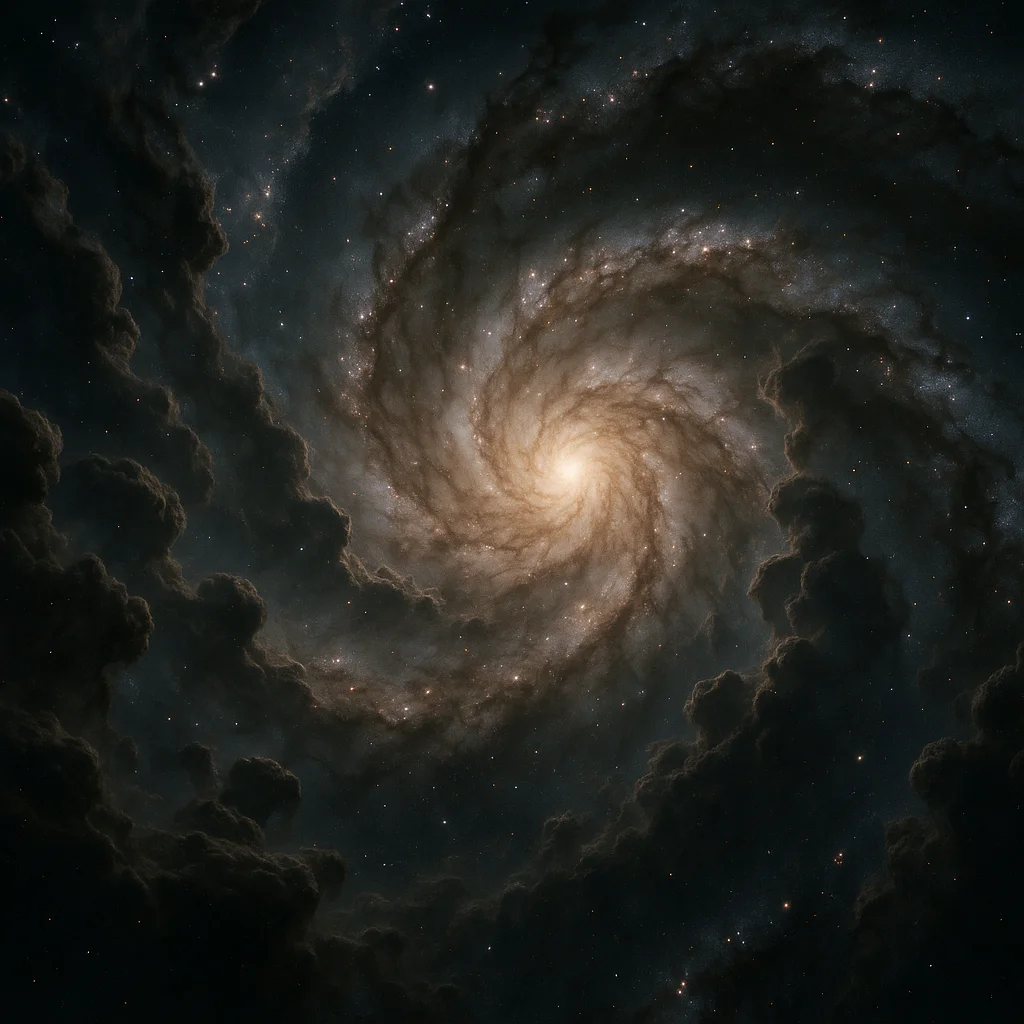
Visualization
In a pivotal study leveraging the observational prowess of the Atacama Large Millimeter/submillimeter Array (ALMA), astronomers have dissected the behavior of star-forming molecular gas within the barred spiral galaxy Messier 83, unraveling insights with profound implications for our understanding of galactic evolution. Messier 83 (NGC 5236), a luminous spiral nestled 15 million light-years away in Hydra and also known as the Southern Pinwheel Galaxy, offers a proximate analog to our Milky Way, albeit approximately half its size.
Astronomers, led by Dr. Jin Koda of Stony Brook University, targeted the galaxy’s cold molecular medium—specifically carbon monoxide (CO), a reliable proxy for tracing the masses and conditions of star-forming clouds. The team's observations, realized at a spatial resolution of approximately 150 light-years, surpass prior surveys in both scope and acuity, allowing a granular mapping of the galaxy's gas distribution and properties.
A critical thrust of the investigation entailed measurement of the intensity ratio between two rotational emission lines of carbon monoxide: CO(J=2–1) at 230.538 GHz and CO(J=1–0) at 115.271 GHz. The ratio \( R_{21/10} = I_{2-1}/I_{1-0} \) acts as a sensitive diagnostic of the molecular gas’s excitation conditions—its density and kinetic temperature. Intriguingly, this ratio peaked conspicuously in the nucleus of Messier 83, mirrored a pronounced drop throughout the elongated stellar bar, climbed again toward the bar’s periphery, and ultimately subsided across the outer disk coincident with the sprawling spiral arms.
Such spatial fluctuations, the authors contend, are not random but are intricately choreographed to the galaxy’s large-scale dynamical structure. The rotational mechanics of the galaxy—as mapped by the pattern speed and streaming motions along the bar—establish turbulence, shocks, and density waves that modulate the properties of the interstellar medium (ISM) on kiloparsec scales. Notably, these structural factors appear to overshadow the local heating and disruptive feedback effects conventionally attributed to nascent stars (e.g., UV radiation, stellar winds, supernovae). The result underscores a paradigm in which the interplay between global gravitational potential and differential rotation—rather than purely stellar feedback—prime the star formation pipeline by regulating the density and collapse of molecular gas.
The study affirms that, in barred spirals akin to Messier 83 and our own Milky Way, the evolution and fate of giant molecular clouds are as much the outcome of galactic architecture as of internal cloud physics. Their findings dovetail with prior inferences from local Galactic studies, reinforcing the concept that the bar’s torque and spiral arm density waves shepherd molecular gas into distinct environments, periodically enhancing or quenching star formation efficiency.
By capitalizing on ALMA’s spectral and spatial fidelity, Dr. Koda’s team could parse the subtle gradations of CO excitation across morphologically distinct regions: the luminous central starburst, the elongated bar with its attenuated CO ratios suggesting less excited, possibly more diffuse molecular clouds, and the dense, actively forming spiral arm complexes. Through these spatial demarcations, the study implicitly tracked how the galactic potential molds both the physical state and the ultimate fertility for star birth in the ISM.
This synthesis of high-resolution molecular line mapping and global dynamical modeling provides not only a window into Messier 83’s current star-forming tapestry but also a template for interpreting the evolutionary destinies of barred spiral galaxies across the cosmos. The work, published in the Astrophysical Journal (June 2025), lays a fresh empirical cornerstone for the notion that the galactic “ecosystem”—its structure and rotation—holds the reigns of molecular gas evolution, setting the tempo for the cosmic ballet of star formation.