Field: Technology
Honey bees assert dominance over wild pollinators, posing a threat to biodiversity
Published | Technical Staff
Visualization
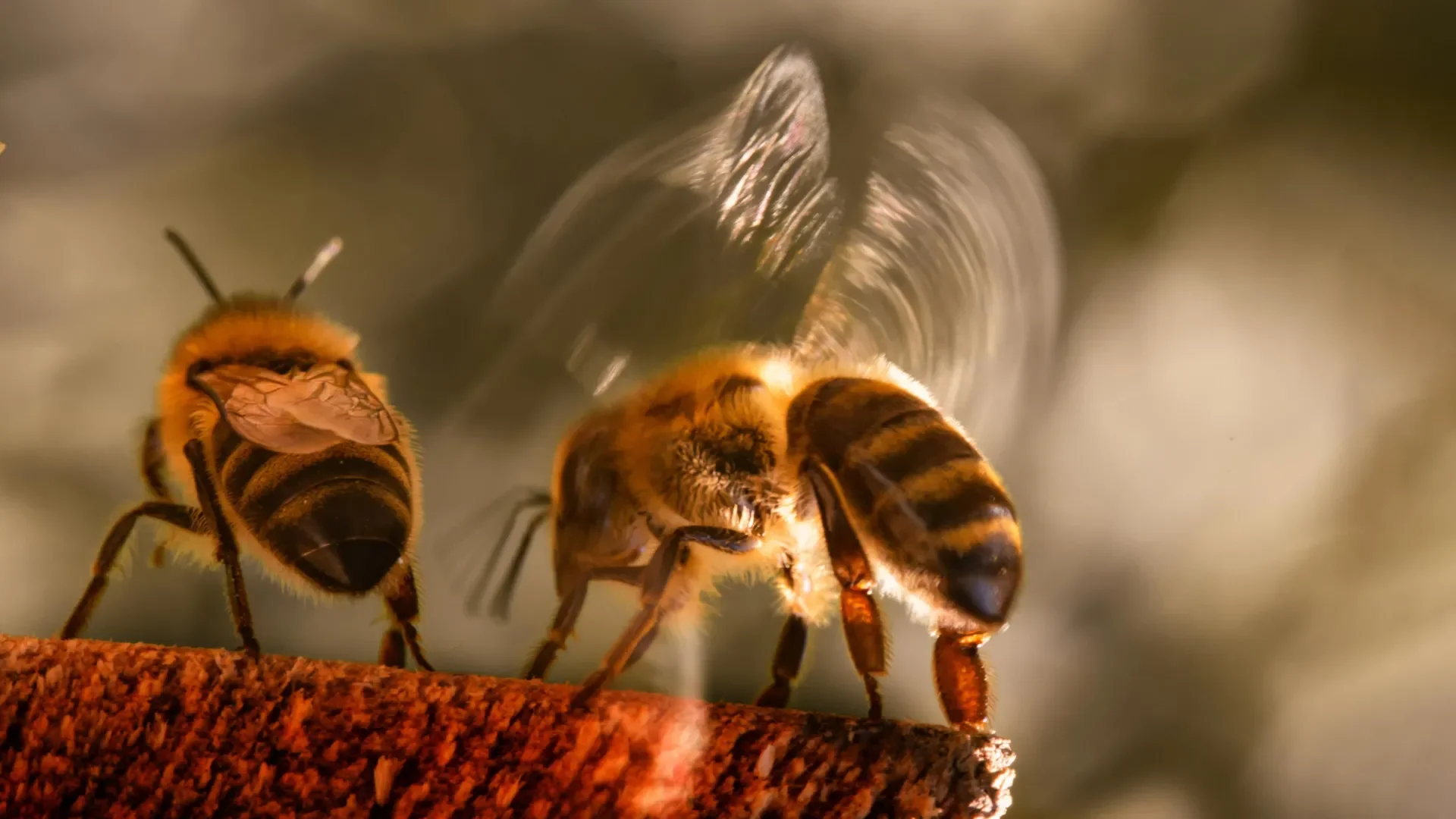
In a striking examination of pollinator dynamics, researchers from Anglia Ruskin University have unveiled troubling insights into the competitive interactions between honey bees (Apis mellifera) and wild pollinators. Over a two-year observational study conducted across five sites in the vicinity of Cambridge, England, the team documented the aggressive tactics employed by honey bees to secure access to nectar-rich floral resources, particularly focusing on bramble (Rubus fruticosus) and ivy (Hedera helix). These findings not only elucidate the extensive displacement of native pollinator species by their domesticated counterparts but also raise alarm regarding the possible exacerbation of these competitive behaviors with ongoing climate change.
The research meticulously categorized the various insect visitors to flowering plants into five distinct groups: honey bees, bumble bees, solitary bees, hoverflies, and a collective assorted category labeled as 'other,' which included butterflies, beetles, and wasps. By dedicating over 93 hours to direct observation, the scientists sifted through countless encounters to analyze competitive interactions. Each encounter was defined in terms of three potential outcomes — a 'win' for the dominant pollinator that gained access to a flower, a 'loss' for the displaced competitor, or a 'share' where both species could forage simultaneously without conflict.
As illustrated through their data, a conspicuous correlation emerged linking honey bee population density with reduced abundance of other pollinator groups. The quantitative findings revealed that an increase in honey bee density by a factor of two resulted in a striking 14% decrease in the abundance of bumblebees. Similarly, increased honey bee presence detrimentally affected solitary bees and hoverflies, further compounding the ecological pressures on these vital but vulnerable species.
This phenomenon is not merely a matter of timing; the aggressiveness of honey bees in chasing off would-be rivals shone through the study's interactions. Instances were recorded where honey bees actively displaced competitors, decisively outpacing them in 20% of such encounters by physically pushing them aside or aggressively chasing them away from prized floral resources. This is not a universal dynamic; while most native pollinators exhibited avoidance behaviors in 28% and 36% of interactions on bramble and ivy respectively, the ivy bee (Colletes hederae) displayed a notable exception, often successfully defending its feeding area against honey bees. This solitary species, relatively new to the UK, emerges as an anomaly in the competitive landscape, showcasing a capacity for retaliatory tactics that contrasts sharply with the generally passive responses of other wild pollinators.
The implications of these findings extend beyond immediate competition. With the burgeoning of beekeeping—evident as the number of registered beekeepers in the UK skyrocketed from 19,000 in 2010 to 47,000 by last year—there exists a pressing need to comprehend the ecological ramifications. Climate change compounds these pressures, as rising temperatures catalyze alterations in floral nectar production, with heat-stressed plants potentially yielding diminished nectar supplies. This reduced availability could intensify competition among insects that rely on these limited resources.
Different pollinator species exhibit varied responses to rising temperatures; for instance, honey bees thrive in warmer conditions, with studies indicating that for every increase of 12°C, the foraging activity of honey bees can escalate by an order of magnitude of ten. In stark contrast, bumblebees and hoverflies, often sensitive to high temperatures, might struggle during such heat events.
Lead author Victoria Buckle, a PhD candidate at ARU, underscored the primary objective of the study: to inform conservation efforts while not undermining the importance of beekeeping. "Our findings suggest that competition for food resources is heavily skewed in favor of honey bees, with detrimental consequences for other pollinator species," she explained. "Understanding these interactions is crucial for developing strategies that allow honey bees and their wild counterparts to coexist, especially in urban environments where hive concentrations are high."
As these dynamics unfold, the research presents a complex yet crucial narrative of ecological interdependence. While honey bees contribute significantly to agricultural pollination efforts, their ascendant populations pose considerable threats to biodiversity, particularly in the face of an ever-warming planet. As science delves deeper into the impacts of competition among pollinators, the quest for balance between agricultural demand and ecological preservation becomes increasingly essential. It is a delicate dance, one where the stakes are nothing short of the very health of our ecosystems.