Field: Technology
Hidden ecosystem: Scientists discover 245 animals living inside a single deep-sea rock
Published | Technical Staff
Visualization
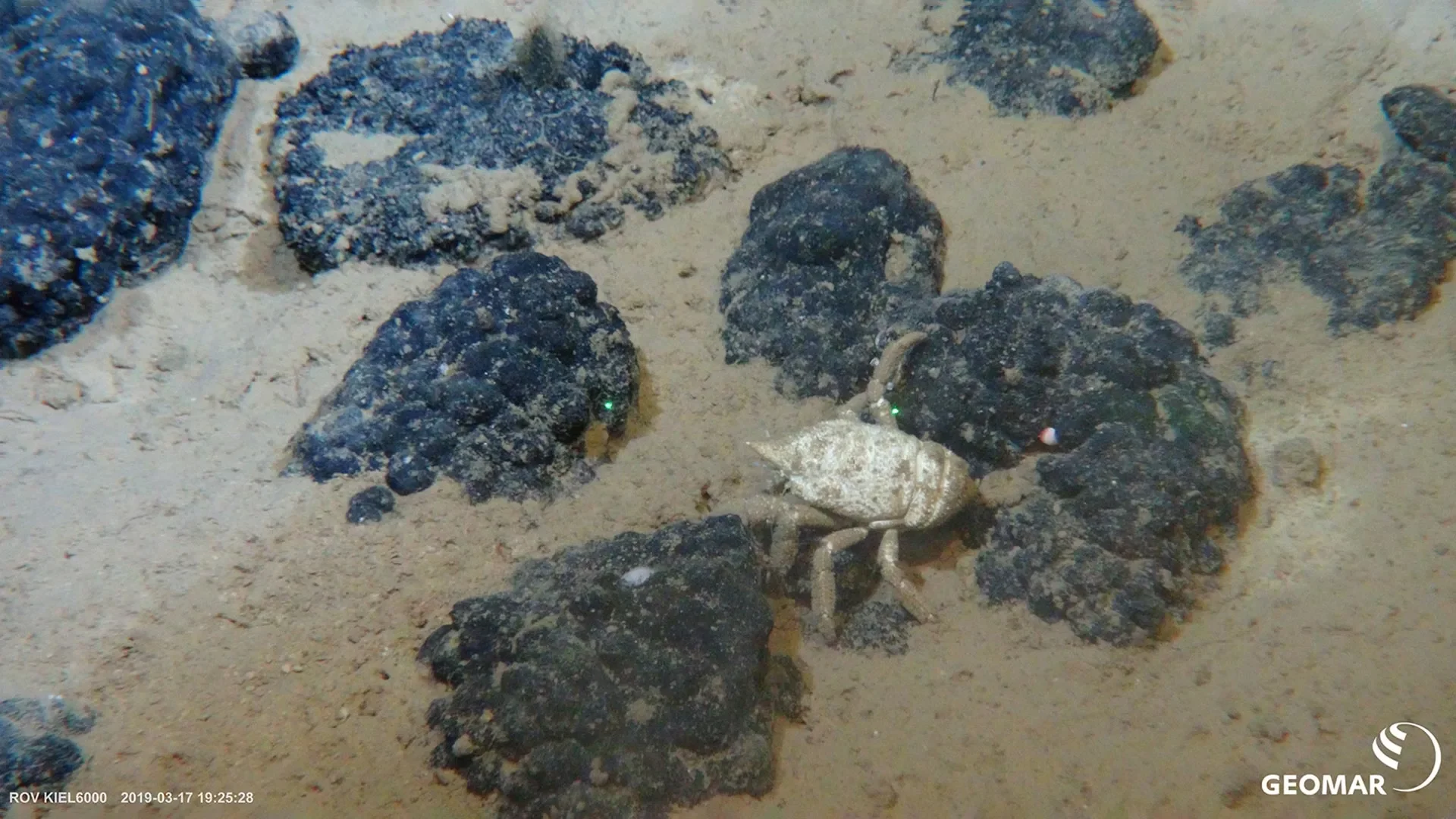
Beneath the vast expanse of the Pacific Ocean, a remarkable discovery is emerging from the shadows of the seafloor. Expansive explorations into the abyssal depths have unveiled intricate ecosystems nestled within polymetallic nodules—metal-rich rocks that slowly form over eons, harboring a plethora of microfauna in the minute fissures and cavities that permeate their structures. These nodules, often mischaracterized as mere geological formations, are, in fact, vital habitats for myriad organisms smaller than a millimeter, revealing a hidden dimension of deep-sea biodiversity never before imagined.
Polymetallic nodules are distinguished by their dark, fist-sized physicality, predominantly composed of iron and manganese oxides, and form at staggering depths between 4,000 and 6,000 meters. The development of these nodules is encapsulated by the remarkable geological phenomenon, where mineral accretion occurs at a glacial pace—often only a few millimeters over millions of years. Their unique morphology provides not only a substrate for attachment but also a multifaceted microhabitat that diverges significantly from the surrounding soft sediment characteristic of the ocean floor.
A research team spearheaded by Dr. Tanja Stratmann has meticulously documented these ecosystems within the Clarion-Clipperton Zone (CCZ), a region underscored by its economic desirability due to the presence of valuable metals like nickel and cobalt. Equipped with cutting-edge sampling technologies, including box corers and remotely operated vehicles (ROVs), the team extracted a total of 244 nodules, revealing an astonishing 4,139 individual animals—a surprising density of life. Each nodule house an average of 17 organisms; however, one was found to cradle as many as 245 individuals, showcasing the extraordinary potential of these microenvironments.
The exploration yielded numerous fascinating insights into the delicate balance of life that these nodules support. Genetic analyses conducted by the researchers indicated a clear distinction between the communities inhabiting the nodules and those living amongst the surrounding sediments. In particular, nematodes demonstrated a presence within nodules that constituted approximately 10% of their population density in adjacent mud, while copepods populated the nodules at about 25% of the densities observed in the soft sediment. Such findings underscore the importance of these nodules as not merely passive substrates, but as active supporters of specialized biota uniquely tailored to thrive within their confined spaces.
The implications of these discoveries stretch far beyond biodiversity alone; they raise profound questions regarding the future of such ecosystems in the wake of burgeoning deep-sea mining operations. The extraction of polymetallic nodules, sought for their lucrative metal content, poses an imminent threat to these delicate habitats. Once removed, the ecosystems encased within the nodules—many of which may consist of species like *Thurammina sp. 1*, highly adapted to life within these geological formations—could face irreversible loss. This situation is exacerbated by the geological timeframe required for nodule formation, wherein new nodules could take millions of years to regenerate, making any mining activity tantamount to ecological obliteration.
Prof. Sabine Gollner has flagged these findings as critical warnings for environmental management strategies associated with deep-sea mining. A singular removal of nodules does not merely strip the seafloor of geological formations; it dismantles entire communities that might never recover, threatening unique and previously undocumented biodiversity. The consequential risk of extinction looms large, particularly for species confined to these niches. As scientists strive to map and understand the distributions of such organisms, the need for proactive conservation measures has never been more critical.
The challenge lies in safeguarding these microhabitats from industrial exploitation while acknowledging their integral role in the larger oceanic ecosystem. Current expeditions, such as the ongoing international effort led by Dr. Stratmann, are fundamental in elucidating the intricacies of these hidden communities, aiming to provide comprehensive data that could influence regulatory frameworks for more sustainable deep-sea resource management.
In the nascent stages of our comprehension of oceanic environments, this revelation serves as a poignant reminder of the complexity and interdependence of life forms within the deep sea. As the specter of mining casts long shadows over these ancient habitats, we are called upon to weigh the value of the minerals extracted against the irreplaceable biodiversity that dwells within the depths. Such evaluations will resonate through generations, influencing the stewardship of our oceans and ensuring that they remain resilient against the weight of human ambition. In revealing the depth of life encapsulated within a single rock, scientists have illuminated not only the hidden richness of the deep sea but also the urgent responsibility to protect it.