Field: Technology
Hidden climate superpower: Why some ocean “snow” carries six times more carbon
Published | Technical Staff
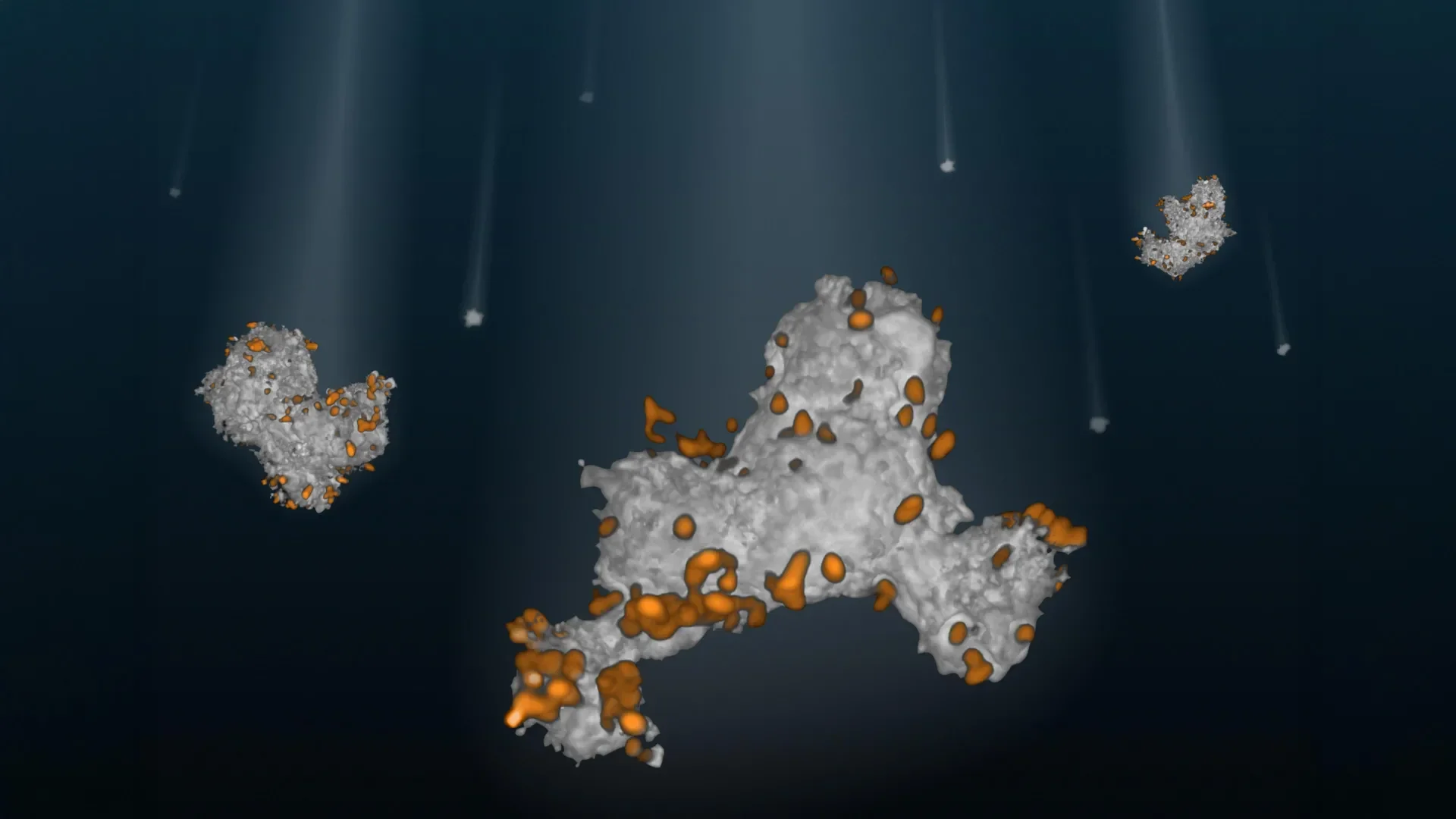
Visualization
Descending into the abyssal depths of our planet's oceans, a unique phenomenon unfolds, reminiscent of ethereal snowflakes dispersing through the atmosphere but strikingly different in nature. This submarine snow, aptly termed marine snow, encompasses a mixture of detritus, organic waste, and remnants of microscopic life—each particle a complex entity resulting from the confluence of marine biological processes. Such particles, comprising everything from microbial mucus to fecal pellets, play an integral role in the marine carbon cycle, as they facilitate the transport of approximately 10 gigatons of carbon from the sunlit upper ocean to the deeper strata each year. However, a conundrum persists; despite this substantial carbon export, only an estimated two gigatons achieve the depths where they are sequestered for extended periods, sometimes spanning centuries or longer.
Recent investigations spearheaded by researchers from the Scripps Institution of Oceanography at UC San Diego have illuminated an unexpectedly pivotal factor in this carbon sequestration puzzle: the viscosity, or permeability, of marine snow. Their findings, published in the October issue of Science, divulge that gooier particles exhibit resilience against bacterial degradation, facilitating the transport of over six times more carbon relative to their less viscous counterparts. This revelation entwines fundamental biophysical interactions with broader implications for Earth’s climate systems.
The cornerstone of this research lies in elucidating how marine snow's structural intricacies and its interaction with microbial life significantly influence its journey to the depths of the ocean. Marine snow is a heterogenous assemblage, featuring variances in composition and viscosity that dictate the rate at which bacteria degrade these particles during descent. By employing advanced imaging techniques, specifically 3D confocal microscopy coupled with bespoke fluorescent probes designed to enhance visibility at microscopic scales, the research team successfully scrutinized the minute interactions between bacteria and marine snow—an endeavor marked by considerable methodological challenges over a four-year period.
This meticulous examination revealed a dynamic interplay between the microscopic landscape of marine snow and bacteria, stratifying the surface of marine snow particles into varying viscosity zones. Notably, bacteria preferentially colonized the less viscous outer layers, unable to penetrate the denser, stickier sections without first breaking down the softer exterior. Inman draws an apt analogy likening this interaction to a worm attempting to navigate through an apple—while the skin is easily penetrable, the core presents a formidable barrier.
The ramifications of these findings are profound. Laboratory simulations indicate that marine snow particles exhibiting higher viscosity resist bacterial breakdown for longer durations, thereby enabling them to descend further into the ocean before disintegration. The implications are clear and striking: particles with pronounced viscosity can transport more carbon efficiently, altering our understanding of carbon cycling within marine ecosystems.
Moreover, this research transcends the confines of oceanographic studies; the insights garnered about the structural complexity of mucus within marine environments parallel biological processes found in terrestrial and human systems alike. The intricate architecture of mucosal layers, previously underestimated, appears integral to numerous ecological and physiological processes, ranging from nutrient absorption in human intestines to the viability of coral reefs and seagrass ecosystems.
Inman’s investigation underscores a revolution in our approach to exploring microbial habitats and the latent potential of mucosal substances. This newfound understanding may catalyze advancements in a variety of domains, including environmental restoration efforts, carbon sequestration strategies, and innovations in medical research.
Thus, the dichotomy between marine snow’s simplicity and complex functionality unveils a cascade of ecological significance. As we peer deeper into the structural unseen realms beneath the ocean’s surface, we glean insights not just into carbon dynamics but indeed, into the fabric of life itself. Such revelations forge a continuum between understanding ecological interactions and harnessing them for climate stability, positioning seemingly innocuous marine products as heavyweight players in the environmental arena. The future of our planet's climate may hinge upon such nuanced yet profound biological revelations—a testament to the fact that even the stickiest of marine snow harbors the latent power to reshape our understanding of global carbon cycles.