Field: Technology
Glioblastoma breakthrough reveals how brain cancer cells become more aggressive
Published | Technical Staff
Visualization
In a remarkable advance within the realm of oncology, researchers from the Aerospace Information Research Institute and Chongqing General Hospital have unveiled intriguing adaptations in glioblastoma cells that heighten their invasiveness. This pivotal discovery centers on the unusually viscous fluid that envelops these malignant tumors. The mechanics of this microenvironment reveal a complex interplay between viscosity and cellular behavior, a factor that has been often overshadowed by chemical signaling pathways and tissue stiffening in cancer literature.
Glioblastoma, identified as one of the most formidable brain cancers, presents a stark challenge due to its aggressive nature and the difficulties of effective treatment. Traditionally, investigations have centered on the biophysical properties of the tumor's microenvironment. However, the study published in *Microsystems & Nanoengineering* shifts the narrative by spotlighting the significance of fluid viscosity, which at the invasive frontier of glioblastoma tumors is approximately eight times denser than that at the tumor's necrotic core. This thickened fluid not only presents physical resistance but inadvertently catalyzes a transformation in cancer cell morphology and invasive potential.
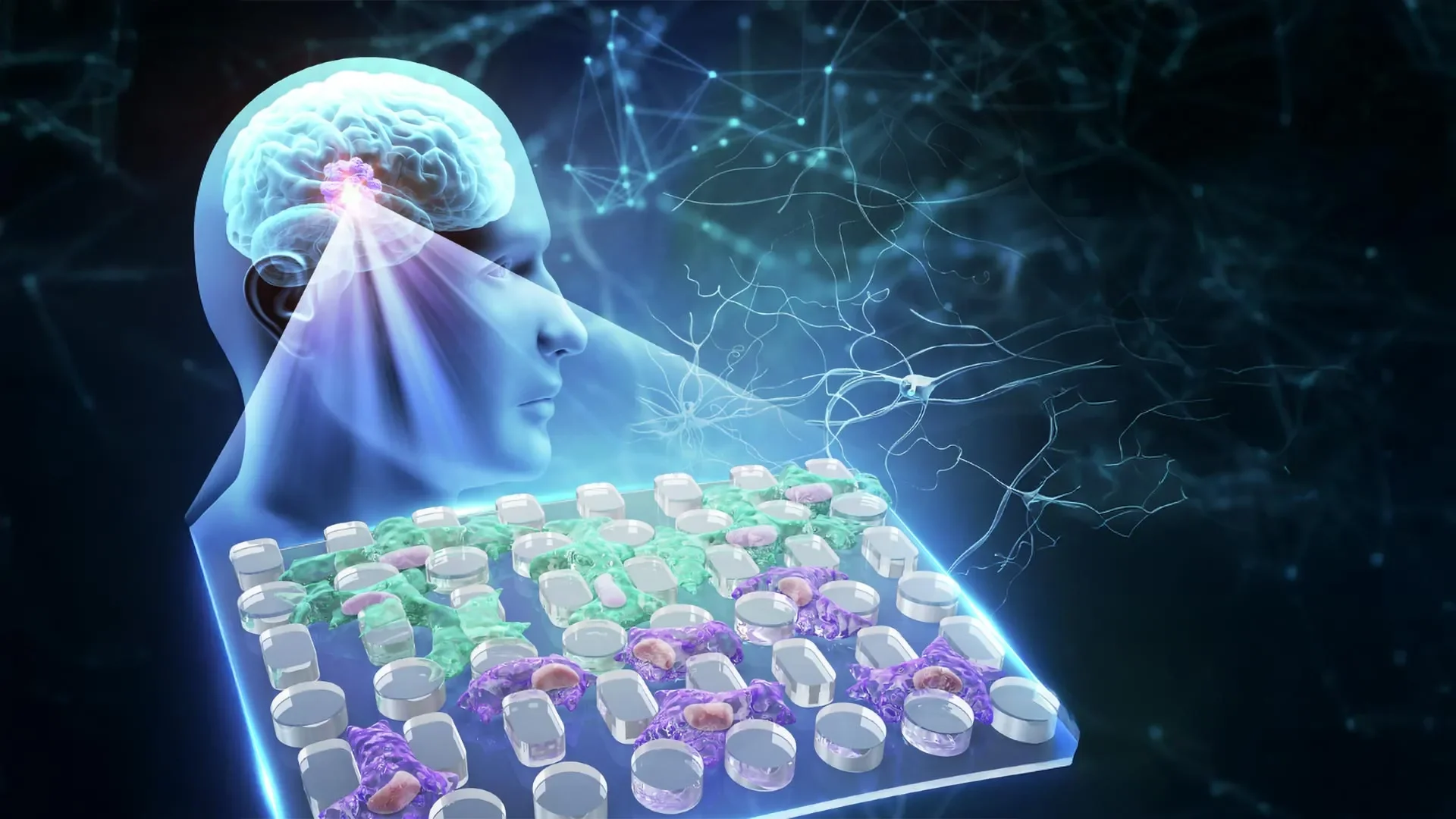
Utilizing an innovative open microfluidic chip, the research team has made substantial strides in simulating the conditions that glioblastoma cells encounter in vivo. This two-layer device, equipped with a detachable cap and a ring-shaped micropillar array, enables the precise observation of cancer cell migration and the biomechanical consequences of their journey through a viscous medium. The adaptability of glioblastoma cells, observed under controlled conditions, reveals a startling phenomenon: upon extended exposure to a high-viscosity environment (with a viscosity of 7.1 cP), these cells become smaller and more pliable, traits that are typically advantageous for invasion and migration through the brain's architecture.
When subjected to the viscous milieu, both U-251 and LN-229 human glioblastoma cell lines exhibited enhanced migratory capabilities relative to untreated cells, traversing further distances over shorter time frames. Microscopic analyses of the cells demonstrated a significant reduction in size and a corresponding increase in deformability. As glioblastoma cells engage these constrained environmental features, such as the micropillars, their nuclei undergo substantial deformation, a transformation that is likely mediated by the accumulation of the Yes-associated protein (YAP) within the nucleus. This accumulation activates mechanotransductive pathways that hint at a cellular response to mechanical stress.
Delving deeper into the molecular responses of each cell line yields further insight into the complexities of glioblastoma behavior. The U-251 cells displayed a distinct mesenchymal-like transformation, marked by the upregulation of genes associated with tumor invasiveness—CD44, FN1, and MMP9—signaling a shift toward a more aggressive phenotype. In contrast, LN-229 cells increased their invasive capabilities without significant alterations in gene expression, illustrating divergent adaptive mechanisms at the cellular level despite outward similarities in phenotype.
Analyzing protein dynamics through methodologies like Western blotting revealed that the adaptations secured during exposure to thick fluid persist even after the cells are reintroduced to media with standard viscosity. Such a phenomenon suggests an intriguing concept known as mechanical memory, where the cells retain a biological imprint from their previous mechanical experiences. This raises essential questions about the plasticity and resilience of glioblastoma cells, as their capacity to adapt could direct future therapeutic strategies.
The implications of employing this open microfluidic design are profound, allowing researchers to dissect mechanical influences on cancer cell behavior independently of other physical stressors typically inherent in conventional closed microfluidic systems. Moreover, these insights may pave the way for innovative approaches to studying tumor biology and identifying potential treatment pathways rooted in modifying the tumors’ environmental conditions rather than solely targeting genetic mutations or signaling pathways.
By uncovering this extraordinary capacity for adaptation and aggression rooted in mechanical stimuli, the research team not only sheds light on glioblastoma's elusive complexities but also opens avenues for the development of advanced therapeutic interventions aimed at mitigating the invasive opportunities afforded by the tumor microenvironment. As glioblastoma continues to challenge oncologists, understanding the fluid dynamics that fuel its malignancy may be an essential step toward turning the tide in the battle against this lethal cancer.