Field: Technology
Giant New Fungus Species Discovered in China
Published | Technical Staff
Visualization
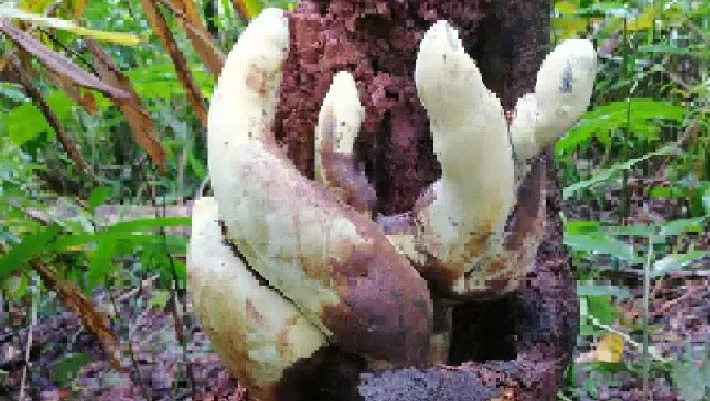
In the dense and biodiverse forests of Yunnan province, China, an unexpected marvel has emerged from the shadows of decaying trees: a pale-yellow fungus, towering at heights upwards of 50 cm (approximately 20 inches), distinctively named Dianjunus rex. This remarkable species not only adds to the already vast tapestry of fungal diversity but also provides insights into evolutionary history that may stretch back to the aftermath of the end-Cretaceous mass extinction.
The initial discovery of Dianjunus rex was made possible through meticulous fieldwork conducted by an international team led by Dr. Indunil Senanayake from the Kunming Institute of Botany. During expeditions in 2024 and 2025, specimens were collected from three diverse habitats—spanning tropical rainforests in the Xishuangbanna region to more temperate conditions near Kunming and Lufeng. Most notably, these fungi were found emerging from the rhizosphere of the roots of Chinese cork oaks, providing a glimpse into their ecological niche and symbiotic relationships.
At first glance, the morphology of the fungus is striking. The fruiting structures, or stromata, exhibit a soft, fleshy texture with a finger-like or palm-shaped appearance, an adaptation that might enhance spore dispersal via wind—a significant factor for survival in densely vegetated areas. Dr. Senanayake posits that the investment of energy required to form such large structures signifies an evolutionary trade-off; specifically, this adaptation likely arose in environments where the ecological advantages surpassed the metabolic costs.
Dianjunus rex is classified within the order Xylariales, which predominantly comprises wood-decomposing fungi that, intriguingly, do not form true mushrooms. Instead, they produce spores from specialized sac-like structures embedded within or on the surface of their fruiting bodies. Genetic analyses, incorporating data from four gene regions along with whole-genome sequencing of select specimens, revealed that this fungus warrants its classification in a newly established family: Dianjunaceae. The genetic divergence suggests that Dianjunus rex branched off approximately 65 million years ago, a timeline that resonates with the major ecological upheaval following the mass extinction event that eliminated non-avian dinosaurs.
This finding reinforces the notion that the aftermath of such cataclysmic events can incubate new avenues for evolutionary development and ecological strategies. Dr. Senanayake reflects on how the sudden increase in available dead plant material after the extinction may have fostered an explosion of opportunity for wood-associated decomposing fungi, which are integral to nutrient cycling in forest ecosystems. Such insights not only highlight the intricacies of fungal evolution but also amplify our understanding of forest dynamics and resilience.
The pale, powdery surface of Dianjunus rex, accompanied by its unique spore morphology and microscopic asexual reproductive cycles, further delineates its evolutionary path—setting it apart within the extensive family of Ascomycetes, which alone encompasses over 64,000 species. As the researchers delve deeper into the genetic lineage and ecological relevance of this giant fungus, the findings affirm that substantial portions of fungal biodiversity remain unexplored, particularly within the rich tapestry of East Asian forests.
This revelation and others like it underscore the critical interconnectedness of life forms within forest ecosystems and provoke further questions about the roles that such ancient lineages might play in contemporary biodiversity and ecosystem functioning. The detailed report of this discovery has been published in the esteemed journal Frontiers in Fungal Biology, heralding a new chapter in fungal taxonomy and evolutionary biology. As researchers continue to explore ecological niches and evolutionary histories obscured by the canopy, the saga of Dianjunus rex serves as a testament to nature's astonishing capacity for resilience and adaptation through epochs.