Field: Technology
Genes Help Explain why German Shepherds Differ in Boldness
Published | Technical Staff
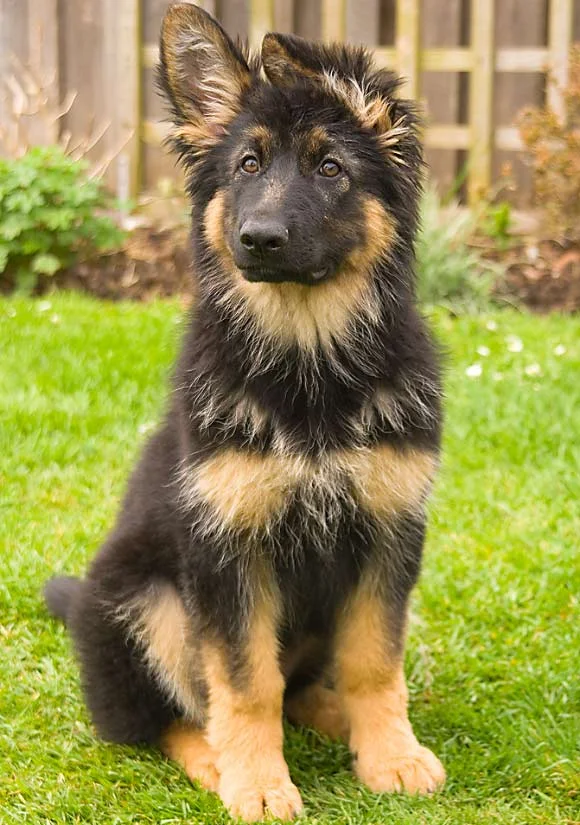
Visualization
The German Shepherd, a breed revered for its intelligence and versatility, exhibits profound behavioral and genetic divergences influenced by its bifurcated lineage into working and show lines. Groundbreaking research spearheaded by Uppsala University probes this phenomenon, examining how selective breeding practices have etched distinct imprints not only on the breed's physical characteristics but also on its temperament. The findings illuminate a complex interplay between breeding choices and behavioral outcomes, potentially providing insights into canine cognition and human behavioral parallels.
The investigation focused on an extensive cohort of 373 German Shepherds, evaluated through the Dog Mentality Assessment—an empirically validated behavioral matrix predominantly applied in Nordic countries. This assessment delineates various behavioral traits, establishing a robust framework for aggregating the observably distinct attributes of working versus show dogs. The sampled canines delineated into two genetically and behaviorally coherent clusters: 222 dogs belonged to the working category, encompassing police and military service dogs alongside working champions, while 132 were classified as show-type, comprising all recognized Swedish show victors. A small subset of 19 dogs straddled the boundary between these two groups.
Quantitative analysis of the behavioral data revealed that working dogs consistently outperformed their show counterparts across nearly every evaluated dimension except for aggression. The working dogs demonstrated heightened levels of playfulness, curiosity, and sociability alongside reduced fearfulness. This amalgamation of traits has been encapsulated in the term “boldness,” which represents a gradient from shyness to assertiveness in canine behavior. Intriguingly, the largest discrepancies between the two clusters spanned playfulness and boldness, emphasizing the behavioral ramifications of breeding decisions.
Genomic scrutiny laid bare significant genetic variances, notably a two-million-letter segment on chromosome 24 that harbors genes associated with pigmentation. The results indicated a stark uniformity in coat color among show dogs as opposed to the diverse palette seen in their working counterparts. In the behavioral domain, the most pronounced signals connected to boldness appeared on chromosome 1, proximal to the TCF4 gene, known in human studies to correlate with neurotic traits—a lineage reflecting aspects of low boldness in dogs. The homology between canine and human genomic factors suggests the potential for canines to serve as proxies in scrutinizing human psychosocial behaviors, a notion posited by lead investigator, Professor Kerstin Lindblad-Toh.
Co-author Professor Åke Hedhammar reflected on the broader implications of these findings, noting that the working dogs exhibited lower fear responses, greater curiosity, and a propensity for social interaction with humans. This observation reinforces the imperative of behaviorally orientated selection in breeding practices for utilitarian canine roles within societal structures.
The prospect of leveraging genetic insights to refine breeding strategies aligns with the growing interest in the genetic architecture of behavior. Professor Lindblad-Toh acknowledged the dual significance of these discoveries, suggesting they could aid in elucidating both canine and human behavioral frameworks over time. While the implications are promising, she tempered expectations by clarifying that the current study represents merely a preliminary exploration, yet one that appositely underscores the behavioral dichotomy extant between working and show German Shepherds.
The findings are slated for publication in the journal Animal Genetics, encapsulating the intricate relationship between genetic makeup and behavior within one of the most popular dog breeds worldwide. By merging genetic analysis and behavioral assessments, researchers have opened a fertile domain for further inquiry—a convergence poised to unravel the complexities of canine personalities and their evolutionary trajectories.