Field: Technology
Fossil Discovery Sheds New Light on Ancient Carnivorous Marsupials’ Origins
Published | Technical Staff
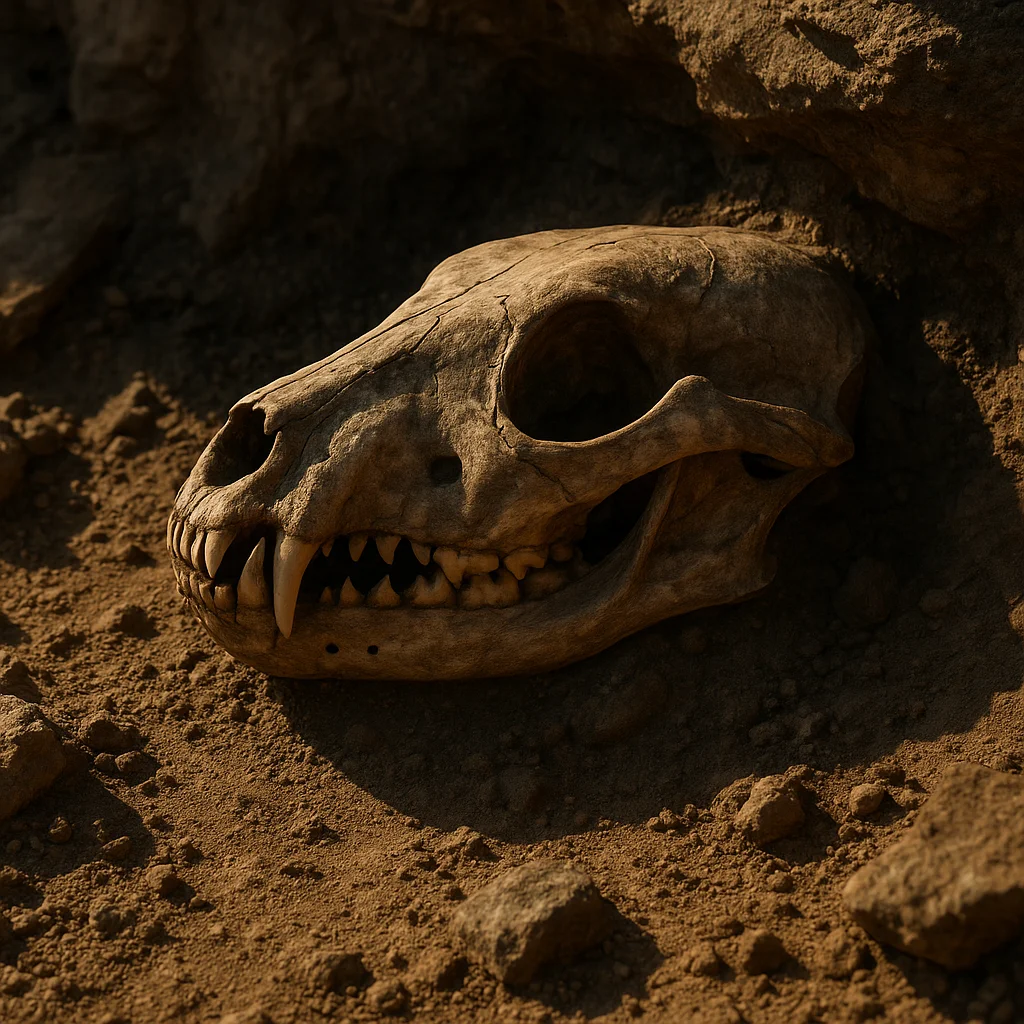
Visualization
In the tangled, humid rainforests of Early Miocene Australia, some 18 million years before the modern era, a diminutive predator no heavier than a pair of pocket change coins darted through the undergrowth. Now, the fossilized remnants of this animal—christened Miyumba chrisdickmani by paleontologists at the University of New South Wales—have prompted a substantial revision to our understanding of dasyurid evolution, anchoring the roots of one of Australia’s most diverse carnivorous marsupial families far deeper in geological time than previously imagined.
The significance of Miyumba chrisdickmani extends well beyond the discovery of another extinct species. Until this point, the fossil record of the Dasyuridae—the family that today includes notoriously feisty predators such as quolls, antechinuses, dunnarts, and the iconic Tasmanian devil—offered only ambiguous evidence for when the lineage arose. The specimen offers the first definitive anatomical synapomorphy uniting this group, fixing its place in the family’s evolutionary tree with unprecedented clarity.
The fossil material, excavated from the richly fossiliferous Riversleigh World Heritage Area of northwestern Queensland, consists of several partial dentaries. Using high-resolution micro-computed tomography (micro-CT), researchers rendered the internal and external topography of the teeth and jaws, enabling meticulous comparison against a comprehensive matrix of both extinct and extant dasyuromorphs. What surfaced was a unique dental character—a configuration not previously documented but now identified across all dasyurids, marking the most reliable anatomical marker for the group to date. This dental trait, potentially involving the relative size and cusp arrangement of molariform teeth, not only corroborates the phylogenetic placement of Miyumba chrisdickmani but also resolves longstanding ambiguity in distinguishing dasyurids from morphologically proximate marsupial lineages.
Volumetric estimations based on mandibular robustness and dental row dimensions place the living weight of Miyumba chrisdickmani between 23 and 33 grams—comparable to today’s agile antechinuses (Antechinus spp.) and dunnarts (Sminthopsis spp.). This underscores a remarkable degree of morphological and ecological conservatism in the lineage, with predatory strategies and body plans persisting through major Cenozoic environmental shifts.
Stratigraphic and morphological evidence, interwoven with molecular phylogenetic data from living species, allowed researchers to recalibrate the dasyurid time tree. The results imply that the dasyurid crown group originated approximately 25.6 million years ago, a finding that predates prior estimates by at least three million years and translates the initial divergence well into the Oligocene. The phylogenetic position of Miyumba chrisdickmani as a basal outgroup to all other known dasyurids suggests this animal represents the most primitive member of the family yet discovered—a critical calibration point for marsupial evolution in Sahul (the ancient continent uniting Australia and New Guinea).
Miyumba chrisdickmani’s discovery illuminates the biogeographic and ecological history of dasyurid marsupials. Strikingly, the dental characteristics linking Miyumba to living rainforest-dwelling marsupials of New Guinea (notably in the genus Murexia) provide tantalizing evidence for deep-time connections between now-disjunct faunal assemblages. As Sahul’s rainforests contracted throughout the Neogene and then the Quaternary, lineage extinction and range contractions left isolated pockets of diversity in New Guinea’s enduring forests, while the Australian mainland’s assemblages dwindled or perished. Miyumba may thus be a representative of an ancestral radiation whose ecological descendants persist in the New Guinea rainforests—refugia preserving evolutionary legacies from Australia’s vanished Miocene ecosystems.
As Dr. Timothy Churchill and colleagues argue, the persistence of ancient lineages in New Guinea underlines the evolutionary significance of these ancient rainforests. They suggest that the current distribution of marsupials is a relic of Miocene forest collapse on the mainland, with several once-widespread lineages now found solely north of the Torres Strait. This view is echoed in the statement by the research team: “New Guinea has retained extensive rainforest cover since the Miocene, preserving a faunal assemblage that likely reflects the ecological structure of Sahul’s former lowland rainforests. This includes a diverse radiation of rainforest-adapted dasyurids, some of which may share a close relationship with Miyumba chrisdickmani.”
In sum, the unassuming fossil jawbones from Riversleigh not only flesh out the ancestral morphospace of Dasyuridae but rewrite the family’s evolutionary narrative. Miyumba chrisdickmani anchors the dasyurid radiation deep in time, standing as a testament both to the evolutionary dynamism of Australia’s ancient faunas and to the power of paleontological scrutiny in uncovering the continent’s lost biological worlds. The findings, published in the July 2026 issue of Australian Zoologist, constitute a pivotal reference point for future studies in marsupial paleobiology and biogeography, challenging researchers to further probe the ancient rainforests of Sahul for the deep roots of modern mammalian diversity.