Field: Technology
Earth's ice ages may have been driven by a hidden ocean chain reaction
Published | Technical Staff
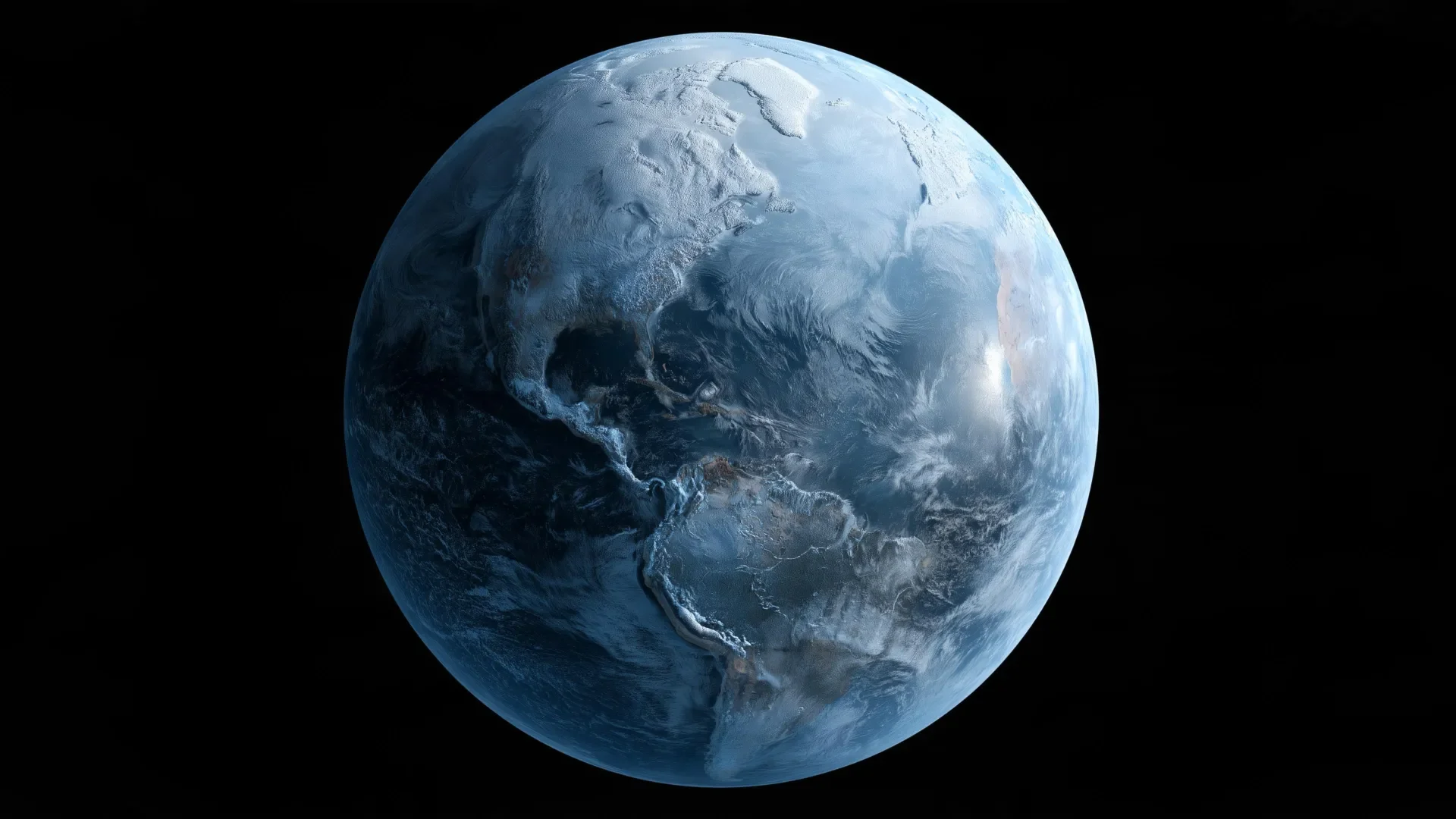
Visualization
Recent groundbreaking research from a team at the University of St Andrews has unveiled a complex interplay between the Northern Hemisphere's expanding ice sheets and the Southern Ocean's circulation, suggesting that this interaction played a significant role in initiating and intensifying past ice ages. The study highlights how fluctuations in the Earth's climatic conditions, particularly the cooling of North Atlantic waters, can induce substantial shifts in global carbon dioxide levels, which in turn affect climate on a broad scale.
At the heart of this investigation is the intricate relationship between atmospheric carbon dioxide (CO2) levels and ocean circulation dynamics. Historically, it has been established that the onset of glacial periods was largely correlated with a marked decline in atmospheric CO2 as increased carbon storage occurred within Earth's oceans, specifically in the Southern Ocean encircling Antarctica. A lingering question, however, has been how seemingly disparate events—large ice sheet formations in the Northern Hemisphere and changes in the Southern Hemisphere's oceanic patterns—could be intricately linked.
The researchers propose a novel mechanism wherein the northward expansion of massive ice sheets cools the surface waters of the North Atlantic Ocean. This is described by thermohaline circulation principles, where cooling induces denser, saline-rich water to sink, subsequently altering the flow of ocean currents southward. The cooling process initiates a chain reaction that facilitates the circulation of chilled waters towards the Southern Ocean. Models indicate that this cold influx has the potential, under certain thresholds, to disrupt the Southern Ocean's normal circulation patterns, ultimately increasing its capacity to sequester atmospheric CO2 in deep ocean strata.
To rigorously examine this hypothesis, the research team employed advanced computer simulations that modeled varying degrees of cooling solely at high northern latitudes. The experiments revealed that localized cooling in the North produced an impressive 74% of the carbon drawdown observed when simulating global cooling. The findings elucidate that even regional temperature changes can possess sufficient force to induce measurable impacts on global carbon cycles and atmospheric conditions.
Dr. Madison Shankle, the lead author of the study published in the Journal of Climate, emphasized the significance of these results as they intertwine two previously isolated elements of glacial theory. What was once elusive—the link between polar ice expansion and southern ocean dynamics—now appears more tangible, inviting deeper inquiry into its implications. "By establishing this connection," Shankle noted, "we have taken a meaningful step toward understanding the multifaceted mechanisms governing Earth's climatic history. This not only enriches our theoretical grasp but also informs our prognosis for future climatic scenarios, especially with the backdrop of anthropogenic carbon emissions."
The precision of these results offers a fresh lens through which scientists can explore carbon dynamics over geological timescales. Understanding the ancient mechanisms of CO2 sequestration is invaluable as researchers tackle contemporary issues surrounding elevated greenhouse gas concentrations resulting from human activities. As the planet grapples with unprecedented levels of carbon emissions, insights gleaned from ice age behaviors could provide crucial predictions about contemporary ocean responses, elucidating the interconnectedness of Earth's climate systems.
One vital aspect emerges from this interconnected network, illustrating how localized processes can have cascading effects on global scales. For instance, the biological and physical processes occurring in the Southern Ocean, derived from the Northern Hemisphere's ice sheath evolution, could reveal critical pathways through which carbon sequestration underpins the regulation of Earth's climate. As research continues in this domain, elucidating these links may lead to more effective strategies for mitigating the impacts of climate change and managing carbon levels within the biosphere.
By integrating these pieces into a cohesive framework, we witness the evolution of knowledge surrounding Earth's ice ages, a narrative sculpted through deep-time interactions that still resonate through modern scientific inquiry. As we advance further into an uncertain climatic future, understanding our planet's past will serve as a compass guiding us toward resilience and sustainability in the face of ongoing environmental change.