Field: Technology
Early Predatory Dinosaurs Survived Shift in Their Ecosystem, Fossil Fragment Suggests
Published | Technical Staff
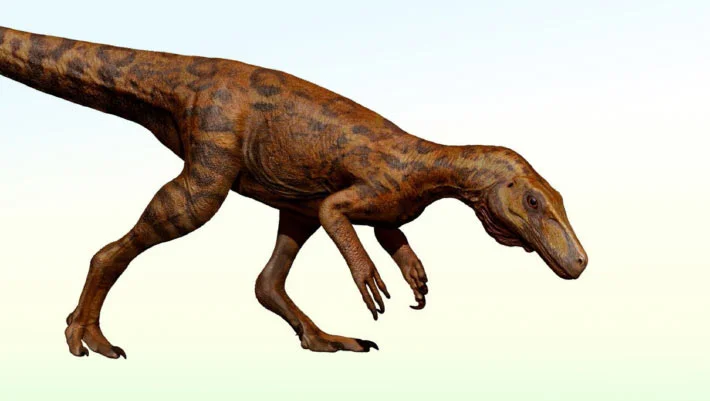
Visualization
A remarkable fossil discovery in southern Brazil has illuminated the enigmatic resilience of the herrerasaurids, some of the earliest large carnivorous dinosaurs that roamed the Earth approximately 230 million years ago during the Carnian age of the Late Triassic epoch. This single bone, catalogued as CAPPA/UFSM 0539, extracted from the Santa Maria Formation in the Paraná Basin, marks the first evidence of herrerasaurids in an ecosystem that drastically transitioned from a diverse rhynchosaur-dominated landscape to one where the cynodont Exaeretodon flourished.
Herrerasaurids, characterized by their bipedal structure, serrated teeth, and substantial foreclaws, were apex predators in their respective ecological niches, growing to lengths exceeding 5 meters (16 feet). Up until this discovery, stratigraphic records had confined these formidable hunters to older rock layers, predominantly within regions of Argentina and Brazil where rhynchosaurs, robust plant-eating reptiles, thrived. The juxtaposition of these ecosystems raised critical questions regarding the survival mechanisms of herrerasaurids amidst rapidly changing faunal assemblages.
Prior research indicated a stark absence of herrerasaurid remains in strata marked by a significant increase in Exaeretodon, a pig-sized ancestor of modern mammals. Dr. Rodrigo Temp Müller, a paleontologist at the Universidade Federal de Santa Maria, posited that this absence might reflect ecological specialization, suggesting that these predatory dinosaurs were inextricably linked to the prey dynamics of the time. His hypothesis maintained that if herrerasaurids had adapted to primarily hunt rhynchosaurs, their decline could precipitate a detrimental impact on herrerasaurid survival rates.
Nevertheless, the fossil evidence suggests a more nuanced narrative than mere extinction. While rhynchosaur populations diminished, they were not entirely eradicated from the fossil record, leading Dr. Müller to caution against simplistic extinction models. Instead, he offers a radical reframing of the herrerasaurids' ecological adaptability, proposing that their presence alongside a dominant cynodont species indicates a level of resilience previously unaccounted for in paleobiological studies.
The specimen from Agudo, belonging to fossil-bearing strata of the Santa Maria Formation, has compelled a reassessment of the herrerasaurid lineage, paving the way for further investigation into stratigraphic chronology and ecological adaptability. The implications of this discovery are profound – it not only challenges existing paradigms in dinosaur survival strategies but also reinvigorates discussions surrounding ecosystem dynamics during a pivotal evolutionary juncture.
Significantly, Dr. Müller suggests that if the Brazilian strata can be confirmed as younger than those in Argentina, this fossil could represent the youngest known occurrence of the herrerasaurids to date. Accurate absolute dating of these rocks remains crucial for establishing a coherent chronological framework for the late Triassic periods in question, situating these findings within a broader evolutionary narrative.
Published on October 19, 2026, in The Science of Nature, the research heralds a pivotal moment in our understanding of prehistoric ecosystems and the complex interplay between predation and ecological change. As our grasp of these ancient environments deepens, the adaptability of early dinosauric forms continues to unveil the dynamic evolutionary processes that shape terrestrial life.