Field: Technology
Don't miss: Meteor showers, fireballs, and a supermoon light up November's night sky
Published | Technical Staff
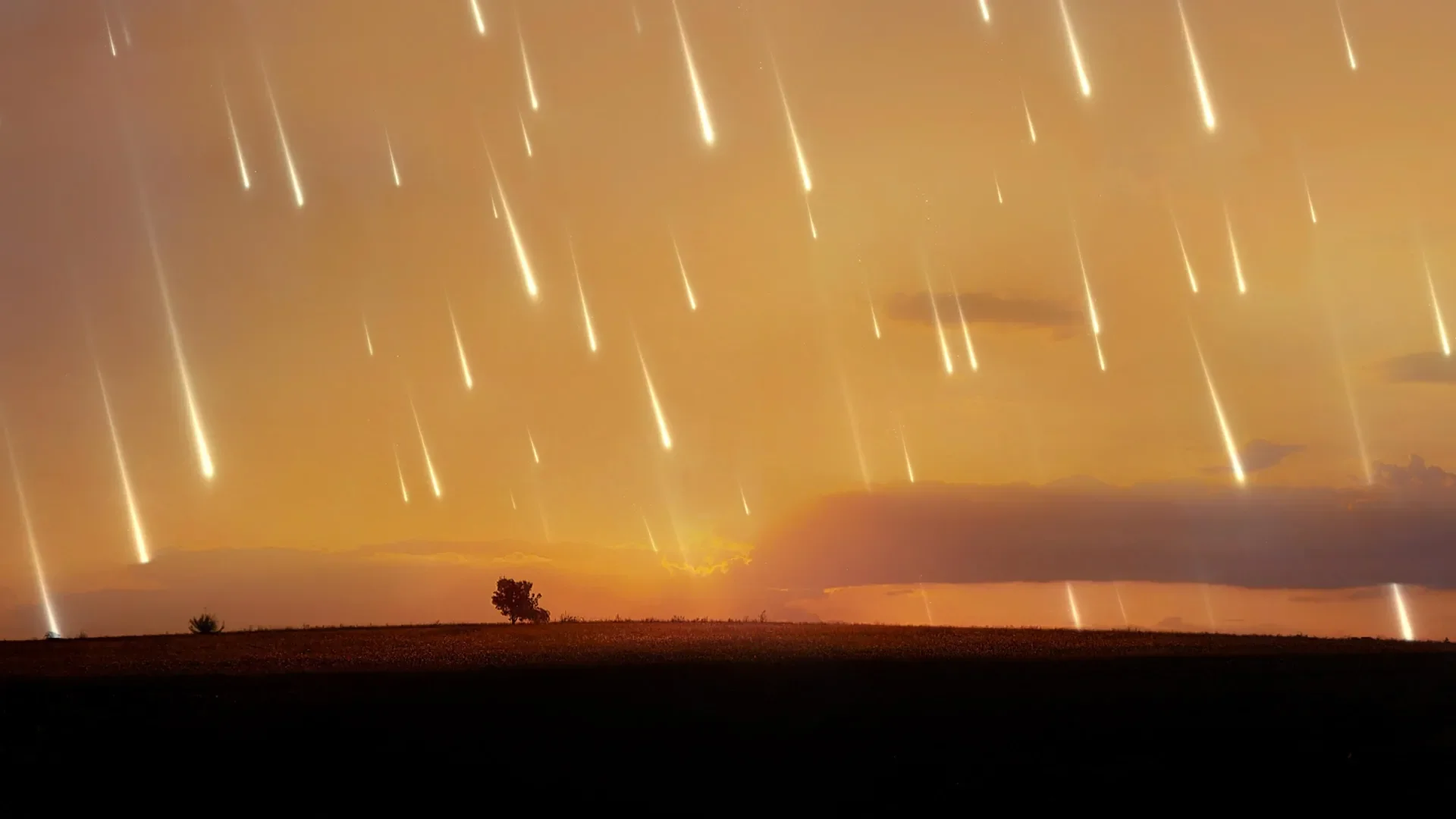
Visualization
As the twilight deepens in November, a cinematic tapestry unfolds across the sky, offering stargazers a feast of celestial phenomena. This month, the cosmos presents an exceptional array of spectacles, including luminous meteor showers, a fleeting conjunction of Mars and Jupiter, and the awe-inspiring presence of a supermoon. Amidst these terrestrial observations, another landmark event unfolds with NASA's Voyager 1—traversing through the void, it becomes the first human-made entity to reach a staggering distance of one light-day from our planet.
November 2026 heralds a plethora of celestial events, initiating with the Southern Taurid meteor shower peaking around November 5. This meteor shower, although producing an average of merely five meteors per hour under optimal conditions, holds the potential for extraordinary fireballs known for their spectacular brightness. These striking streaks of light result from tiny particles of space debris, primarily from comet Encke, colliding with Earth’s atmosphere at speeds approaching 30 km/s. The Southern Taurids are particularly notable for their sporadic yet dazzling displays, contrasting sharply with more consistent meteor showers.
Continuing the month’s cosmic offerings, the Northern Taurids peak shortly thereafter on November 12, perpetuating the tradition of the Taurids as a modest yet delightful opportunity for skywatchers. Observers are urged to escape the glare of urbanity, venturing into the countryside where light pollution wanes, allowing the darkness to enhance the visibility of these meteoric marvels. Following this, the Leonid meteor shower will grace the early morning hours of November 17 and 18, promising an uptick in activity, with peak rates of perhaps 15 meteors visible per hour. This event carries historical significance, tracing its origins to the debris trail of Comet Tempel-Tuttle, illuminating the pre-dawn sky with ethereal flashes as the Earth plows through the remnants of this ancient comet.
Equally captivating will be the exceptional alignment of the planets Mars and Jupiter on the mornings of November 15 and 16. The two gas giants will appear a mere 1.2 degrees apart in the southeastern sky, a separation eclipsed only by a pair of full moons. Jupiter, renowned for its brilliance, will dominate visuals, while Mars, with its characteristic reddish hue, will serve as a striking counterpart. This ephemerality will be a visual treat for both amateur and seasoned astronomers, demonstrating the vast distances these planets inhabit, even while their apparent proximity on our celestial canvas belies the actual space between them. Watching the duo over consecutive days will reveal their gradual movement, a dynamic reflection of Kepler's laws of planetary motion, particularly highlighted as they create an impression of merging and separation from our Earth-bound perspective.
While these phenomena unfold overhead, Voyager 1 reaches a remarkable milestone in the annals of space exploration. As it crosses the threshold of one light-day—approximately 25.92 billion kilometers—communication with this pioneering spacecraft becomes a lesson in the physics of light. Measured in terms of the formula d = ct (where d denotes distance, c is the speed of light, and t is time), messages transmitted from Earth now require 24 hours to reach Voyager 1. This, coupled with an additional 24 hours for a response, imposes a formidable temporal constraint on human interaction with the spacecraft, a stark reminder of the expansive gulf traversed by humanity's most distant envoy.
NASA designs to celebrate this unprecedented achievement with the "Shine Bright for Voyager's Light-Day" initiative on November 17, inviting stargazers to recognize the spacecraft's monumental journey as it meanders through the cosmic ocean toward the constellation Ophiuchus, a region well beyond the reach of the naked eye.
Completing November’s astronomical journey is the striking ascent of a supermoon on November 24. This phenomenon arises when a full moon coincides with its perigee—the point in its orbit when it is closest to Earth—resulting in a perceptible increase in both size and luminosity. While the apparent increase can often deceive the casual observer, the phenomenon is a veritable blend of myth and astronomical reality, punctuated by the Moon illusion, wherein the satellite appears disproportionately large when rising on the horizon yet diminishes in apparent size when ascended.
The supermoon not only serves as a visual spectacle but also ushers in a triad of successive supermoons, with notable iterations in December and January. NASA suggests positioning oneself toward the eastern horizon around sunset for a sweeping view as the moon rises, illuminating the night sky and evoking wonder about its ever-fluctuating relationship with Earth.
Rich with multidimensional experiences—from meteor showers illuminating the darkness to a planetary alignment reminiscent of ancient navigators and a spacecraft whispering through the void—November is a call to action for celestrial enthusiasts everywhere. As humanity continues to cast its gaze upward toward the night’s tapestry, we are reminded of our profound connection to the universe, inherently interwoven within its myriad wonders.