Field: Technology
DNA Reveals Two Hidden Species of Howler Monkeys in the Amazon
Published | Technical Staff
Visualization
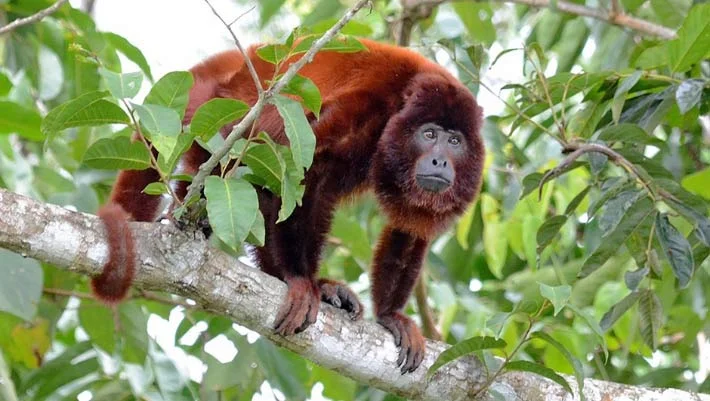
In an illuminating study published in the journal Communications Biology, researchers have unveiled two previously unrecognized species of howler monkeys, expanding our understanding of the genetic diversity present within the Amazon rainforest. Analyzing whole-genome data from 86 howler monkeys, they covered a significant portion of the diversity in the genus Alouatta, which encompasses 13 recognized species distinguished by varying sizes and coat colors—from rich reddish-brown and golden hues to nearly all-black pelages. The new findings indicate that much of the diversification among these primates occurred within the last million years, shedding light on the evolutionary dynamics at play within this critical region.
Among howler monkeys, renowned for their remarkable vocalizations that can resonate for several kilometers through dense forest, the hyoid bone plays a pivotal role. This enlarged structure acts as a resonating chamber, enabling these impressive vocalizations that aid in territory marking and social communication. Occupying the intricate upper canopies of tropical forests, howler monkeys have a predominantly folivorous diet, supplemented by fruits and occasional flowers, which reinforces their role as ecological agents of seed dispersal and forest health.
The research spearheaded by Romina Batista of the University of Salford elucidated crucial lineages and evolutionary distinctions within the species by constructing phylogenetic trees from thousands of conserved DNA segments. By correlating genetic data with morphological evidence in skulls and skins, the scientists unveiled two distinct species: Alouatta iroi, or the Pantepui red howler, and Alouatta matogrossensis, known as the Mato Grosso red howler. A. iroi is located within the northwestern Amazon, demarcated by the Rio Branco and the Rio Cauaburi, with the holotype specimen first collected in 2005 near the Aracá Tepui in Brazil. Dissimilar to its closest relative A. macconnelli, A. iroi features a dorsal coat that ranges from bright yellow to light golden-brown.
Conversely, A. matogrossensis inhabits southern Amazonia, specifically between the Madeira and Teles Pires rivers, displaying evolutionary traits that differentiate it from A. sara of Bolivia and Peru, such as notable variations in coat coloration and distinct skull and throat morphology. The revelations from this research emphasize the Amazon's status as a biodiversity hotspot, harboring species yet to be identified and cataloged.
Historically, the genus Alouatta has exhibited remarkable adaptability and a wide geographical spread, noted for its capacity to thrive across various ecological niches, from lowland rainforests to savanna-like ecosystems. The study posits the genus’ initial divergence approximately 3.5 million years ago, coinciding with the emergence of the Panama land bridge, while most diversification among Amazonian red howlers transpired over the last million years. The most recent speciation event that separated A. macconnelli from A. iroi is estimated to have unfolded around 700,000 years ago, largely influenced by the geographical barriers posed by significant rivers and transitional habitats.
The urgency of these findings cannot be overstated, as they arrive amid escalating threats from deforestation, habitat degradation, and climate change that jeopardize numerous species—often before they are even scientifically recognized. Professor Jean Boubli echoed this sentiment, emphasizing the necessity for conservation strategies aligned with the newfound understanding of species boundaries and evolutionary trajectories. The research ultimately serves as a clarion call for conservationists, highlighting vulnerable populations that warrant immediate protective measures in the Amazon Basin.
As we forge ahead, probing the depths of the Amazon’s biological secrets offers not only a glimpse into the intricate web of life sustained within its confines but also underscores an essential commitment to preserve this irreplaceable treasure for generations to come. The recent discoveries underscore the notion that the Amazon is not simply a backdrop for ecological inquiry; rather, it is a dynamic and critical component of our planet’s biodiversity, revealing complexities and evolutionary history that continue to unfold.