Field: Technology
Digital Resurrection: Reconstructing the Face of Humanity’s Oldest Known Ancestor
Published | Technical Staff
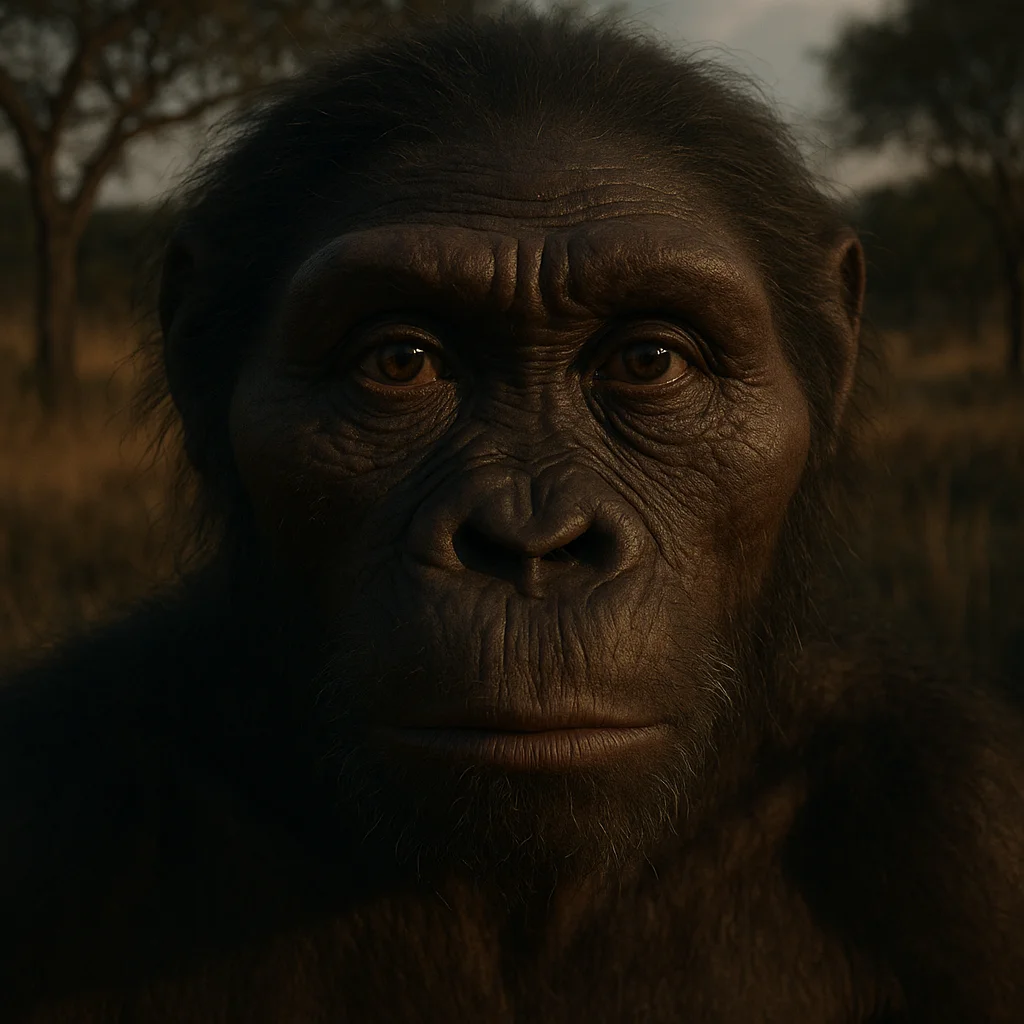
Visualization
In the summer of 1961, within the ochre sediments of Morocco’s Jebel Irhoud site, a mineral worker uncovered a partial skull. Its strikingly modern features defied easy classification, launching a six-decade scientific odyssey that would culminate in the latest triumph of digital paleoanthropology: the first evidence-driven facial approximation of our species’ earliest known member.
Originally, the fossil—designated Irhoud 1—was attributed to an African Neanderthal population, considered no more than 40,000 years old. However, as chronometric methods advanced, so did the recognized antiquity of these remains. Thermoluminescence of associated flint artifacts and uranium-series dating of the fossil matrix progressively rewound evolutionary clocks: first to 200,000 years, then 160,000 years, and ultimately, via sophisticated electronic spin resonance and thermoluminescence protocols published in 2017, to approximately 315,000 years before present. This reassessment reclassified Irhoud 1 and associated specimens (Irhoud 10, 11, 21, 22) as Homo sapiens—the oldest securely dated members of our species.
The task of digitally resurrecting the visage of this Middle Pleistocene forerunner fell to an international team led by Cicero Moraes and Dr. Johari Yap Abdullah. Their approach fused the rigor of forensic facial approximation with the transparency of open-source computational tools, leveraging 3D photogrammetry data publicly released by the Max Planck Institute for Evolutionary Anthropology in 2017. The digital composite was anchored by Irhoud 1, whose robust cranial vault and facial skeleton provided the volumetric and spatial reference frame. Anatomically compatible mandibular and craniofacial fragments from Irhoud 11, 10, 21, and 22 completed the structural mosaic—a strategy undergirded by the principle of population-level morphometric congruity within a single archaeological horizon.
High-resolution photogrammetry facilitated the construction of a digital 3D mesh, which was then deformed using constrained anatomical deformation. This hybrid methodology algorithmically matched a modern human CT scan—chosen for sex and anthropometric compatibility—to the ancient cranial template. The process effectively “mapped” contemporary soft tissue patterns onto the 315,000-year-old osteological framework, with tissue depth markers parameterized using the most extensive databases on African population means available in the craniofacial literature.
A fascinating corollary emerged from this process: volumetric measurement of the endocranial cavity. The modeled cranial capacity was calculated at 1,364 milliliters, placing Irhoud’s brain squarely within the lower-to-middle range of extant Homo sapiens (typically 1,200–1,600 mL), and mirroring earlier CT-based direct measurements of 1,375 mL and historical estimates ranging from 1,305 to 1,480 mL (Moraes et al., 2026; doi:10.3390/heritage9090369). This volumetric congruence underscores both the anatomical proximity and evolutionary implications of the Irhoud population at the threshold of modern cognitive capacity.
The researchers produced two visual outputs. The first is a high-fidelity, grayscale, hairless rendering, designed to convey the unembellished anatomical architecture of the face relative to the composite cranium. The second—a full-color, speculative recreation—layers in plausible skin pigmentation, facial pilosity, and a beard, informed not by direct evidence but by ethnographic modeling of archaic and recent African phenotypes. The artistic version remains explicitly non-diagnostic regarding pigmentation and hair, reflecting a synthesis of probability rather than a statement of fact.
Critically, this study deploys a methodological workflow whose transparency and reproducibility surpass many previous efforts in paleoanthropological facial reconstructions. Open-source platforms, rigorous morphometric integration, and clear separation between evidence-based and artistic interpretive choices exemplify new standards for digital heritage science. As noted by the authors, the effort bridges scientific precision with the imperatives of public engagement, rendering visible the face of a hominin whose genes—dispersed over continents and millennia—still resonate within us.
Published in Heritage on September 13, 2026 (Moraes et al., doi:10.3390/heritage9090369), this work affirms that the interface of paleoanthropology, digital morphology, and open-source computation has irrevocably altered the landscape of our ancestral self-recognition. The visage of Jebel Irhoud is both a revelation and a reminder—a 315,000-year-old reflection in the digital mirror, reconstructed with scientific rigor and a profound sense of shared origin.