Field: Technology
Detecting Dangerous “Mirror Life” Before It Exists
Published | Technical Staff
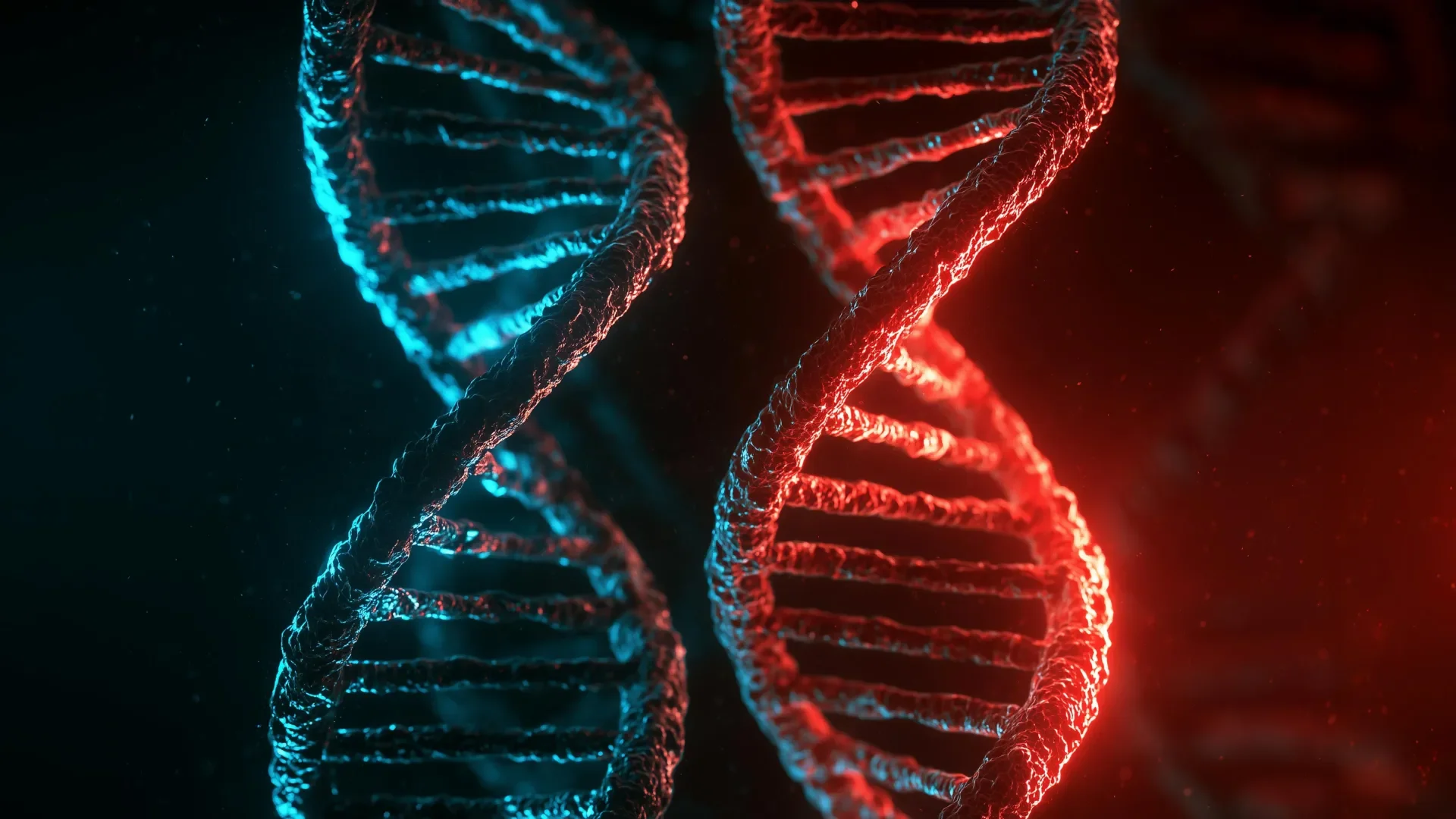
Visualization
In a pioneering venture that bridges theoretical biology and cutting-edge photonics, scientists have unveiled an innovative detection methodology aimed at identifying “mirror life” — a speculative form of life constructed from molecular building blocks that are the reversed versions of those found in conventional terrestrial organisms. The research, carried out by a collaborative team from the University of Strathclyde and Durham University, raises critical questions regarding the feasibility and implications of such entities, which could pose significant risks to ecological systems if artificially created.
At the crux of this inquiry lies chirality, a fundamental property that defines molecular handedness. Much like how one's left and right hands exhibit mirror-image symmetry yet cannot perfectly align, certain biological molecules exist in two enantiomeric forms — configurations that share identical atomic compositions but differ in three-dimensional spatial arrangements. These differences, though subtle, yield profound biological consequences; a molecule that functions therapeutically in one orientation may elicit toxicity in its mirror counterpart. As such, the prospect of organisms synthesized from these reversed molecules is laden with uncertainty and potential peril.
With the specter of mirror life regarded as a critical biosafety concern — although its actual emergence remains unlikely — the scientific community is galvanizing efforts to preemptively address this hypothetical threat. Increased attention from regulatory bodies and global institutions underscores the seriousness of the pursuit for detection mechanisms, setting the stage for this novel exploration into the realm of molecular chiral identification.
The cornerstone of the proposed detection tool is circularly polarized luminescence (CPL), a phenomenon adept at discerning the chiral properties of molecules. This optical technology, analogous to the polarized light utilized in 3D cinematic experiences, allows for intricate analysis of the differential light emission from chiral molecules. Specifically, when illuminated with CPL, molecules can emit light that either rotates clockwise or counterclockwise, revealing their handedness — a spectral fingerprint that could differentiate between conventional life forms and their mirror counterparts.
Dr. Lewis MacKenzie, leading the project within the Department of Pure and Applied Chemistry at the University of Strathclyde, articulated the rationale behind this forward-thinking methodology: “While we do not anticipate mirror life appearing imminently, the repercussions of such an emergence could be dire. Developing detection strategies ahead of time is both prudent and necessary.” This foresight emerges from previous scholarly endeavors into CPL technologies, culminating in a robust methodology that combines theoretical significance with practical applications.
To operationalize their detection framework, the researchers propose utilizing a suite of specialized fluorescent probes tailored to bind specific cellular features. Upon attachment, these probes would yield characteristic CPL signals that signify the presence or absence of molecular handedness associated with earthly biology versus its mirror entities. Fundamental to the efficacy of this strategy is a multifaceted approach; reliance on a singular probe could generate inaccurate signals, indicating the necessity of employing multiple probes that target various cellular structures to ensure the integrity of the results.
The ability to test and refine this CPL-based detection methodology using natural biological samples represents a remarkable advantage, circumventing the ethical and logistical complications of generating actual mirror organisms for experimental purposes. As research accelerates, the prospect of translating this technique into versatile analytical equipment emerges, significantly broadening its applicability across diverse scientific disciplines.
Professor Robert Pal of Durham University reinforces the adaptable nature of the proposed assay, noting the longstanding application of CPL technology in laboratory instruments such as microscopes, biological plate readers, and advanced camera systems. “This approach offers an exciting avenue for analysis in varied environments, catering to specific user requirements.”
While it remains imperative to thoroughly investigate and validate the proposed detection strategy, this newfound initiative serves as a compelling reminder of the intersection between molecular biology, optical physics, and the ethical considerations of scientific advancement. As researchers continue to explore the boundaries of life and its myriad forms, the specter of mirror life invites rigorous scrutiny and underscores the necessity for proactive measures in biosafety and biological research.