Field: Technology
Crows can make decisions twice as fast as humans, scientists discover
Published | Technical Staff
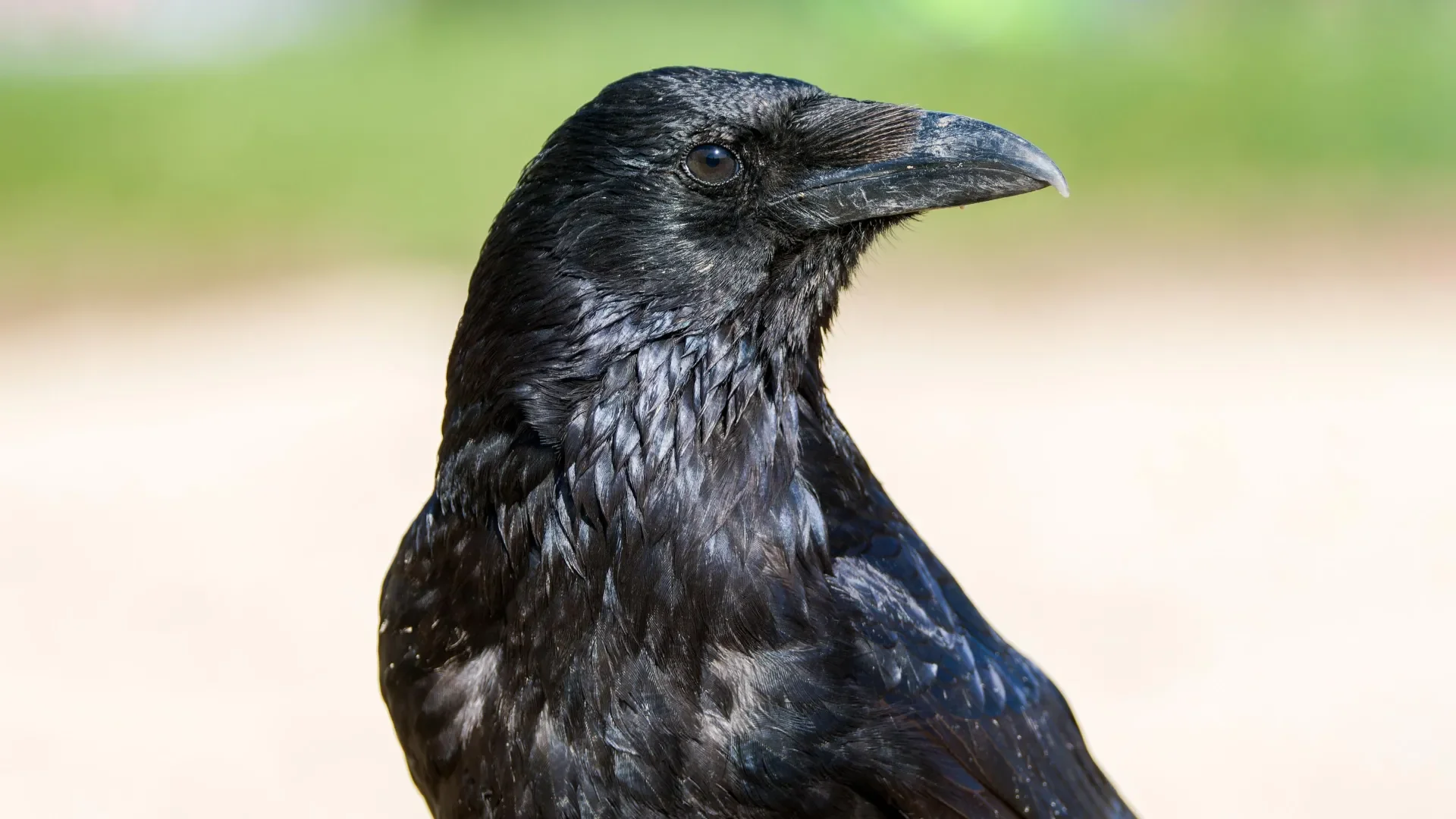
Visualization
In an extraordinary revelation from the University of Tübingen, researchers have uncovered that crows possess a remarkable cognitive prowess, executing visual decisions at a speed twice that of human beings and even non-human primates. This groundbreaking study animates the narrative of avian intelligence, spotlighting the efficiency and rapidity of neural processing within the relatively miniature architecture of a crow's brain.
In meticulously designed experiments, two carrion crows were subjected to a task involving a series of electronically projected moving dots on a touchscreen interface. The task required the birds to discern the predominant direction of the motion—left or right—by pecking a target that correlated with their decision. Averaging a mere 235 milliseconds for a response, the crows demonstrated not only astounding swiftness but also a striking accuracy, frequently nearing the 100 percent mark when the directional signals were unequivocal. Even when faced with ambiguous patterns, their choices surpassed random chance, sketching a portrait of cognitive reliability.
To dissect the mechanisms behind this impressive capability, researchers led by Philipp Schmidbauer and Professor Andreas Nieder turned their focus to the nidopallium caudolaterale, a region pivotal for decision-making comparable to the human prefrontal cortex. Real-time recordings of individual neurons revealed a captivating timeline: within 70 milliseconds of exposure to the visual stimuli, neuronal responses began to diverge, signaling the crows' burgeoning ability to process the conflicting motion inputs. The nuanced variations in neuronal activity not only reflected the clarity of the visual cues but also predicted the direction the birds would elect.
This discovery serves as a window into the neural architecture of crows, marking a profound analogy to the human decision-making process despite the considerable differences in brain structure. While mammals boast a layered cerebral cortex, the avian brain operates under a distinctly different organizational schema, yet seems to adhere to similar dynamic principles in processing evidence and decision-making. "These findings align neuronal dynamics in avian and primate brains, revealing a shared cognitive blueprint," remarks Nieder.
The evolutionary underpinnings of such accelerated decision-making capabilities may be traced to the fundamental survival demands faced by birds. The requirement for rapid interpretative skills in navigating complex aerial environments underlines the necessity for quick, precise reactions, particularly when foraging or avoiding predators. The crows' adeptness at discerning visual stimuli must be viewed as an evolutionary advantage, finely tuning their instinctual responses to environmental cues.
Despite this insight, the precise biological mechanisms fueling the crows' superior processing speed remain an enigma. This opens multiple avenues for future research—investigating the intricacies of avian cognition could further illuminate not only the unique cerebral adaptations of birds, but also the broader implications for our understanding of intelligence across species.
This revealing work, published in the journal Science, harmonizes the complexities of avian and primate neural processing, underscoring a profound intelligence that is far too frequently underestimated in non-human species. As the boundaries of cognitive science continue to expand, the cognitive acumen of crows stands as a testament to the unexpected depths of avian intellect.