Field: Technology
Could Common Cooking-Oil Fat Be Fueling Psoriasis Itch?
Published | Technical Staff
Visualization
In a groundbreaking study, scientists have elucidated a fascinating connection between dietary lipids and the distressing itch associated with psoriasis, a chronic autoimmune condition affecting millions worldwide. A recent investigation led by Professor Santosh Mishra and a team of researchers at North Carolina State University's College of Veterinary Medicine provides compelling evidence that a byproduct of linoleic acid—specifically EKODE, or 9-keto-12,13-epoxy octadecenoic acid—interacts with the G protein-coupled receptor Gpr35 (GPR35) on sensory neurons, revealing a novel metabolic-sensory axis linked to itch and inflammation.
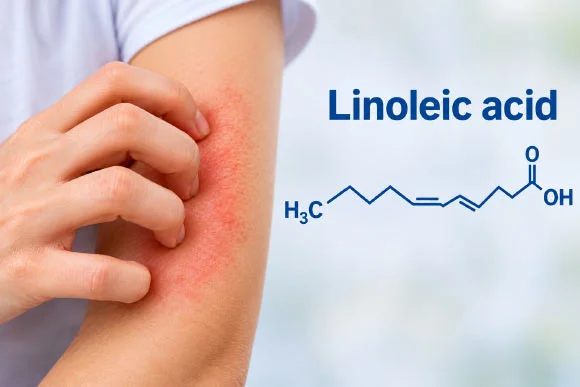
Linoleic acid, an essential fatty acid predominantly present in a myriad of foodstuffs from nuts to vegetable oils, is integral to human nutrition in modest quantities. However, the health implications of excessive linoleic acid intake have been previously documented, correlating with chronic ailments such as cardiovascular disease and diabetes. Given the prominence of linoleic acid in Western diets, and its association with various dermatological and inflammatory conditions, the research team aimed to probe the relationship between this fatty acid and the perpetuation of itch signals within the body.
In their prior investigations, the researchers had established that EKODE levels are significantly elevated in psoriasis lesions compared to unaffected skin, and that its injection could incite scratching behavior in murine models. The question at hand was how the nervous system detects this lipid species. The newly published findings in Communications Biology reveal that EKODE preferentially activates GPR35, leading to intracellular calcium signaling indicative of neuronal activation in approximately 9% of cultured mouse sensory neurons. Notably, the ectopic activation diminished when GPR35 was inhibited pharmacologically or genetically ablated, pinpointing the receptor as a critical mediator of these metabolic signals.
To further explore GPR35’s role in itch modulation, the researchers employed a mouse model of psoriasis induced by imiquimod application. Mice genetically modified to lack GPR35 in specific pain and itch-sensing neuronal populations exhibited significantly reduced scratching behavior and dermatological thickening compared to their wild-type counterparts. In contrast, they retained sensitivity to histamine, reinforcing the notion that GPR35 represents a distinct regulatory pathway for itch beyond traditional histaminergic mediators.
Additional work delineated that a neuropeptide known as Nppb (neuropeptide B) operates downstream of GPR35, suggesting an intricate signaling network orchestrating the itch sensation. Knockout mice lacking Nppb demonstrated an attenuation in scratching and reduced skin thickness in the psoriatic model, implicating the Nppb-GPR35 interface as pivotal in the pathophysiology of itch. Furthermore, these knockout mice exhibited delayed withdrawal responses to pro-inflammatory thermal stimuli, while remaining unaffected by cold or tactile stimuli, which underscores the specificity of GPR35's role in mediating heat hypersensitivity alongside itch.
The work is further enhanced by the demonstration of GPR35's presence in human sensory neurons, as confirmed through biopsies from two healthy individuals, wherein every Nppb-expressing neuron simultaneously expressed GPR35. This finding holds significance for therapeutic implications, as Professor Mishra posits that targeting GPR35 could offer dual benefits for conditions characterized by itch, regardless of their etiology—autoimmune disorders like psoriasis and allergic reactions—effectively positioning this receptor as a promising avenue for future pharmacological intervention.
Through these intricate explorations of metabolic pathways and sensory circuits, this pioneering research fundamentally advances our understanding of the intersection between diet, inflammation, and sensory perception, ultimately paving the way for more effective therapeutic strategies against chronic itch associated with psoriasis and potentially other dermatologic conditions linked to dietary fats.