Field: Technology
Comets May Have Been Unlikely to Deliver Life’s Ingredients to Early Earth
Published | Technical Staff
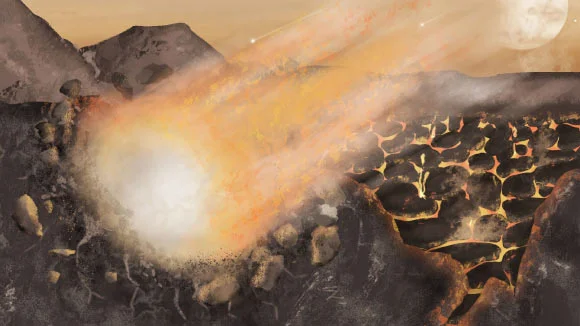
Visualization
In a significant shift from traditional hypotheses regarding the emergence of life on Earth, a groundbreaking study from the University of Cambridge presents compelling evidence that comets, the icy celestial bodies long perceived as harbingers of prebiotic compounds, may not have delivered the requisite ingredients for life in any meaningful concentration. The insights from this research, led by Dr. Richard Anslow and his colleagues at the Institute of Astronomy, challenge the established narrative that these space snowballs were pivotal in seeding Earth with essential carbon and nitrogen-bearing molecules.
Historically, the concept of comets as a significant source of the fundamental components that foster life has evoked a sense of romantic optimism within the scientific community. Dr. Anslow posits that previous frameworks positioned comets as almost metaphorical "get out of jail free cards," indispensable carriers of life's molecular precursors. However, the study's findings suggest that the delivery of such compounds, particularly hydrogen cyanide (HCN)—a crucial facilitator in various prebiotic synthesis pathways—is highly improbable.
Through meticulous computer simulations, the team scrutinized the capacity of comets impacting early Earth to provide HCN in sufficient quantities conducive to prebiotic chemistry. The relevance of HCN is underscored by laboratory evidence evidencing its potential in synthesizing sugars, lipids, and other essential components of genetic material. Given that comets inherently carry hydrogen cyanide along with a suite of organic compounds, they appeared, at first glance, to be logical candidates for delivering the building blocks of life.
Nonetheless, the physical realities of planetary impact complicate this scenario. The researchers established that even minor comets have a propensity to disintegrate upon atmospheric entry. Even if fragments could withstand the descent, the intense heat generated from high-velocity impacts is catastrophic, likely obliterating any fragile organic molecules that may have survived the atmospheric gauntlet.
Employing a statistical model that encompassed 100,000 simulated impact histories, the researchers discovered that a staggering 54% of the simulated scenarios yielded no impacts capable of delivering hydrogen cyanide in concentrations deemed conducive to fostering life's origins. This infrequency is encapsulated in a stunning statistical claim by Dr. Anslow: "It would really have to be a one-in-a-million occurrence." He highlights the necessity of not only an impact with optimal speed and angle but also favorable circumstances for subsequent biological chemistry to commence—an intricate interplay of events that casts doubt on the viability of comets as reliable sources of life's building blocks.
Intriguingly, the study also included comparative analyses of comet impacts across Earth, Mars, and Venus, revealing that Mars's conditions may have allowed for a greater incidence of successful deliveries of concentrated HCN. The Red Planet's diminished gravitational influence and thinner atmosphere permit a more hospitable environment for cometary impacts that could preserve chemical compounds intact. Such findings suggest that, under the model's parameters, Mars might have experienced a significantly greater number of impactful cometary encounters than either Earth or Venus.
However, Dr. Anslow is careful to state that such a framework does not conclusively ascertain that life could have arisen on Mars, but rather indicates a potential for greater chemical delivery efficiency than on Earth. "This is not to say it definitely happened on Mars, of course, but it suggests it would be unlikely if it happened on Earth and didn’t happen on Mars. Or the other, perhaps more likely, alternative, is that it didn’t happen on either planet."
As scientists continue to sift through the multifaceted complexities surrounding the origin of life, this study, published in the journal Scientific Reports, serves as a sober reminder of the realities faced in the evolutionary narrative of our planet. By refocusing attention on the improbabilities surrounding cometary contributions to prebiotic chemistry, this research invites further inquiry into alternative pathways that may have facilitated the emergence of life on Earth and potentially, beyond.