Field: Technology
Chinese scientists unearth D-rex: a colossal fungus with roots tracing back 65 million years
Published | Technical Staff
Visualization
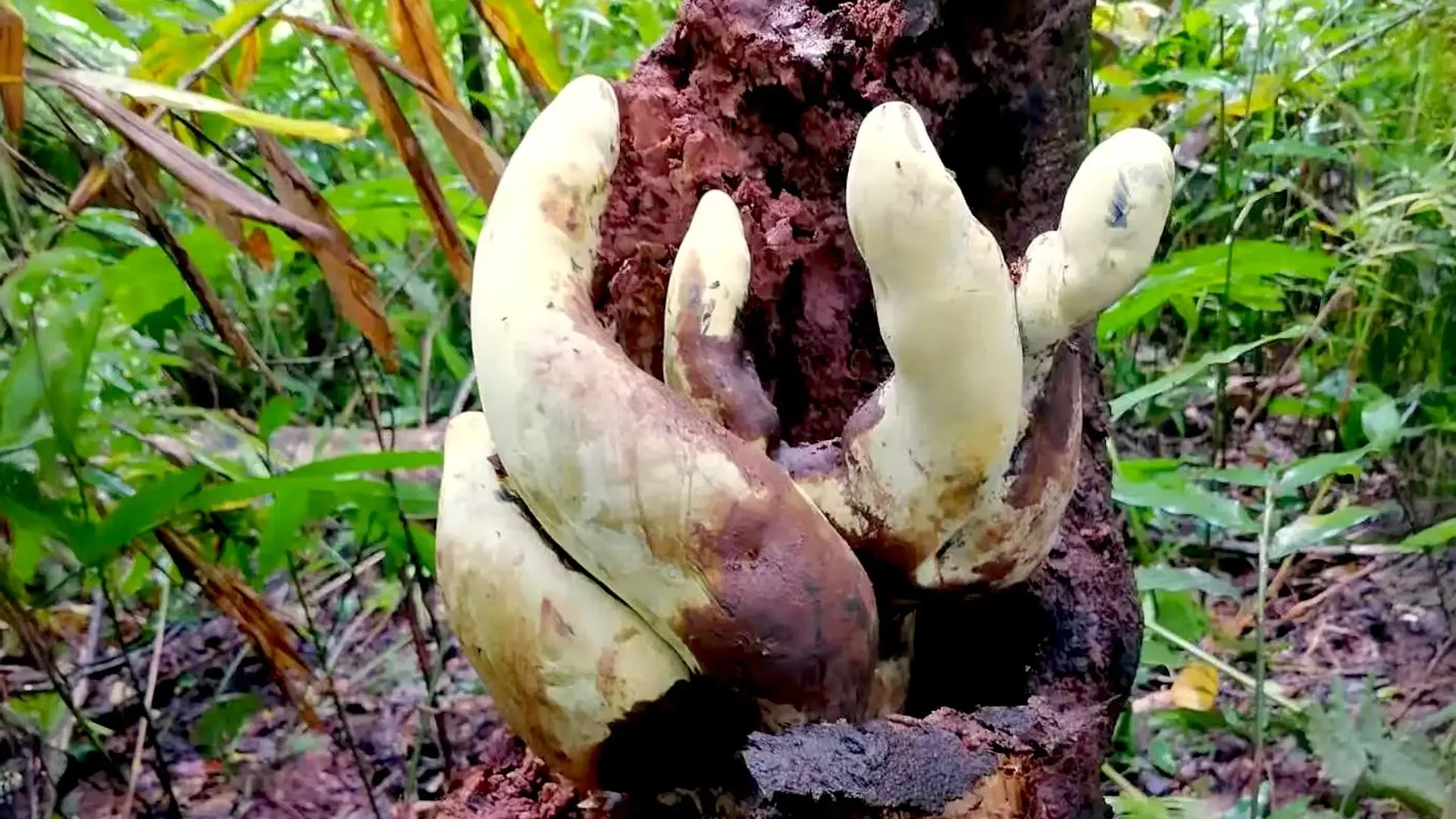
In a groundbreaking discovery that challenges previous paradigms about fungal growth, researchers at the Kunming Institute of Botany have identified a remarkable species of fungus in the diverse ecological tapestry of Yunnan, China. Dubbed Dianjunus rex, or more colloquially referred to as “D-rex,” this organism possesses the ability to reach heights of 50 cm (approximately 20 inches) and can weigh up to 2.2 kg (4.9 pounds), setting a record for the largest known fruiting body among the ascomycete fungi. Its evolutionary lineage indicates that it emerged shortly after the mass extinction event that eradicated the non-avian dinosaurs, a mere 65 million years ago, thus intertwining its history with one of Earth's most significant geological transformations.
The journey leading to the identification of D-rex began with extensive field surveys across varied ecological environments, particularly focusing on temperate coniferous forests and tropical rainforests in the region. Researchers meticulously observed the interaction of the fungus with its woody hosts, specifically Chinese cork oak trees, where the distinctive whitish reproductive structures known as stromata sprouted from the rhizosphere surrounding the plant roots. The rhizosphere serves as a critical zone for nutrient exchange, thus underscoring the symbiotic relationships that fungi engage in with vascular plants.
What distinguishes D-rex from its fungal counterparts is not only its size but also its evolutionary significance as a representative of a newly established family, Dianjunaceae, within the order Xylariales. The team employed a combination of morphological and molecular analysis, utilizing genomic sequencing to parse through the intricate spatial and functional characteristics of this giant fungus. Moreover, the researchers cultivated spores under carefully controlled laboratory conditions to elucidate its phenotypic attributes, paving the way for a deeper understanding of its biological mechanisms.
The genetic dissection revealed that D-rex warranted not just a novel species designation but also necessitated the creation of a new genus, reflecting its significant divergence from existing taxa. Phylogenetic analysis indicated that its closest relative is Graphostroma platystoma, which is found growing on decaying hardwood throughout the Northern Hemisphere. This positioning within the Xylariales highlights the unique ecological niche that D-rex occupies, which likely involves complex biochemical interactions with its environment.
Most noteworthy is the identification of D-rex’s origins using a molecular clock technique, which allowed researchers to extrapolate the timing of its evolutionary lineage. This analysis indicated that the Dianjunaceae family emerged shortly after the Cretaceous-Paleogene extinction event, coinciding with an ecological upheaval that drastically reconfigured global plant and fungal diversity. Such timing posits an intriguing hypothesis that the dramatic shifts in environmental conditions, particularly the abundance of decomposing organic matter, may have created fertile ground for the diversification of fungi that adapted to thrive in decomposing ecosystems.
One of the principal enigmas accompanying the discovery of D-rex is the provenance of its astonishing size. Past research indicated that ascomycete fruiting bodies rarely exceeded 30 cm in height; thus, the emergence of a specimen that reaches 50 cm raises important questions about selective pressures shaping fungal development. One proposed mechanism for its prolific growth relates to the evolutionary advantage conferred by an elevated reproductive structure, allowing D-rex to better harness wind currents for spore distribution across dense vegetation.
However, the trade-off of constructing such an energetically costly structure cannot be overlooked. The decision to invest in significant biomass for reproductive purposes suggests that D-rex likely evolved in highly competitive environments where maximizing spore dispersal presented a clear adaptive benefit. Such resource allocation strategies reveal the delicate balance fungi maintain between growth demands and reproductive success.
The implications of this discovery extend well beyond the astonishing specifications of D-rex. It casts a spotlight on the vast fungal diversity that remains underexplored within China's subtropical forests. Despite the richness of ecological interactions and habitat variety inherent to this region, fungi have traditionally been marginalized in scientific research, which has primarily fixated on economically viable species. The ongoing exploration into these ecosystems suggests a treasure trove of undiscovered forms and evolutionary histories await those willing to delve deeper into the shadows of Yunnan’s forests.
As the researchers continue to catalog and analyze fungal specimens, they anticipate that further findings will not only augment our understanding of fungal biodiversity but may also provide insights into the ecological responses to historical mass extinction events. D-rex stands not merely as a scientific curiosity but as a testament to the resilience and adaptive potential of life forms that thrive in the wake of catastrophic change, urging us to reconsider the narratives that shape our understanding of the natural world.