Field: Technology
Chemists Unravel a Six-Decade Quest to Isolate Stable Oxoboranes
Published | Technical Staff
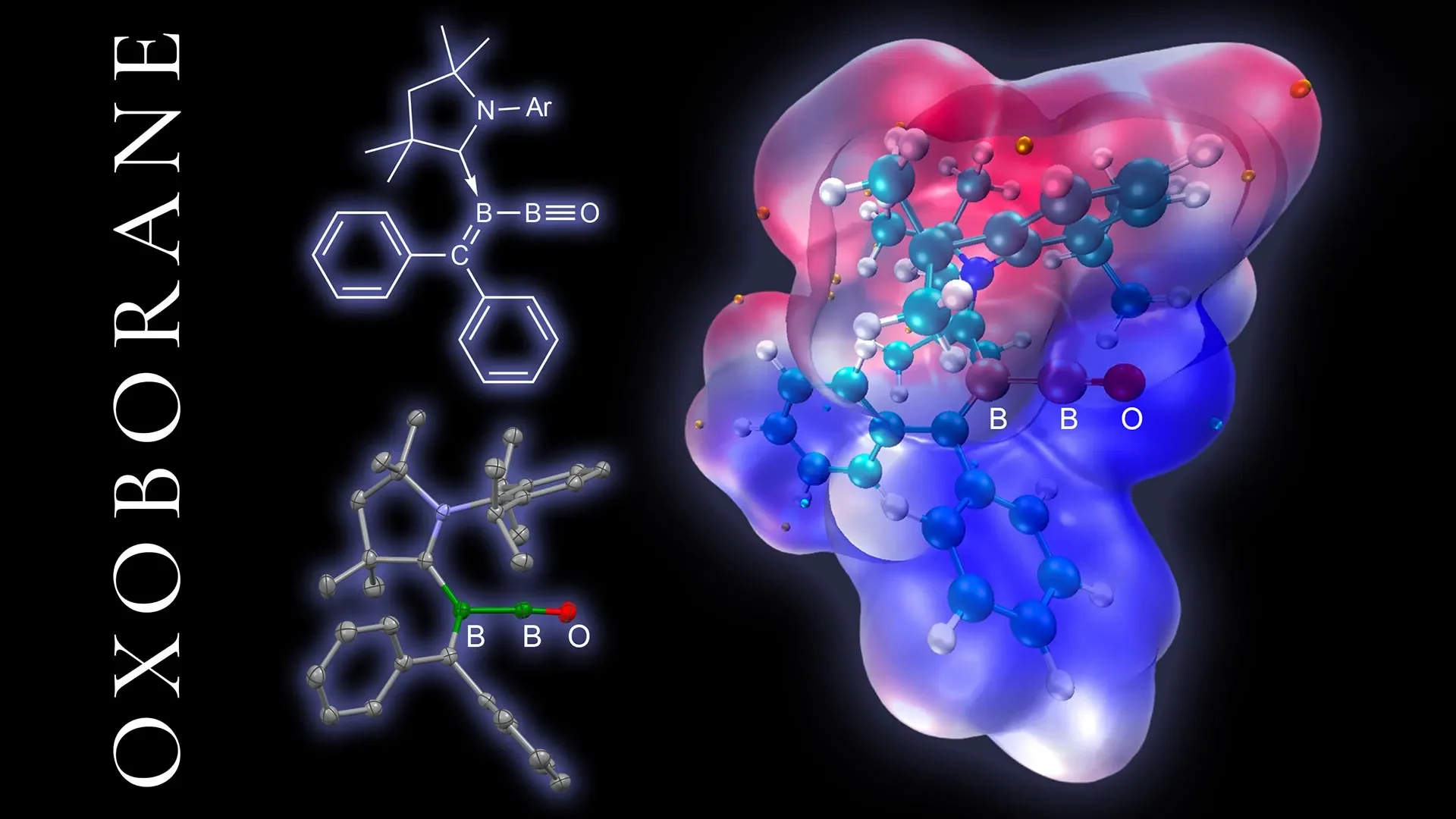
Visualization
In a remarkable turn of events, a persistent conundrum that has plagued chemists for over sixty years has finally met with resolution, marking a pivotal milestone in the field of molecular chemistry. Researchers at the University of Würzburg, Germany, have successfully managed to isolate stable configurations of oxoboranes—complex molecules defined by a triple bond between boron and oxygen. This achievement, which emerged from serendipitous experimentation rather than the anticipated outcomes, not only sheds light on the enigmatic behavior of boron compounds but could also herald a new era of exotic molecular architectures.
Boron, with its unique electronic structure, occupies a fascinating position within the periodic table, particularly in the realm of p-block elements. Its proclivity for forming unconventional bonds has spurred researchers’ interests for decades, yet the element's tendency to form triple bonds has remained exceptionally rare. Professor Holger Braunschweig, who spearheaded the groundbreaking work, has dedicated more than 15 years to unraveling the complexities of boron chemistry. His previous notable triumphs include orchestrating the formation of the first diboratriple bond and realizing the elusive triply bonded neutral molecule between boron and carbon. However, the enigmatic oxoboranes had remained stubbornly out of reach, defying the efforts of chemists globally since the early 1960s.
Theoretical groundwork had suggested that oxoboranes were too unstable for isolation under conventional laboratory conditions. While indirect evidence hinted at their existence, the challenge lay in stabilizing these compounds long enough to permit further investigation. Attempts to synthesize them had garnered some success, albeit under extreme conditions, often resulting in transient intermediates rather than stable end products.
In an unexpected twist during their research, PhD candidates Lukas Lubczyk and Christian Markl became instrumental to this breakthrough. Tasked with investigating reactions between diboracumulene—a compound prized for its minimalistic design and reactive potential—and various ketones, commonly utilized in organic synthesis, the two researchers stumbled upon an astonishing phenomenon. Instead of producing the anticipated reaction products, their investigations yielded distinctive orange or yellow solids, which upon deeper examination revealed themselves to be oxoboranes.
"What we achieved defied the conventional expectations; we anticipated a completely different chemical landscape based on prior knowledge," noted Lubczyk. The striking formation of oxoboranes as primary products, contrary to what had been thought probable, underscored the potential the researchers had unearthed with this reaction scheme. Braunschweig articulated the astonishment resonating within the scientific community, stating, "Most scholars in the field had reluctantly accepted that isolation of oxoboranes was an unattainable dream. To see them form so readily was truly staggering."
The methodology employed was characterized by its elegance and simplicity. By combining diboracumulene with common ketones, the research team uncovered a reliable synthetic route that produced not one but multiple oxoborane derivatives. The versatility of this method opens doors wide enough to suggest that other complex molecules once deemed impossible may also be within reach.
Through meticulous analysis and exploration of these nascent compounds, the team has successfully synthesized at least three distinct species of oxoboranes. This not only suggests the scalability of the technique but also the likelihood that it may be adapted to explore a range of chemical species within the periodic table, expanding the boundaries of molecular chemistry.
Furthermore, this endeavor was bolstered by consequential international collaboration, with computational inputs from Professor Ashwini K. Phukan’s group at Tezpur University in India, contributing to a holistic understanding of the reaction dynamics at play. The fruits of this partnership, aided by funding from esteemed entities such as the German Research Foundation and the Department of Science & Technology of India, illustrate the collaborative spirit that pervades contemporary scientific inquiry.
In essence, these discoveries illuminate a path forged by perseverance, ingenuity, and the chance realizations that accompany carefully measured experimentation. As the research community eagerly anticipates further implications of oxoborane chemistry, one thing stands clear: the realm of possible compounds has expanded, and with it comes the promise of new explorations into molecular structures that may reshape our understanding of chemical bonding. Thus, the accidental synthesis of oxoboranes not only provides closure to a decades-long pursuit but ignites the spark for future breakthroughs in synthetic chemistry.