Field: Technology
Century after Its Discovery, Taung Child Still Puzzles Paleoanthropologists
Published | Technical Staff
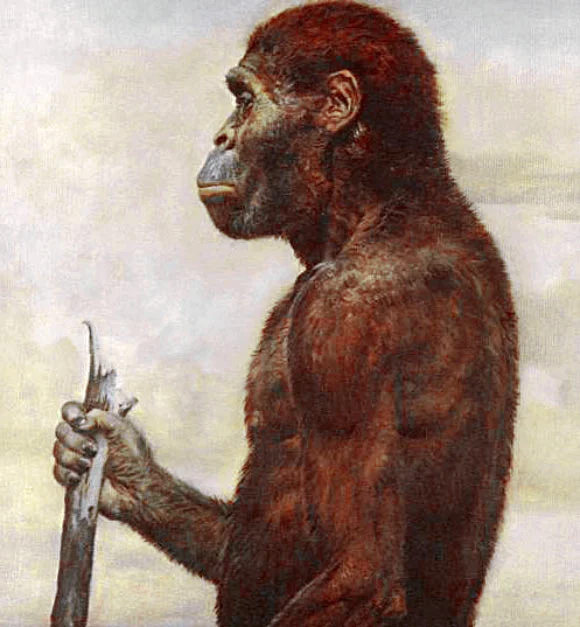
Visualization
In the realm of paleoanthropology, the Taung Child—an enigmatic fossil skull unearthed from the limestone quarry of Buxton Limeworks in South Africa—continues to challenge longstanding assumptions about human evolution nearly one hundred years after its discovery. This fossil, representing the only unequivocal specimen of Australopithecus africanus, stands as a pivotal reference point in understanding the complexity of hominin ancestry. Newly published research led by Professor Gabriele Macho, affiliated with Vrije Universiteit Brussel and University College London, casts further light on this ancient fragment, dating it to approximately 3 million years ago and offering insights into the climatic and ecological variability that may have influenced early hominin diversity.
The narrative of the Taung Child began with Australian anatomist and anthropologist Raymond Dart, who, in 1925, described this small cranium, originally believed to belong to a baby. However, subsequent research, including Macho's groundbreaking study, undermines the previous notion that the Taung Child was merely representative of a singular type of fossil, thereby reframing the human phylogenetic landscape as a complex and chaotic bush rather than a straightforward tree. Macho articulates this perspective succinctly: "The human family tree wasn’t a neat, straight trunk—it was a chaotic, tangled bush driven by climate shifts."
Central to this revelation is the fossil's dating methodology. Previous estimations of the Taung Child's age spanned a broad spectrum, from 942,000 to 3.03 million years. Macho's team employed advanced uranium-lead dating techniques to analyze flowstone that enveloped the fossil-bearing deposit, establishing a minimum age of 2.962 million years. This finding, coupled with prior magnetic evidence asserting a maximum age, delineates a timeframe for the Taung Child between 2.96 and 3.03 million years ago, a significant refinement that underscores the complexity of South African hominin evolution.
The research team also undertook a comparative analysis of the Taung Child's dental morphology and neurodevelopment vis-à-vis other contemporaneous fossils. Initial observations surrounding tooth-formation patterns indicated a potential deceleration in development after the emergence of the first molars, akin to patterns observed in modern humans. This developmental insight suggests the inception of a 'childhood' phase—an intriguing indication that the origins of extended pediatric growth may date back to hominins of this era.
In drawing inferences from the variability observed in hominin fossils within the Sterkfontein cave system, the research posits a remarkable diversity among early hominin populations. The morphology of the boundary between the Taung Child's dental enamel and dentine intriguingly aligns closely with that of A. africanus as well as robust relatives like Paranthropus robustus, reinforcing the hypothesis of inter-species diversity within the region.
The climate was not merely a backdrop to these fossils’ extant environments but may have actively influenced the evolution and migration of early hominins. Ocean sediment core records reveal that southeastern Africa experienced considerable climatic shifts between 4 and 2.5 million years ago, a period marked by greater variability compared to the more stable conditions that followed. Pollen analyses from sediment samples near the Taung flowstone suggest a wetter, more forested ecological landscape than the present-day semi-arid savanna, with indications of the presence of Podocarpus, a tree considerably displaced from its current range.
In conclusion, Macho and his colleagues propose that such climatic fluctuations likely prompted early hominin populations to adapt their migrations and behaviors along regional biogeographic boundaries, particularly near the Limpopo River. These adaptive strategies could have facilitated genetic drift and hybridization among disparate hominin groups.
As the Taung Child enters its second century, it remains an invaluable specimen, continuously reshaping the scientific community's understanding of the multifaceted pathways through which early hominins navigated their evolution, setting the stage for the eventual emergence of our own genus, Homo. The findings elucidated in the study published in npj Palaeoecosystems underscore the enduring legacy of this remarkable fossil, prompting further investigation into the intricate narrative of human ancestry. Indeed, the Taung Child serves as a poignant reminder of the unpredictable and impactful forces that have sculpted the lineage of humanity.