Field: Technology
Astronauts just gave the International Space Station a powerful upgrade
Published | Technical Staff
Visualization
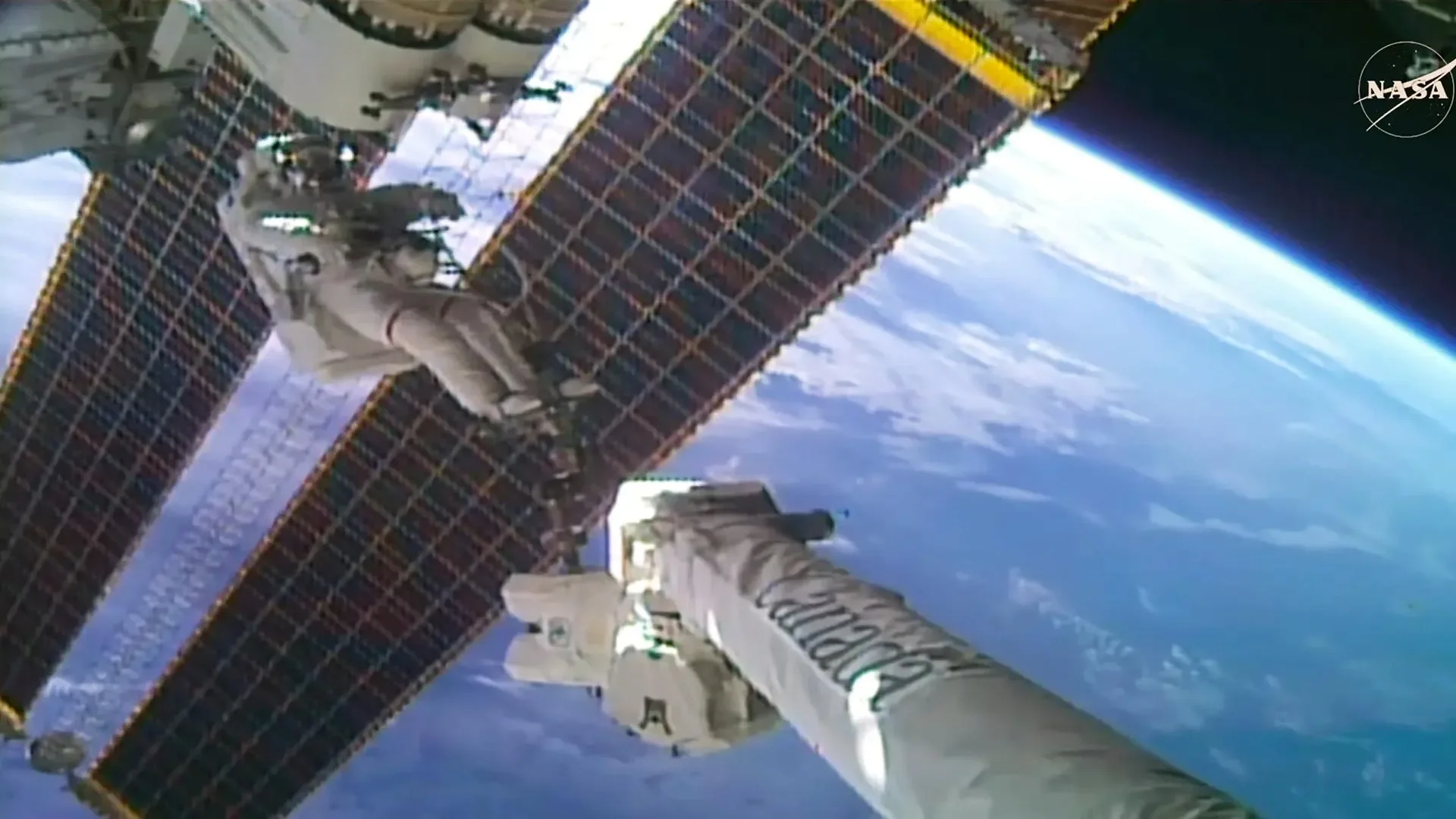
In a significant advancement for the International Space Station (ISS), astronauts successfully orchestrated a prolonged spacewalk that lasted 7 hours and 11 minutes, culminating in the installation of a state-of-the-art solar array. Conducted aboard the orbiting laboratory at an altitude of approximately 260 miles, this mission marks a pivotal step toward enhancing the spacecraft’s power capacity, which is crucial for future operations, including its planned controlled deorbit.
NASA astronaut Anil Menon and Canadian Space Agency astronaut Joshua Kutryk embarked on their mission with precision and determination. The duo commenced their activities at 3:08 p.m. EDT, acutely focused on deploying an International Space Station Roll-Out Solar Array (IROSA) within the station's existing 2A electrical power channel. This installation represents the seventh such array added to the ISS and is a critical component in bolstering the station's electrical infrastructure.
As calculated, the addition of these solar arrays is projected to augment the station’s electrical output by as much as 30%. Following the installation of the final array, which will occur in a subsequent spacewalk on November 5, the total generating capacity of the ISS’s solar power system will escalate from the current 160 kilowatts to an impressive 215 kilowatts. This expanded capacity is not merely a quantitative enhancement; it directly supports various essential operations aboard, ensuring that the ISS can sustain life-support systems, scientific research, and equipment functionality as it approaches the end of its operational lifespan.
During the course of their extravehicular activities (EVAs)—which were part of U.S. spacewalk 100—Menon and Kutryk not only installed the new solar array but also executed several preparatory tasks in anticipation of the upcoming installation of the eighth and final solar array on the 3B power channel. The meticulous planning involved in this mission reflects the complexities of operations within the realm of low Earth orbit. NASA is scheduled to provide live coverage of this highly anticipated second spacewalk, a demonstration of commitment to transparency and public engagement in space exploration endeavors.
Each element of this operation underscores the ISS's importance as a microgravity research environment and the technological vanguard of human space exploration. The space station has been the cornerstone of collaborative space science since its inception, serving as a platform for numerous international efforts in astrophysics, biology, and Earth sciences.
Menon's participation in this mission distinguished it not only as his fourth spacewalk but also marked a significant milestone for Kutryk, who achieved his inaugural EVA. Over the lifetime of the ISS, a commendable total of 285 spacewalks have been conducted, each contributing to the assembly, maintenance, and enhancement of the station's complex systems.
As the ISS evolves, the anticipated upgrades herald a new era for the station, poised to provide enhanced capabilities that will facilitate extended missions, support scientific endeavors, and ultimately contribute to the future of human expeditions beyond low Earth orbit. The convergence of human ingenuity and technology continues to shape the possibilities of space exploration, firmly establishing the International Space Station as a pivotal player in the quest for knowledge and understanding of our universe.