Field: Technology
Arctic sea ice loss could be far worse than predicted
Published | Technical Staff
Visualization
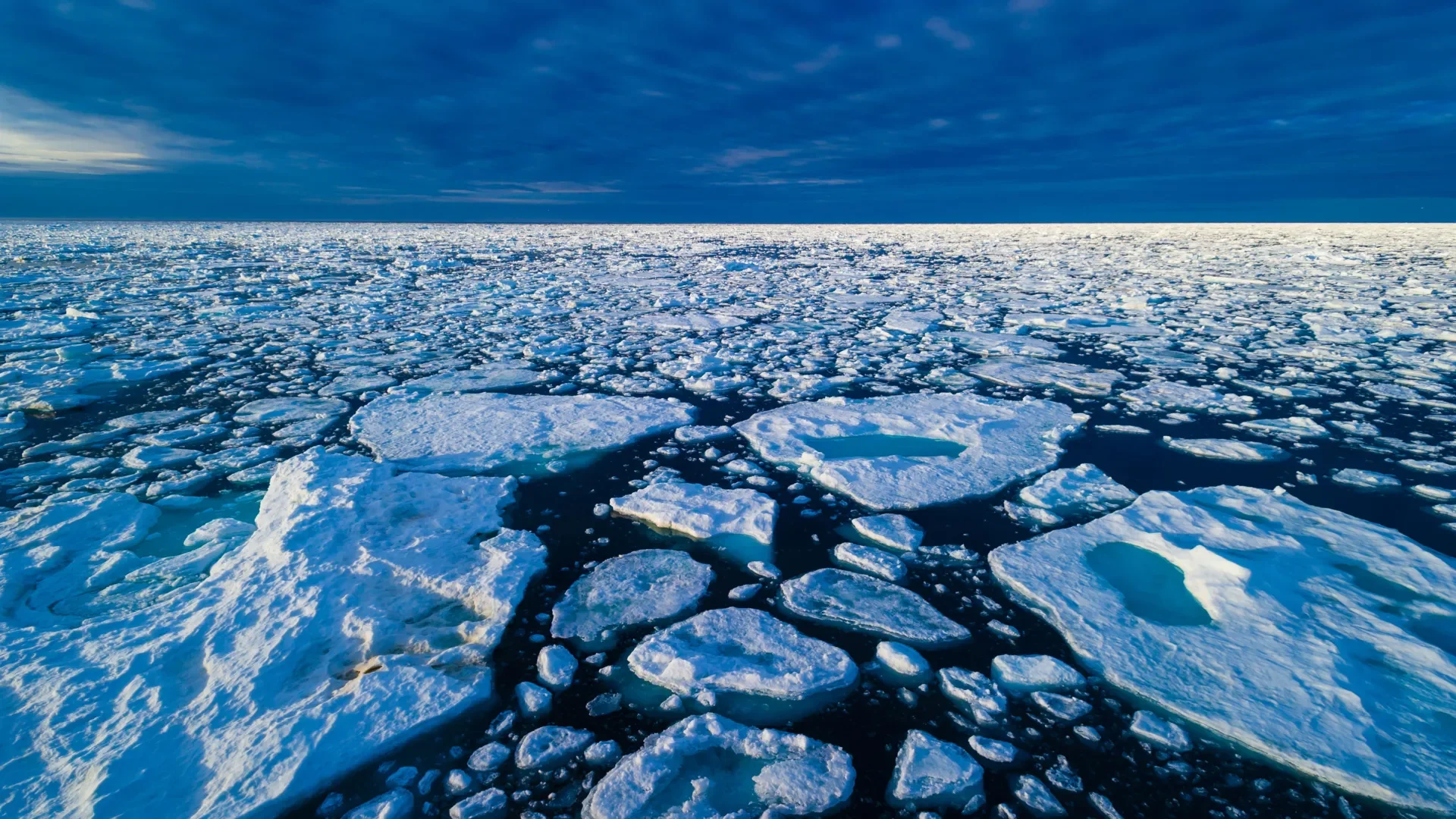
In a groundbreaking study published in Nature Geoscience, researchers at the University of Cambridge, in collaboration with Mexico's Centro de Investigación en Matematicas (CIMAT), unveil a chilling forecast for Arctic winter sea ice that may fade significantly faster than previously estimated. By meticulously examining ancient climate evidence from 6,000 years ago, they suggest a potential loss of approximately one million square kilometers more winter sea ice than earlier models had indicated.
The implications of these findings extend beyond the Arctic Circle, as the dynamics of winter sea ice influence global weather patterns in profound ways. The traditional focus on summer sea ice retreat has overshadowed the equally critical role winter ice plays in regulating heat and moisture exchange between the ocean and atmosphere. Declining winter ice cover has been linked to harsher winters and increased precipitation in regions as far-flung as the United Kingdom, northern Europe, and North America.
Recent data reveals an alarming trend: as of March 2025, winter sea ice reached its lowest maximum extent on record, a benchmark that was tragically matched again in March 2026. This ongoing decline motivated scientists to probe historical ice conditions more deeply through the lens of paleoclimate records, particularly sediment cores that bear witness to a warmer Arctic epoch during the mid-Holocene.
Researchers dove into substantial ancient climatic datasets, particularly scrutinizing concentrations of the biomarker IP25, which is synthesized by algae thriving in sea ice. By juxtaposing these archaeological proxies with systematic simulations derived from 27 climate models, the team applied a statistical framework known as Bayesian weighting. This nuanced approach enabled them to preferentially account for models that demonstrated better predictive accuracy against the backdrop of historical evidence, thus calibrating the fidelity of future projections.
The outcome of this analysis was striking; it revealed a systematic overprediction of winter sea ice extents within the ensemble of climate models. Lead author Crystal Fu from Cambridge's Scott Polar Research Institute illuminated this pivotal realization, noting, "When we apply the model weights to historical simulations, we completely eliminated the positive bias." Consequently, when looking ahead, the revised forecasts indicate a more alarming picture, suggesting potential ice loss on the order of a million square kilometers.
In bolstering the veracity of these predictions, the research team significantly reduced the uncertainty envelope surrounding future Arctic conditions, refining probabilistic outcomes by up to 85%. Co-author Marco Aquino-López remarked that these reevaluated projections now provide a much clearer framework for visualizing the trajectories of Arctic winter sea ice, thus heightening awareness around the critical importance of realistic climate modeling.
The implications extend well beyond the permafrost and polar bear habitats. What happens in the Arctic does not stay in the Arctic; rather, it reverberates across the globe. Applying their refined model predictions to precipitation forecasts, the researchers uncovered a worrying trend: current models might also underestimate future increases in snowfall over southeastern Greenland as well as rainfall across the Mediterranean. These shifts could destabilize the Greenland ice sheet, amplifying the risks of sea-level rise, while bolstering the potential for flooding in Southern European regions.
As climate systems continue to evolve under anthropogenic pressures, the findings accentuate a simple yet profound truth about thermodynamics: the underlying physical principles governing sea ice behavior remain unchanged, irrespective of whether the warming is anthropogenic or natural. Fu poignantly summarized the study's core assertion: "If it warms, sea ice is going to melt."
Collectively, this research not only sheds light on the accelerating disappearance of Arctic winter sea ice but also lays a crucial groundwork for comprehending the broader atmospheric consequences stemming from this transformation. As scientists forge ahead in untangling the complex web of climate interactions, the urgent call for precise, reliable models has never been clearer, particularly as the stakes for both the Arctic and global weather systems continue to rise. The research, partially funded by the U.S. National Science Foundation and the Cambridge Trust, stands as a pivotal contribution in the relentless quest to forecast the fate of our planet's ecosystems amid an ever-warming climate.