Field: Technology
Antarctica’s Thwaites Glacier: A Catalyst for Unprecedented Sea Level Rise
Published | Technical Staff
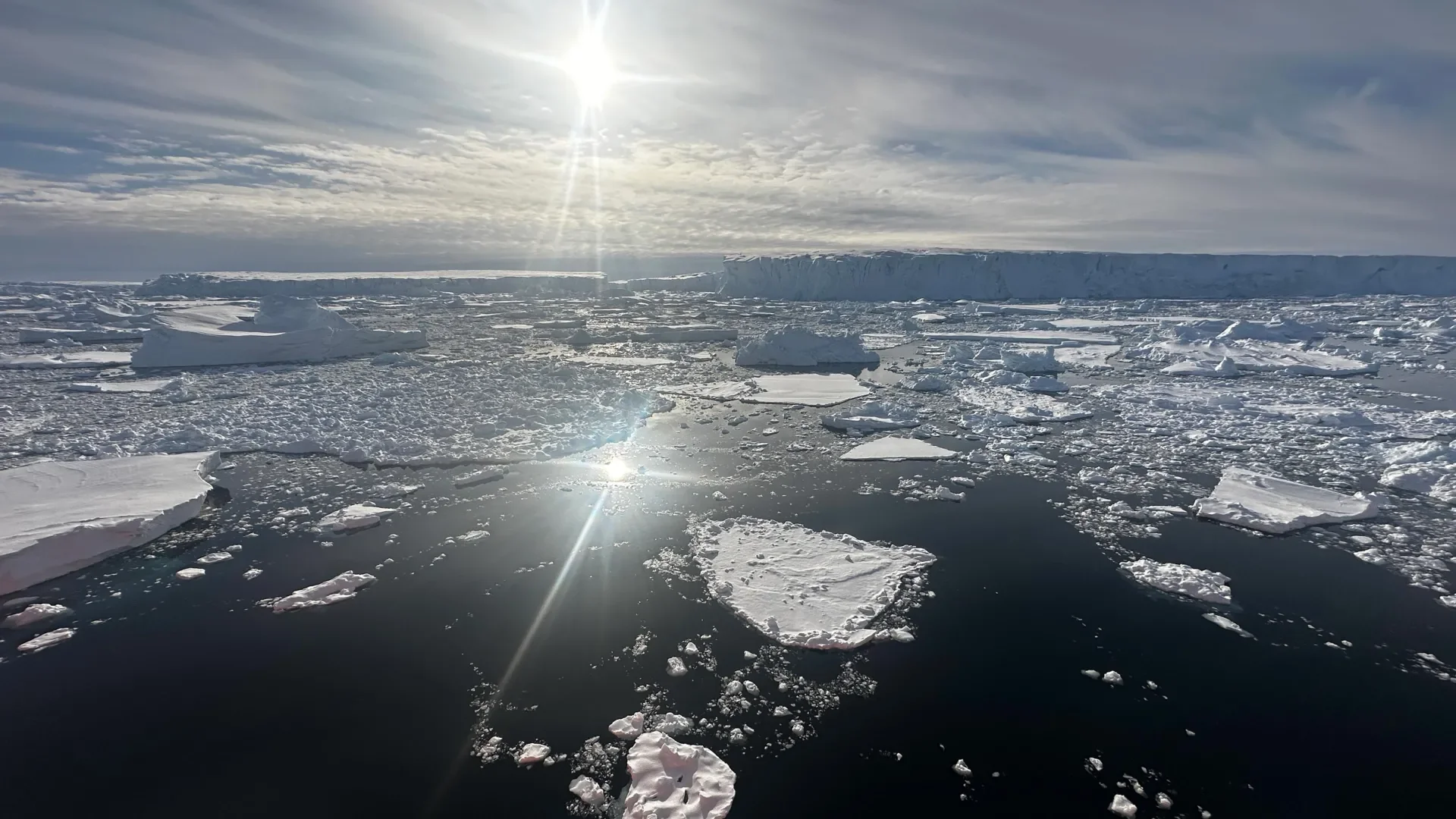
Visualization
Recent advancements in computational modeling have unearthed staggering revelations regarding Antarctica's Thwaites Glacier, colloquially dubbed the "Doomsday Glacier." Researchers from the University of California, Irvine, in collaboration with NASA's Jet Propulsion Laboratory, have refashioned our understanding of this colossal West Antarctic ice mass, predicting an alarming potential contribution to global sea levels that could reach 30 millimeters by 2100, a figure that doubles prior projections even under the scenario of no additional global warming.
The new model painstakingly integrates a breadth of empirical data, particularly focusing on the glacier's grounding zone, that critical interface where ice transitions from being grounded on bedrock to floating on ocean water. Conventional assumptions surrounding this boundary characterized it as a narrow band; however, innovative satellite imagery and data analyses reveal that warm seawater infiltrates into expansive zones kilometers wide, exacerbating structural instability in the glacier. This breakthrough in understanding is pivotal, as it explains why traditional models inadequately forecasted the dramatic retreat of Thwaites Glacier, which is accountable for nearly a third of the Antarctic Ice Sheet's mass loss.
Mattia Poinelli, the lead author of the study, articulated how this shift in perspective is monumental for glaciology. The modeling now considers a dynamic grounding zone where interaction between warm ocean currents and glacial structures plays out on an expansive scale. Instead of merely tracking a thin demarcation, the new methodology encapsulates several kilometers of the grounding zone, corroborated by over two decades of satellite observations and synthetic aperture radar data from Finland's ICEYE satellite constellation. Such data illustrate the oscillating interplay between tides and seawater that exposes the glacier's underside to thermal influences, contributing significantly to melting rates.
The implications of this research extend beyond increased melting rates. The interactions at play beneath the glacier are eroding vital underwater ridges that have long served as stabilizers, enabling the glacier to maintain its position over its subglacial landscape. Poinelli highlighted the vulnerability stemming from the Mouginot Ridge, a critical underwater anchoring system that currently stabilizes the Thwaites main trunk. The model forecasts a notable 60% likelihood that by the century's close, this stabilizing feature could be compromised, leaving the glacier poised for relentless retreat towards the South Ridge, a topographic highpoint that could further exacerbate the ice flow.
In light of this recent modeling update, the specter of coastal flooding risks looms larger than previously recognized. Professor Eric Rignot, a co-author of the research and an authority on ice sheet dynamics, underscored the heightened alarm triggered by these findings. Existing projections have struggled to align with observable rapid mass loss from glaciers due to omitted physical processes. However, the new model, now inclusive of these pertinent dynamics, not only reconciles past discrepancies but paints a more dire picture of future prospects.
The relentless march of climate change—channeling warmer ocean currents into the grounding zones of Antarctica—is driving this critical feedback loop, wherein not only is ice mass lost but the very stability of the ice sheets is jeopardized. The research findings, disseminated in Nature Communications, affirm that the Thwaites Glacier may contribute significantly more to sea level rise than previously anticipated, prompting urgent reevaluation of coastal infrastructure readiness and global policy responses.
As the scientific community grapples with these unfolding realities, the overarching narrative remains clear: Thwaites Glacier, with its unprecedented dynamics, embodies one of the most pressing challenges of our time—a quintessential case in redefining our understanding of climate change's profound, often underestimated, impact on our planet's future.