Field: Technology
Anomalous CO Chondrite Implicated in Dinosaur-Killing Chicxulub Impact
Published | Technical Staff
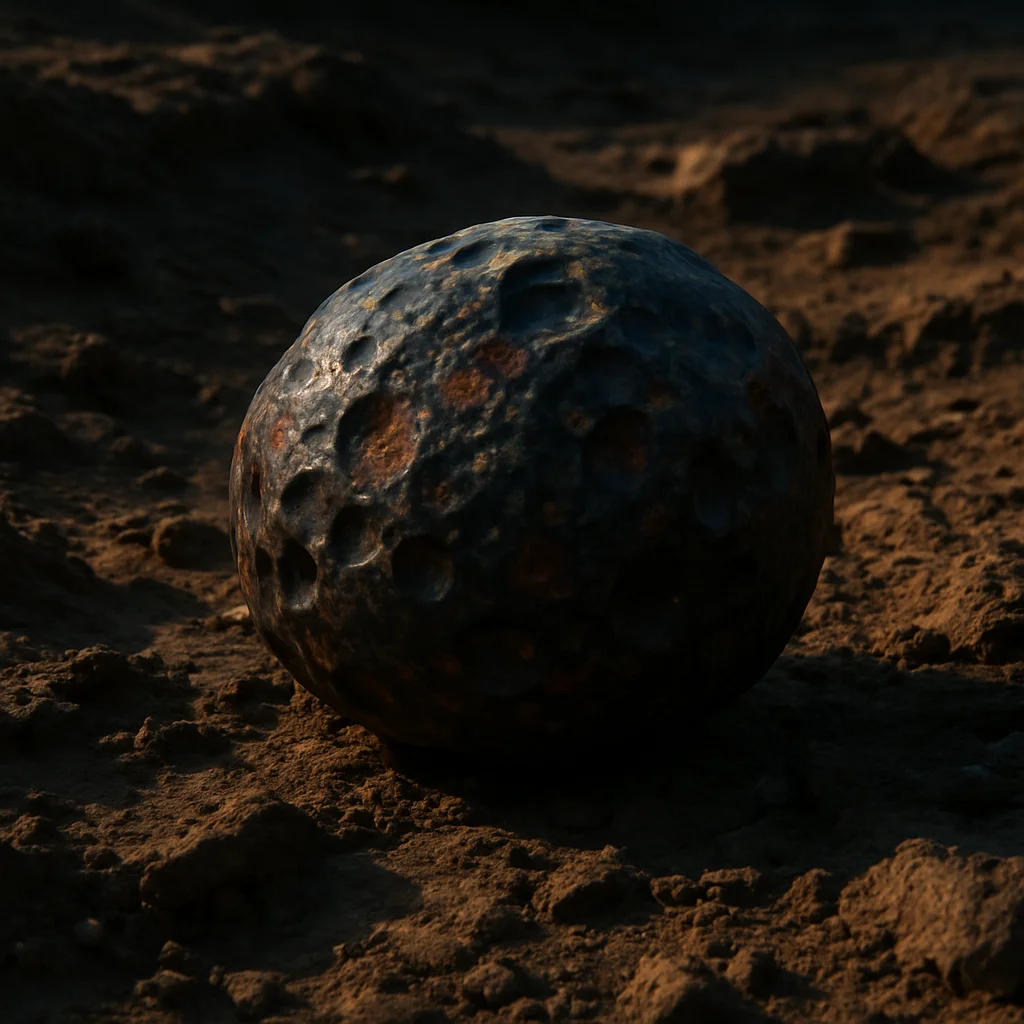
Visualization
Sixty-six million years ago, a cataclysmic collision in what is now the Yucatán Peninsula irrevocably altered the trajectory of life on Earth. The asteroid that excavated the Chicxulub crater triggered the Cretaceous-Palaeogene (K-Pg) mass extinction, erasing entire lineages, including the non-avian dinosaurs. Yet, despite the global significance of this event, the precise identity of the impactor has eluded resolution—until now. A recently published study in *Science Advances* leverages cutting-edge isotopic analyses to pinpoint the culprit as an extraordinarily rare type of carbonaceous chondrite, specifically of the Ornans-type (CO) variety, suggesting the dinosaurs' demise may have been precipitated by a true cosmic outlier.
Carbonaceous chondrites account for a mere 5% of meteorites recovered on Earth, and within this subset, CO chondrites are rarer still. These meteorites are renowned for preserving the most unaltered material from the early Solar System, often containing presolar grains and refractory inclusions largely undisturbed since the nebular epoch. What sets the CO group apart is their deep depletion in volatiles—elements such as carbon, water, zinc, but most notably sulfur—which shapes their mineralogical and isotopic signatures.
To unmask the identity of the Chicxulub impactor, the team led by Professor Philippe Claeys embarked on a meticulous investigation of nickel isotopes within the globally distributed K-Pg boundary layer. This thin stratum of clay, enriched in meteoritic elements and iridium, memorializes the vaporized projectile's faint traces. Utilizing state-of-the-art multi-collector inductively coupled plasma mass spectrometry (MC-ICP-MS), researchers isolated and measured minute variations in the abundance of ^60Ni among other nickel isotopes, a fingerprint sensitive to parent body history and differentiation processes.
Given the near-total vaporization of the impactor, only a diminutive portion—mere parts per million—of meteoritic residue remains encapsulated in the boundary clay. Extracting, concentrating, and analyzing these residues demanded unprecedented analytical precision. Yet, the isotopic ratios obtained consistently aligned most closely with CO chondrite profiles, as opposed to other chondritic groups such as the CV, CM, or ordinary chondrites, or iron meteorites, which had previously been considered as candidate progenitors.
The implications extend beyond mere taxonomy. The volatility-poor composition of CO chondrites undermines the frequently posited scenario that sulfur released from the impactor played a dominant, short-term role in post-impact atmospheric perturbation. While the impact site itself—a sulfur-rich carbonate platform—remains a critical source of sulfate aerosols and climate forcing, the projectile's own contribution would have been comparatively minimal. Instead, the atmospheric opacity and global cooling likely ensued overwhelmingly from silicate dust and fine ejecta, consistent with the aftermath preserved in the geological record.
The origins of such a rare chondrite monolith remain speculative. CO chondrites are thought to derive from distant, relatively unprocessed asteroidal parent bodies, possibly originating from the outer reaches of the main asteroid belt, near the Jovian boundary, or even more primordial reservoirs. Modelling of asteroid belt dynamics and the orbital migration of planetesimals suggest that bodies of this composition are unlikely to encounter the Earth's orbit with any significant frequency. That the Chicxulub impactor—a mass estimated at 10–15 kilometers in diameter and striking at a velocity of ~64,000 km/h (17.8 km/s)—represents one of the rarest of Solar System interlopers, amplifies the contingency of the Cretaceous mass extinction.
The scenario distilled from high-precision isotope geochemistry now reframes one of the key extinction events in Earth history as the product of improbable celestial dynamics. That such a statistical outlier—a carbonaceous chondrite of the CO group—should intersect Earth’s geologically brief habitable epoch underscores the role of stochastic, high-energy processes in biospheric evolution. The study by Claeys and colleagues provides not merely a new chapter in the deep history of planetary impacts but also prompts a recalibration of risk from similarly rare, undiluted Solar System relics still traversing the void.