Field: Technology
Ancient ape fossil in Egypt could rewrite the story of human origins
Published | Technical Staff
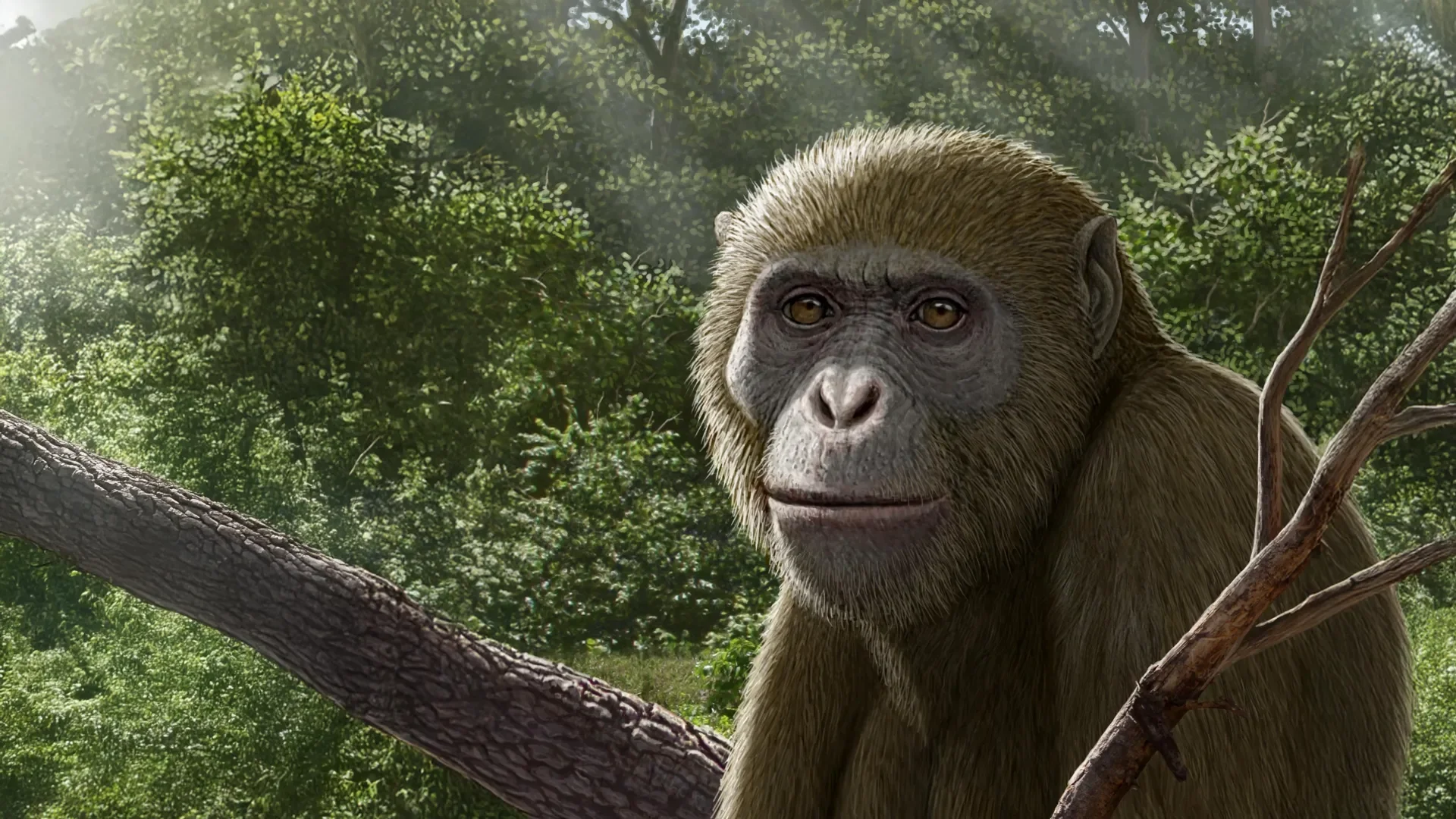
Visualization
In a groundbreaking revelation, an unusual fossil unearthed from the depths of Wadi Moghra in northern Egypt threatens to reshape our understanding of human ancestry and the evolutionary paths of modern apes. This remarkable fossil, hailing from the Early Miocene epoch—approximately 17 to 18 million years ago—embodies a previously unrecognized chapter in the tale of primate evolution, suggesting that North Africa, rather than the conventional centers in East Africa, may have served as the original cradle for modern ape evolution.
The species has been aptly named *Masripithecus moghraensis*, a designation that marries the Arabic term for Egypt, 'Masr' (مصر), with the Greek term ‘píthēkos’, meaning ape. The significance of this discovery is amplified by its status as the first definitive fossil ape recovered from North Africa—an area that previously yielded numerous ancient monkey remains but had remained starkly devoid of evidence for the existence of apes during this period.
An international collaboration between the Mansoura University Vertebrate Paleontology Center and the University of Southern California yielded this fossil during extensive fieldwork carried out around 2023 and 2024. The paleontologists involved suggest that this finding could elucidate gaps within the ape evolutionary timeline—specifically, the genesis of their lineage which ultimately led to the diversification of all living apes, including the lineage that leads to humans.
For decades, prevailing theories posited a southern-centric model for early ape evolution, largely due to the lack of fossil evidence in northern regions. However, the remains of *Masripithecus*—though limited to lower jaw material—exhibit an intriguing array of distinctive anatomical features. This fossilized jaw is notably robust, adorned with oversized canine and premolar teeth, alongside molars characterized by rounded surfaces imbued with complex textures. This amalgamation of traits implies a dietary versatility, primarily leaning towards fruit consumption yet capable of processing tougher materials like nuts and seeds, thereby affording *Masripithecus* a significant survival advantage amid the dynamic climatic fluctuations of the Miocene.
The evolutionary implications of *Masripithecus* extend far beyond mere anatomical peculiarity. Phylogenetic analyses conducted through Bayesian methods provided insights into its evolutionary proximity to extant apes, revealing that this ancient relative holds closer ties to present-day ape lineages than to any previously identified species from East Africa’s Early Miocene fossil records. The researchers utilized advanced statistical techniques to correlate anatomical and genetic data across both living species and extinct forms, ultimately reconstructing an evolutionary tree that suggested a radical departure from the established East African-centric narrative.
The findings indicated that the ancestor of all living apes likely emerged from what is now perceived as a pivotal geographic nexus—northern Africa and the Middle East—during the Early Miocene. This epoch was marked not only by ecological diversification but also by significant geological alterations, wherein the African and Arabian tectonic plates were slowly converging towards Asia. These shifts allowed for intermittent opportunities for faunal migration and diversification. As sea levels fluctuated, land bridges occasionally connected disparate land masses, enabling species to traverse regions that are now separated by vast expanses.
The implications of this geological context are profound; it positions northern Africa and the Middle East as critical arenas for the development and dispersal of early apes. The evolutionary story gained complexity as the researchers highlighted that *Masripithecus*, with its distinct characteristics, lay at a confluence of evolutionary narratives that bridge fossil records of Africa and Eurasia. Instead of being a peripheral entity in the saga of ape evolution, this region emerges as a vital arena of diversification for ancestral primates.
In light of this finding, one cannot help but reconsider the geographical and temporal frameworks that have long dominated discussions regarding ape origins. Could it indeed be that *Masripithecus moghraensis* serves as a turning point in our understanding, reaffirming that the pantheon of modern apes has deeper roots than previously acknowledged in what is now northern Africa? As the intricate tapestry of evolution continues to unravel, this extraordinary discovery attests to the need for an expanded geographical perspective in illuminating the enigmatic lineage that culminates in the modern human condition.