Field: Technology
All 5 genetic “letters” of DNA and RNA discovered in a 4.5-billion-year-old asteroid
Published | Technical Staff
Visualization
In a groundbreaking revelation illuminating the origins of life's building blocks, a collaborative team of scientists has confirmed the presence of all five canonical nucleobases in pristine samples retrieved from the asteroid Ryugu. This discovery, reported in *Nature Astronomy*, not only substantiates the hypothesis that the fundamental components necessary for life were extant in the primordial time of the Solar System but also significantly contributes to our understanding of biogenesis beyond Earth.
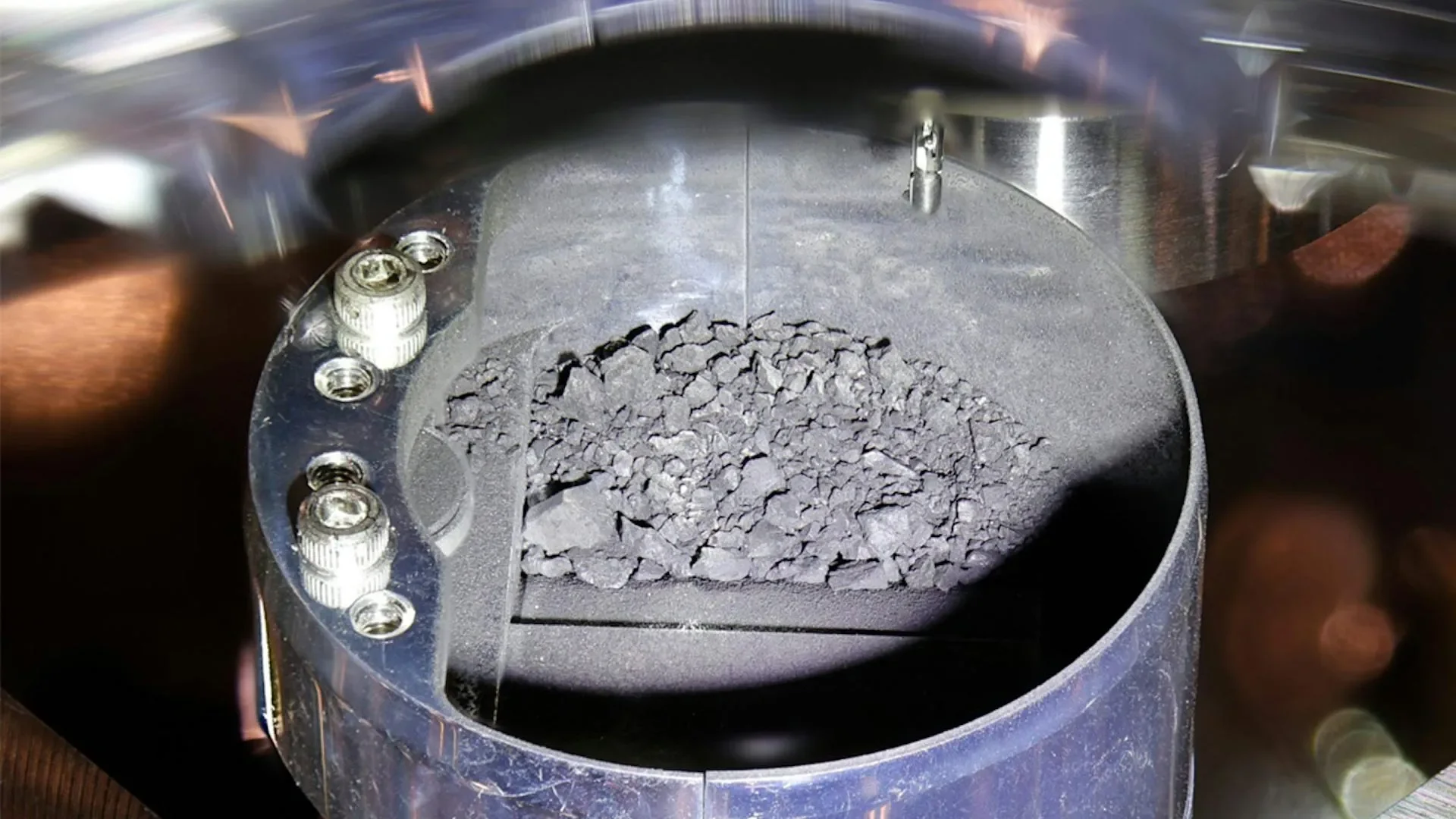
The Ryugu samples were meticulously collected in 2020 by the Japan Aerospace Exploration Agency (JAXA) during the Hayabusa2 mission. Since their return, these untainted fragments of ancient celestial bodies have garnered unprecedented attention. With a total mass of 5.4 grams, these samples provide a rare opportunity to study organic molecules that may have played a pivotal role in the emergence of life on Earth. The researchers operated under ultra-clean conditions to prevent contamination, employing extraction techniques involving distilled water and hydrochloric acid followed by rigorous purification methods.
Previously, in 2023, the team identified uracil within the Ryugu samples, marking an initial step in the nucleobase investigation. However, the latest analysis confirms the presence of adenine, guanine (both purines), and the pyrimidines cytosine, thymine, along with uracil. The molecular representation of these nucleobases, represented by their chemical formulas—adenine (C₅H₅N₅), guanine (C₅H₅N₅O), cytosine (C₄H₅N₃O), thymine (C₅H₆N₂O₂), and uracil (C₄H₄N₂O₂)—completes the set known to constitute the genetic language encoded within DNA and RNA.
The implications of this finding are profound. These nucleobases are not mere components; they are the foundational "letters" of genetic information that orchestrate the synthesis of nucleotides, the building blocks of nucleic acids. The discovery that these prebiotic molecules were once ubiquitous throughout the early Solar System suggests a potential pathway for life's ingredients to have been delivered to Earth via celestial bodies like asteroids.
Asteroids such as Ryugu, Bennu, and other remnants of the Solar System's infancy preserve conditions largely unchanged for approximately 4.5 billion years. Their unaltered state provides scientists with a unique lens to probe the chemical conditions that prevailed during the Solar System's formative epochs. Interestingly, while the Murchison meteorite is characterized by a notable enrichment in purines, contrastingly, Ryugu, Bennu, and the Orgueil meteorite presents a more balanced distribution of both purines and pyrimidines. This variance in chemical composition could be attributed to the asteroids’ distinct histories and interactions with ammonia—a critical molecule in organic synthesis.
The presence of all five nucleobases in Ryugu aligns with and extends previous findings from the Murchison and Orgueil meteorites, both of which have unveiled a diverse array of organic compounds. The comparable amounts of nucleobases found in Ryugu signify that asteroids may not only harbor isolated molecules but also a rich tapestry of organic chemistry that could be indicative of wider cosmic processes, hinting at life's potential emergence across different planetary bodies.
Through the immense reach of astrobiology, these findings carry substantial weight in the discourse surrounding the origins of life on Earth. By suggesting that the ingredients for life formed in the cold expanses of space, the research advances the narrative that our planetary biological heritage may be intimately interwoven with the ancient chemistry of asteroids. As researchers delineate these molecular pathways, they bring to light the extraordinary potential that life’s precursors may have traversed the cosmos, landing upon early Earth and sparking the biological processes that led to the complex life forms we observe today.
This dialogue with the past, made possible by exquisite scientific inquiry into celestial samples, prompts a reevaluation of life's universal narrative, indicating that our quest to understand who we are might just be a chapter in a much larger cosmic story, one that spans billions of years and traverses the vastness of space.