Field: Technology
AI Uncovers Hidden Cardiac Signals Predictive of Sudden Death
Published | Technical Staff
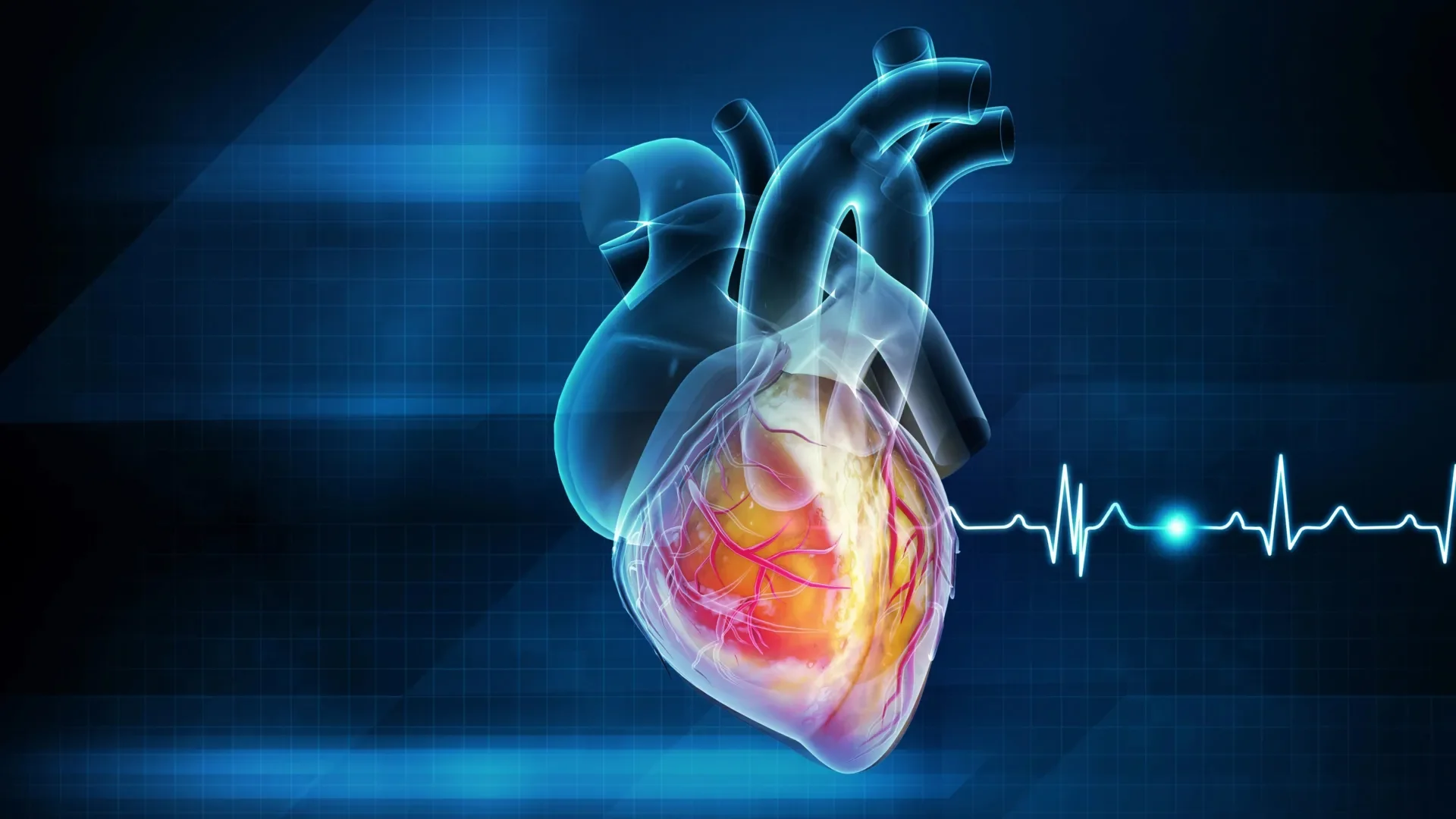
Visualization
In a groundbreaking exploration of cardiovascular health, researchers at the University of California, Berkeley have harnessed the capabilities of artificial intelligence to unveil an elusive indicator of sudden cardiac death, a phenomenon that results in the untimely demise of over 300,000 individuals annually in the United States alone. This failure of the heart’s electrical system can strike without prior marker among both older adults with existing heart issues and seemingly healthy young athletes, laying bare the complexities involved in preemptive medical assessments.
The AI-driven research commenced with an extensive analysis of over 440,000 electrocardiograms (EKGs) amassed from Sweden's cohesive healthcare system. By linking these scans to records obtained from death certificates, the researchers adeptly trained a sophisticated algorithm to discern the subtle but significant variances in electrical patterns that distinguish healthy individuals from those at heightened risk of sudden cardiac mortality. The complexity of these patterns is often lost in traditional screening methods, which tend to emphasize metrics such as the ejection fraction, a parameter formulated as EF = (SV/EDV) × 100, where SV represents stroke volume and EDV is end-diastolic volume. Such traditional measures currently identify a subset of patients with a yearly sudden death rate pegged at 4.6%, yet the AI's predictive prowess disclosed a cohort with a mortality rate of 7%, suggesting the potential for earlier and more reliable intervention.
A unique aspect of this emergent technology is its compatibility with standard EKG procedures, which are routinely collected within cardiac diagnostic settings, thereby eliminating the need for novel medical modalities. As reported in the journal Nature, this innovation stands to reshape clinical guidelines, enhancing the capacity of practitioners to make informed decisions regarding the utility of implantable cardioverter defibrillators (ICDs) for those at risk.
The anticipation surrounding the AI discovery resonates with the insights of Ziad Obermeyer, an associate professor at UC Berkeley's School of Public Health and the study's principal investigator. He emphasizes the dual capabilities of AI not only to augment decision-making but also to illuminate the intricate mechanisms at play prior to cardiac arrest. "Medical decisions are exceedingly challenging," Obermeyer articulated, "the promise of AI lies in its ability to refine these difficult choices while enriching our understanding of underlying cardiac events."
The trajectory of sudden cardiac death predominantly diverges from that of heart attacks, which are typified by obstructed blood flow resulting in ischemia. In stark contrast, sudden cardiac arrest is characterized by the abrupt failure of the heart’s electrical conduction system, leading to a cessation of effective circulation. Given that approximately 90% of individuals experiencing cardiac arrest outside hospital settings perish within minutes, the identification of at-risk patients is paramount.
Moreover, the state of current risk assessments presents formidable challenges. Medical professionals often rely on conventional thresholds of cardiac output to ascertain candidates requiring ICDs; this involves elaborate evaluations that many potential candidates never receive due to the absence of overt clinical indicators. Alarmingly, about two-thirds of ICDs implanted in at-risk patients go unused, underscoring a systemic inefficacy that compounds the vulnerability faced by countless individuals who are otherwise undetected yet teeter on the brink of cardiac catastrophe.
The AI algorithm's development not only required extensive data acquisition but also rigorous cross-validation across variable population datasets. After training on the Swedish EKG data, the project expanded to evaluate the algorithm against two additional cohorts from the United States and Taiwan, ensuring robustness in its predictive capacity across demographics. By systematically recognizing characteristic features in the EKG waveforms—complex interactions of depolarization and repolarization—AI models deciphered which electrical signatures correlate with elevated fatality risks. "Good AI starts with good data," Obermeyer reiterated, underscoring the necessity for comprehensive datasets to optimize learning outcomes.
Looking ahead, the aim is to refine these computational tools to detect more nuanced warning signals, creating avenues for targeted therapeutic interventions in those likely to benefit. As the healthcare paradigm shifts towards personalization and predictive analytics, researchers are optimistic that these AI-enriched methodologies herald a new era in cardiac care, offering preventive strategies that may ultimately avert countless premature deaths from sudden cardiac death.