Field: Technology
AI-Powered Bionic Eye Breakthrough Paves the Way for Restoring Vision in the Blind
Published | Technical Staff
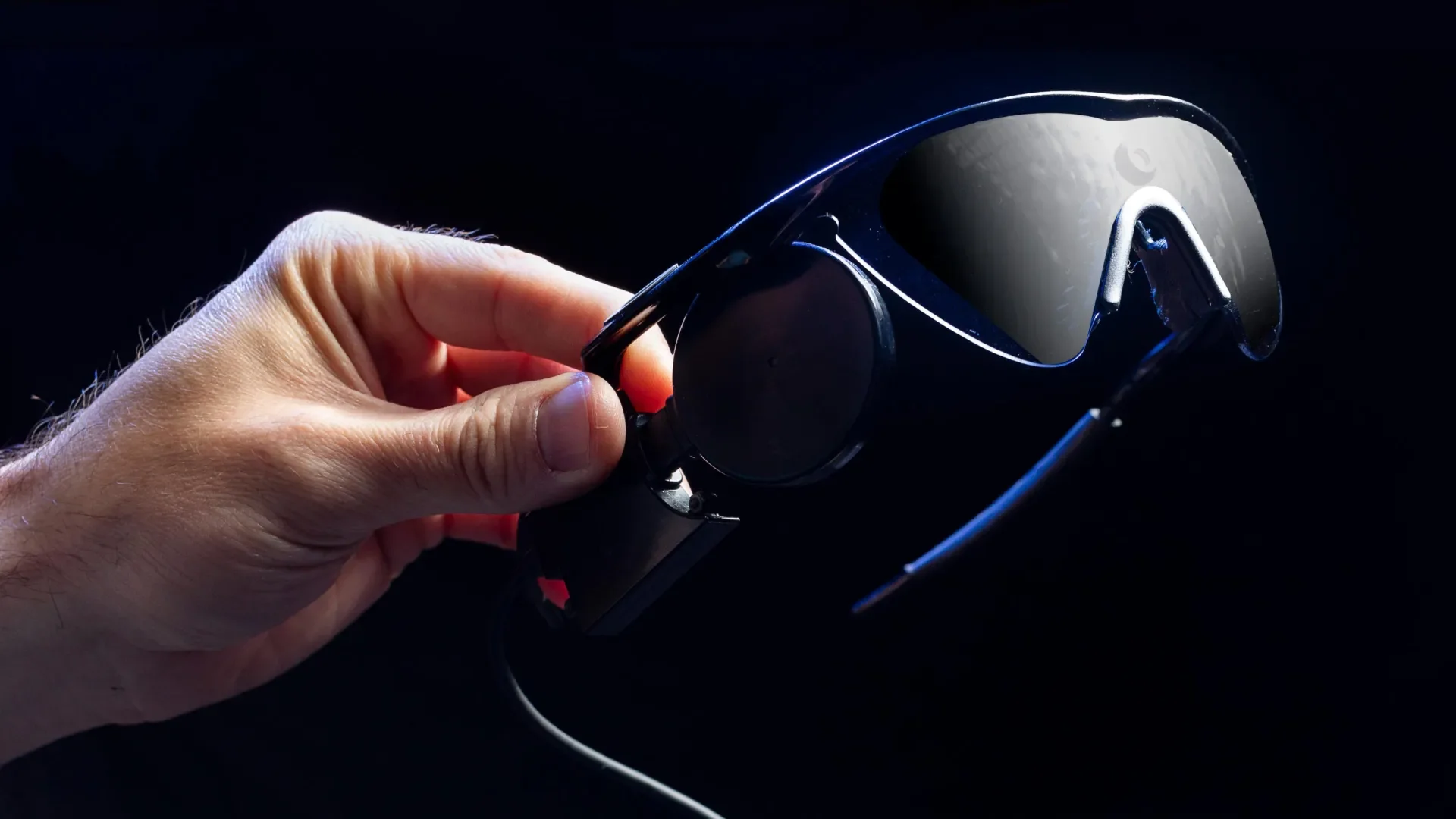
Visualization
A groundbreaking convergence of artificial intelligence and neuroscience has ushered in a new era of hope for individuals grappling with blindness. Researchers at the University of California, Santa Barbara, along with collaborators from other institutions, have made significant strides in refining visual cortical prostheses—commonly referred to as "bionic eyes." These advancements hinge on the nuanced interplay between AI algorithms and the intricate dynamics of neural activity within the visual cortex, ultimately offering the prospect of restoring sight to those who have lost it.
For decades, attempts to revive visual perception in individuals have often met with formidable challenges, predominantly in establishing reliable and interpretable outcomes from various restorative technologies. While some experimental devices have endeavored to stimulate the retina—serving as the light-sensing layer at the back of the eye—others have sought to activate the pathways connecting visual stimuli to the brain. However, the fundamental premise of visual cortical prostheses diverges significantly: rather than relying on the integrity of the eyes or optic nerves, these devices directly engage the visual cortex, the pivotal brain region responsible for processing visual stimuli.
The essence of this innovation lies in its potential to serve individuals whose optic pathways have become compromised due to conditions such as stroke, neurodegenerative diseases, or traumatic brain injuries. This segment of the population, particularly those who once possessed vision, yearns not merely for the restoration of sight but for a semblance of the visual experience they once knew. As Michael Beyeler, an associate professor at UC Santa Barbara, eloquently puts it, “For those people, the desire may be very strong to get some vision back.”
At the heart of this exciting research is a sophisticated application of deep learning algorithms equipped to analyze and predict the responses of brain tissue to electrical stimulation applied via implanted electrodes. The neural responses elicited by electrical stimulation are often unpredictable, complicating the task of associating a given set of stimulation parameters with definitive visual experiences—known as phosphenes. Phosphenes manifest as flashes or shapes of light, varying from sparks to ephemeral patterns akin to fireworks. For researchers, the goal of creating a predictable correspondence between stimulation and perception involves not just generating neural activity but ensuring that such activity translates effectively into sensory experiences.
Central to the scientists’ approach has been the development of a deep neural network, specifically engineered to recognize complex patterns inherent in the responses of the visual cortex. By training this AI model on data derived from actual neural activity coupled with stimulation parameters, the researchers gained unprecedented insights into the ideal stimulation patterns that would induce specific neural responses.
An illuminating moment in this research transpired in 2024 when the team ventured to Spain to assess the efficacy of their AI-enhanced stimulation protocol using a brain implant in a 27-year-old man who had sustained a traumatic brain injury. This patient was equipped with a device embedding 96 electrodes in his visual cortex, allowing for real-time stimulation and neural recording over an experimental six-month period. Importantly, the dual-capacity functionality of the implant—facilitating both stimulation and feedback monitoring—proved essential for refining the AI model.
The results from this in vivo testing demonstrated an encouraging outcome. The stimulation patterns curated by the AI model significantly improved the precision of the neural activations, achieving more consistent and predictable visual sensations while necessitating reduced electrical current. Furthermore, analysis revealed an intriguing correlation: the brain's recorded activity emerged as a more reliable predictor of perceptual experiences than the initial stimulation settings.
This discovery highlights a critical aspect of neural interface technology: the need to comprehend the complex transformations the brain performs when converting electrical impulses into visual perceptions. Beyeler aptly notes the misalignment between stereotypical engineering approaches—where increasing electrode stimulation is assumed to yield clearer images—and the reality of neural processing. The brain, it appears, operates through a dynamic interplay of neural inputs, with emergent responses that fluctuated independently of the map of electrical stimuli delivered by the bionic eye.
Looking ahead, these findings suggest that future iterations of visual prostheses must integrate real-time feedback mechanisms capable of adapting to individual neural responses. This adaptability could afford prospects of even greater sophistication in the design of neural interfaces. As researchers continue to explore the intricate and multifaceted relationship between stimulation and perception, the prospect of teaching these bionic devices to become attuned to each user’s unique neural signatures offers a tantalizing vision of a future where, against the odds, sight might once again be a reality for those who have traversed the journey of blindness.