Field: Technology
A train was delayed by a solar storm. But something didn't add up.
Published | Technical Staff
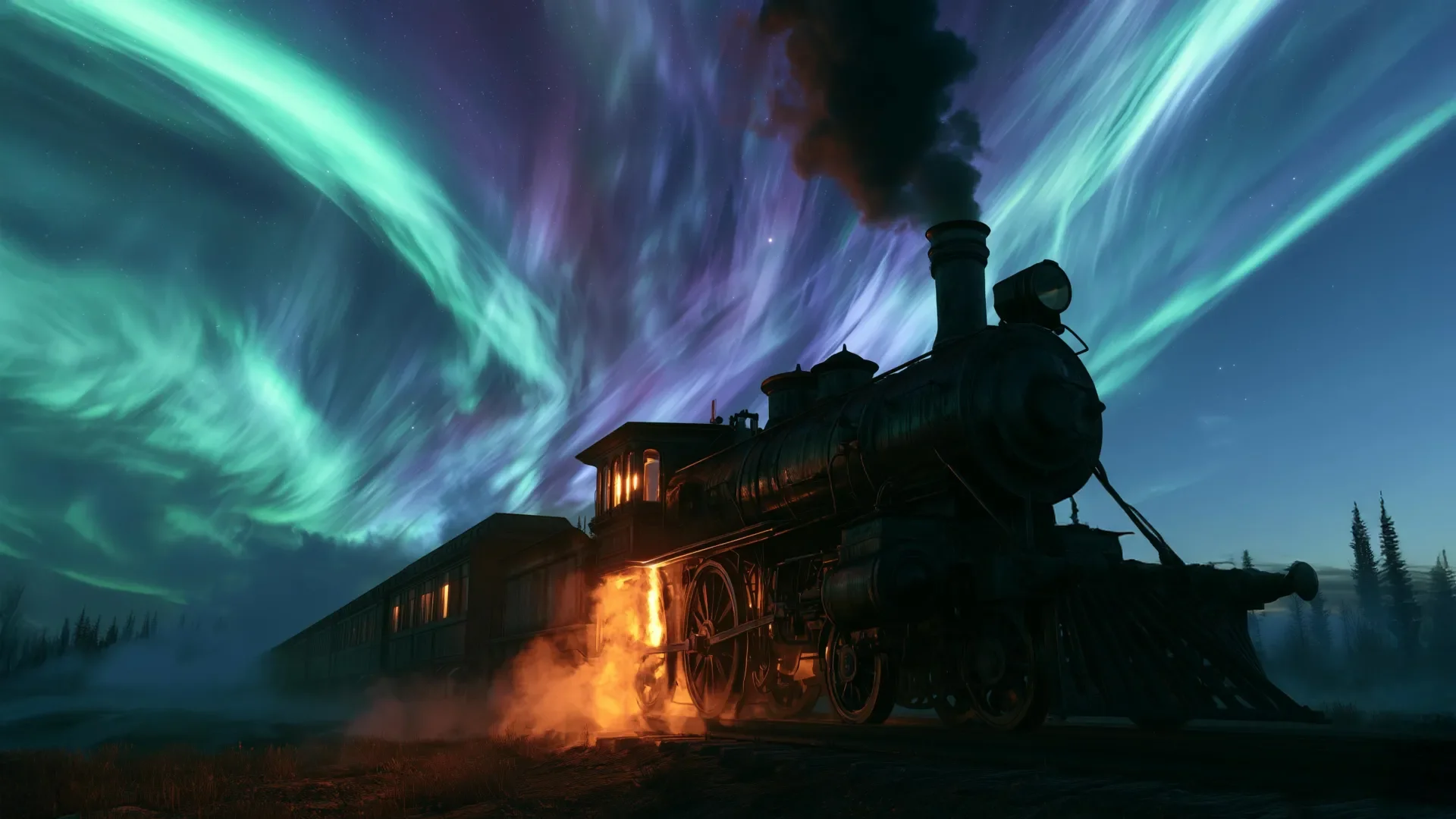
Visualization
In an intriguing saga that unearths layers of historical inaccuracies and highlights the nascent relationship between technology and solar activity, the story of a delayed train in 1848 has led researchers to rectify a long-standing misconception about the impact of solar storms on early electrical systems. The dialogue surrounding this incident, unearthed by an international collaboration led by Lancaster University, underscores not only the intricacies of historical documentation but also the broader implications of space weather on technological infrastructures—revealing how these forces have been exerting their influence for nearly two centuries.
The original malfeasance can be traced back to a report published in 1871, which stated that a "very intense magnetic disturbance" had interfered with railway signals in Exeter, England, resulting in a 16-minute delay of the scheduled train at 10:05 p.m. The mentioned date, October 18, 1841, stood as a potential milestone in the annals of modern technology as it would represent one of the earliest recorded instances of solar weather affecting electrical systems. However, the date itself began to crumble under scrutiny, as historical context revealed that the Exeter-to-Starcross railway line—crucial to this chronicle—had not commenced operations until 1846.
The essence of this inquiry lies in the analysis of multifaceted historical documents. By juxtaposing railway timetables, extensive newspaper reports, and observations of solar activity, the research team conducted a thorough investigation, revealing the correction of the timeline to October 18, 1848. Armed with methodologies that ranged from astrophysical scales to the more localized effects felt on the Earth's electromagnetic field, researchers pieced together how disturbances, often triggered by solar phenomena such as coronal mass ejections, exerted their influence on the emergent electric telegraph systems of the time.
These disturbances were not mere curiosities; they had the power to disrupt communication networks fundamentally. The Carrington Event of 1859 offers a striking example; it unleashed a barrage of charged particles that produced auroras visible as far south as Hawaii and led to widespread electrical disturbances. Telegraph operators worldwide faced electrical surges severe enough that some systems transmitted messages without batteries, providing a glimpse into the chaotic interplay between solar activity and the fledgling technologies of the 19th century.
As the researchers delved deeper into the substantial archives, they identified not just a correction of chronology but a shift in our understanding of how early society responded to extreme cosmic events. Associate Professor Brett Carter of RMIT University emphasized this transformative period: "The 1840s marked a turning point when solar disturbances began to affect human technology meaningfully." The awareness that humanity now contended with uncontrollable cosmic forces through technological channels developed—a crucial narrative shift as electrical systems became omnipresent.
This revelation is not merely an academic exercise but serves as a critical examination of the continuity of risks posed by space weather on modern technology. Professor Jim Wild, who spearheaded the study, elucidated that the lurking threats from solar activity are not a contemporary phenomenon as often portrayed; they have posed risks since the genesis of electrical technologies themselves.
The implications of this revised historical framework extend into today’s modern context where power grids and satellite-based communication systems exist at severe risk from solar weather events. The record not only illuminates the need for vigilance concerning our interconnected infrastructures but also highlights how interdisciplinary studies combining archival documents with contemporary scientific data can reconstruct historical narratives previously misunderstood.
In reaffirming the Exeter incident as one of the first credible instances of solar disturbances impacting technology, albeit not the earliest, we gain a critical understanding of humanity's protracted relationship with both technology and space weather. The train delay, thus, transforms from an isolated historical event into a compelling tale illustrating the unpredictable dynamics between human innovation and the vast, often tumultuous cosmos.