Field: Technology
A shipwreck off Turkey’s coast could be the oldest known maritime relic, dating back to approximately 4,500 years ago.
Published | Technical Staff
Visualization
An enthralling discovery has emerged from the azure depths of the Mediterranean, where archaeologists believe they have unearthed the remnants of a shipwreck that dates back to the Early Bronze Age, around 2700–2400 BCE. This ancient vessel, potentially the oldest known shipwreck, predates even the construction of the Giza pyramids and may thus serve as a critical link to understanding the expansive trade networks that characterized the ancient Mediterranean landscape. According to preliminary analyses of its ceramic cargo, the discovery off the rocky shores of Kekova could radically alter the historical narrative regarding maritime exchange and interconnectivity among ancient civilizations.
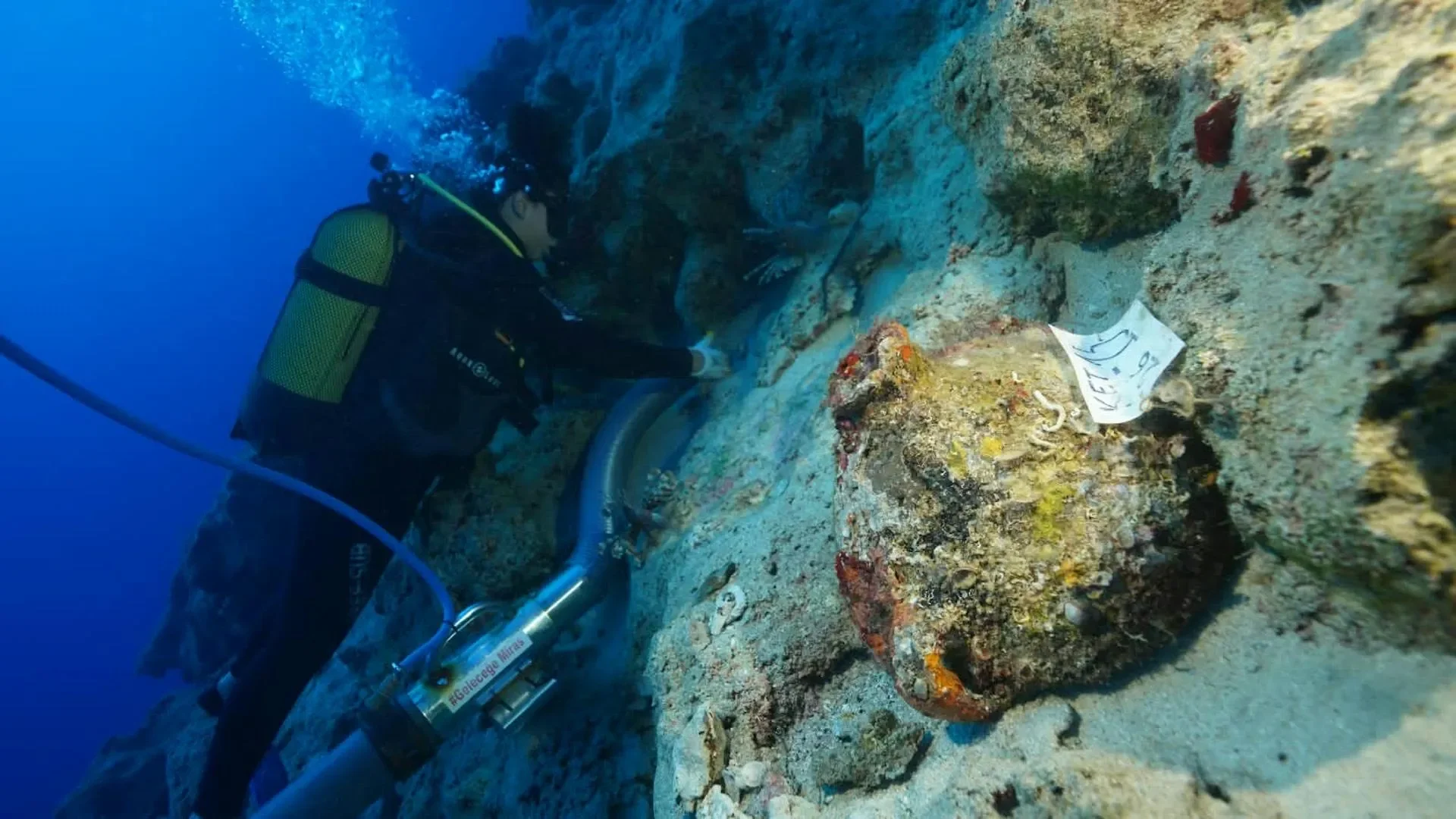
The shipwreck, initially revealed through the efforts of Associate Professor Hakan Öniz from Akdeniz University, was brought to light after years of meticulous excavation in shallow waters west of Antalya. The vessel itself has long succumbed to underwater exposure and erosion, leaving behind only tantalizing fragments of its cargo—a cache of pottery that serves as a time capsule of ancient trade. By analyzing this ceramic haul, researchers hope to reconstruct the trade routes and economic interactions that occurred during this formative epoch.
The absence of the ship's structure may lead one to assume diminished significance, but the remaining pottery proves otherwise. The artifacts, particularly large amphorae, were likely used to transport valuable commodities such as oils, wine, or tree resin—important trade goods that would have facilitated connections between disparate cultures across the eastern Mediterranean. These amphorae possess distinct morphological traits, such as a pronounced horizontal clay "belt" around their widest circumference and a flat base, attributes that provide insights into their origin and utilization.
In a fascinating intersection of chemistry and archaeology, advanced methodologies are employed to glean information from these vessels. The study of residual organic materials in the jars could unveil the precise nature of their contents—substances that ancient scripts suggest included olive oil, wine, or aromatic resin. Such analyses rely on meticulous techniques like gas chromatography-mass spectrometry, providing scholars with a clearer understanding of trade dynamics and consumer practices of the time.
Examining the pottery's manufacturing techniques and stylistic details can help refine the dating of not only the jars themselves but also of the ship and the broader maritime activities of its era. Recent research indicates that exchange in the eastern Mediterranean during the third millennium BCE remains poorly understood, with only scant documentation available from Egyptian texts who alluded to trade with regions such as Byblos in Lebanon. The challenges of reconstructing this ancient economic web have spurred academic curiosity and propelled inquiries into how civilizations engaged in long-distance maritime commerce.
The Kekova ship's story evokes vivid imagery of seafaring life and the tumultuous interactions between human endeavors and the mercurial forces of nature. While navigating the perils of the Mediterranean, maritime traders—perhaps originating from coastal enclaves in the Levant—would have been acutely aware of the danger posed by storms that could easily smash fragile vessels against rocky outcrops. This ship, a vessel of economic promise, tragically succumbed to the sea's wrath, leaving behind a layer of sedimentary history embedded in the seabed.
Continuing excavations have revealed that the remnants of this ancient ship rest between two islands, as divers have recently spent several months meticulously extracting the pottery from barnacle-encrusted rock formations. By shedding light on the locations from which these ceramic vessels may have originated, researchers can similarly untangle the threads of trade routes that, while long forgotten, are fiercely protective of their secrets. Current hypotheses suggest a linkage to the Central Jordan Valley, indicating a sophisticated network in which the ship may have participated, further complicating the narrative of ancient commerce.
Lastly, as the five-thousand-year-old world of shipping emerges from the depths, it beckons the interest of archaeologists, scholars, and history buffs alike, as they ponder the stories awaiting discovery beneath the waves. Are there untapped sites that still lie shrouded in mystery along the coast of southern Turkey? What else could these waters reveal about the vessels that traversed their bounds long before our own time? The ongoing research spearheaded by Öniz and his team, supported by a wealth of modern scientific tools, may offer a glimpse into an intricate past—one where trade was not just an economic activity but an essential component of civilization's growth and cultural exchange. As they turn these historical stones, the rich tapestry of ancient maritime life unravels, promising revelations yet to come.