Field: Technology
A rock plunged 90 kilometers into Earth and revealed something unexpected
Published | Technical Staff
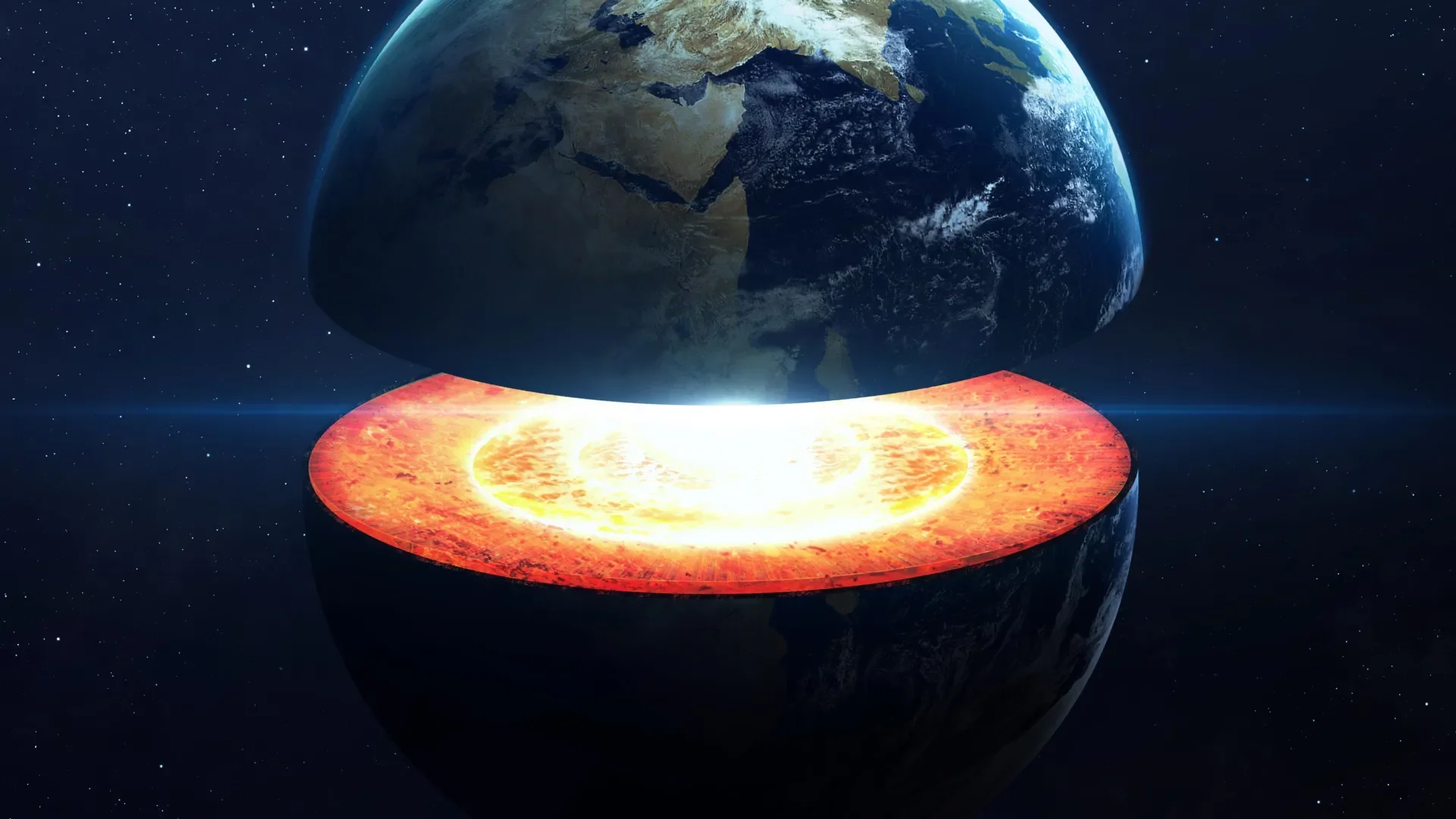
Visualization
Deep beneath the rolling landscapes of Papua New Guinea, a geological revelation has emerged, threatening to recalibrate fundamental theories on tectonic dynamics and the thermal structure of Earth’s interior. An international team, spearheaded by scientists from the University of Göttingen, unearthed a rock with a remarkable history—a specimen that journeyed over 90 kilometers beneath the surface approximately four million years ago. The significant depths of this rock unearthed not only provide a glimpse into the pressures and temperatures that characterize our planet's interior but also pose intriguing questions about heat distribution and subduction processes.
This rock, collected from an active subduction environment, serves as a geological time capsule. Under immense pressures typical of such regions, the rock underwent metamorphic transformation into a type of material known as eclogite, primarily composed of garnet and omphacite. The presence of coesite, a high-pressure polymorph of silica, within the eclogite signifies the extreme conditions the rock experienced deep beneath—conditions that researchers estimate reached around 800 degrees Celsius (1,472 degrees Fahrenheit) at depths greater than 90 kilometers. This evidence was meticulously analyzed using a variety of advanced techniques, including electron-probe microanalysis and Raman spectroscopy, to preserve the vital clues trapped within the mineral assemblage.
Intriguingly, the researchers discovered a pronounced thermal anomaly during their investigation. As they mapped the thermal trajectory of the rock, they noted that at approximately 45 kilometers (28 miles) beneath the surface, the temperature had already escalated to about 700 degrees Celsius (1,292 degrees Fahrenheit). This scenario represents a stark departure from established thermal models, which predict a more uniform increase in temperature with depth. The gradual nature of this particular thermal profile, characterized by a slowing rate of temperature rise outside conventional expectations, has led to significant discourse within the geoscience community.
Dr. Jan Schönig from Göttingen's Geoscience Center articulates the implications of this unexpected temperature shift succinctly: “Finding this change from hot to cold subduction was unexpected as this contradicts our current thermal models of subduction zones.” This revelation indicates a more complex thermal regime in play, possibly suggesting that at shallower depths, the heat generated by tectonic interactions could be more substantial than previously acknowledged.
Several hypotheses are being considered to elucidate this enigmatic thermal behavior. One notable proposition is that the kinetic energy of descending tectonic plates generates frictional heat at shallower depths, resulting in intensified thermal conditions prior to reaching depths where cooler temperatures would typically dominate due to geological inactivity. Alternatively, it has been suggested that the relative youth of the subduction zone may preclude the development of the stable thermal conditions anticipated in mature subduction environments.
These findings carry profound implications beyond mere geological curiosity. Subduction zones are pivotal in facilitating Earth's rock recycling processes, including the long-standing carbon cycle that regulates atmospheric composition and climatic conditions over geologic timescales. With the current insights indicating such a drastic shift in thermal behavior, the new data could enable scientists to refine existing predictive models regarding volcanic activity and seismic events, which are frequently associated with the complex interplay of tectonic plates.
Moreover, a clearer comprehension of these subterranean processes may assist in understanding broader geochemical cycles, as well as the dynamics that underpin Earth's climate systems. As researchers continue to analyze the implications of this unusual thermal history, the study not only unveils a hidden narrative of Earth's subterranean architecture but also raises questions about the very nature of our planet’s geology and its evolution over millions of years.
In a landscape continuously shaped by powerful geological forces, this groundbreaking research affirms that there remains much to learn from the depths of the Earth, where stunning phenomena often evade the eye but hold the key to understanding the tapestry of tectonic history. As more is revealed, scientists will extend their exploration further, piecing together the intricate mosaic of Earth's dynamic behaviors that fuel both its captivating beauty and its daunting challenges.