Field: Technology
A new treasure map reveals where Earth's lost prehistoric life may be hiding
Published | Technical Staff
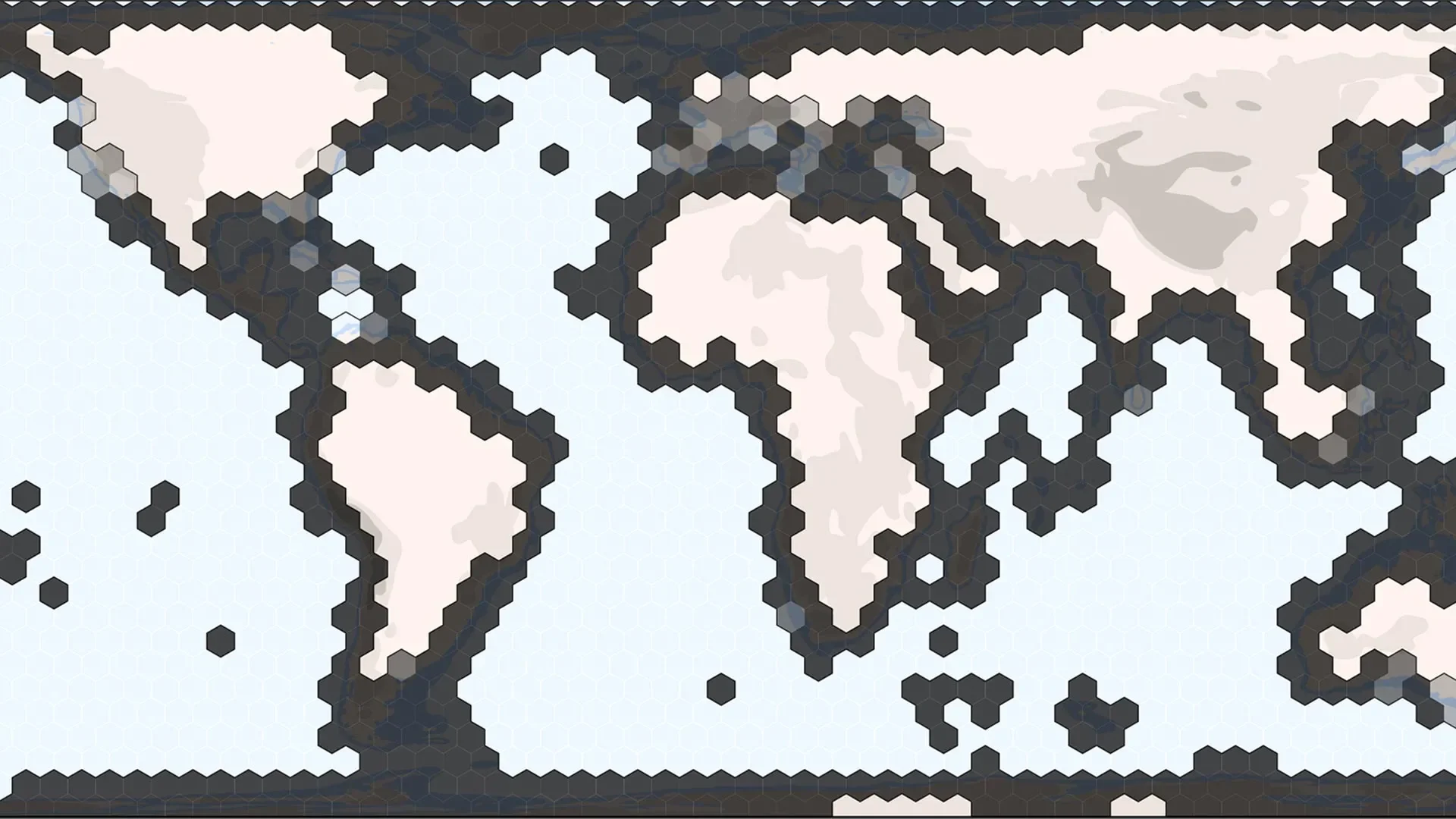
Visualization
Paleontology, often described as the science of lost worlds, continuously confronts the challenge of an incomplete narrative, a reality underscored by the limitations of fossilization. Within the vast expanse of geological time, fossils offer but a voyeuristic glimpse into ancient ecosystems, documenting life forms that flourished millennia ago while leaving substantial gaps that beg for elucidation. Recent work by paleontologists Thomas A. Neubauer from the Bavarian State Collections of Natural History (SNSB) and Mathias Harzhauser of the Natural History Museum in Vienna proposes a transformative methodology—an innovative treasure map delineating potential hotspots for undiscovered marine fossils, particularly from the Cenozoic era.
The collaborative research, dissecting a robust dataset spanning approximately 540 million years, meticulously employed records from the Paleobiology Database (PBDB). This led to the creation of a comprehensive geospatial model highlighting regions with significant fossil imbalances. The stratigraphy of Earth indicates a differential preservation of life across geological epochs; extensive fossil assemblages characterize certain periods, notably the Early Mesozoic (252 to 66 million years ago) and the Palaeozoic (539 to 252 million years ago). Despite their storied histories, both epochs have been subjected to intense scrutiny, resulting in diminishing marginal returns of new insights from forthcoming discoveries.
Neubauer and Harzhauser's team utilized geographic information systems (GIS) techniques to cross-reference the fossil distribution with the geological insights from the Macrostat database. This analytical framework not only mapped where fossilized remains have been documented but also surfaced areas deemed geologically favorable for future paleontological exploration. The spatial analysis revealed that, contrary to prior assumptions, the most fertile ground for new findings lies within the relatively recent Cenozoic deposits, which span from the extinction of the non-avian dinosaurs to the present day, beginning 66 million years ago.
The critical insight garnered from their work is that although extensive collections from Cenozoic marine environments exist, many of these accessible geological profiles remain underexplored. The researchers systematically identified key locales where lithological features suitable for fossil preservation are present, propelling a strategic shift towards investigating these yet-unexamined territories. The implications are significant: rather than persisting in areas yielding little novel evidence, the paleontological community can now realign efforts toward promising sites.
Neubauer's assertion that many regions of our planet reflect an “unexplored opportunity” illuminates the potential for unearthing significant findings. The geographical framework offered through their new map serves not only as a guideline for prospective excavations but also prioritizes the re-evaluation of existing collections housed in museums, where countless specimens await scholarly attention. Applying a data-driven approach, the researchers advocate for a methodical exploration protocol aimed at strategically closing the gaps in the fossil record.
With fossils being the tangible remnants of ancient biota, the significance of this study cannot be overstated. Each undiscovered specimen is not merely another data point; it represents insights into evolutionary trajectories, ecological relationships, and the adaptive strategies of organisms that navigated the dynamic challenges of their respective eras. As this treasure map guides the next generation of paleontologists, it paves the way for a reimagining of Earth’s prehistoric narrative, heralding a renaissance in fossil exploration that promises to enrich our understanding of life in the ancient seas.
The synthesis of comprehensive data analysis, strategic exploration, and a commitment to unearthing the past rekindles hope in the paleontological community. With this innovative approach, the research of Neubauer and Harzhauser invites scientists globally to engage in a concerted effort towards illuminating the obscured chapters of ancient life, epitomizing the intersection of technology and the timeless quest for knowledge within the depths of our planet’s geological history.