Field: Technology
A Jurassic Deep-Sea Enigma: The Discovery of Wyoteuthis linsterorum
Published | Technical Staff
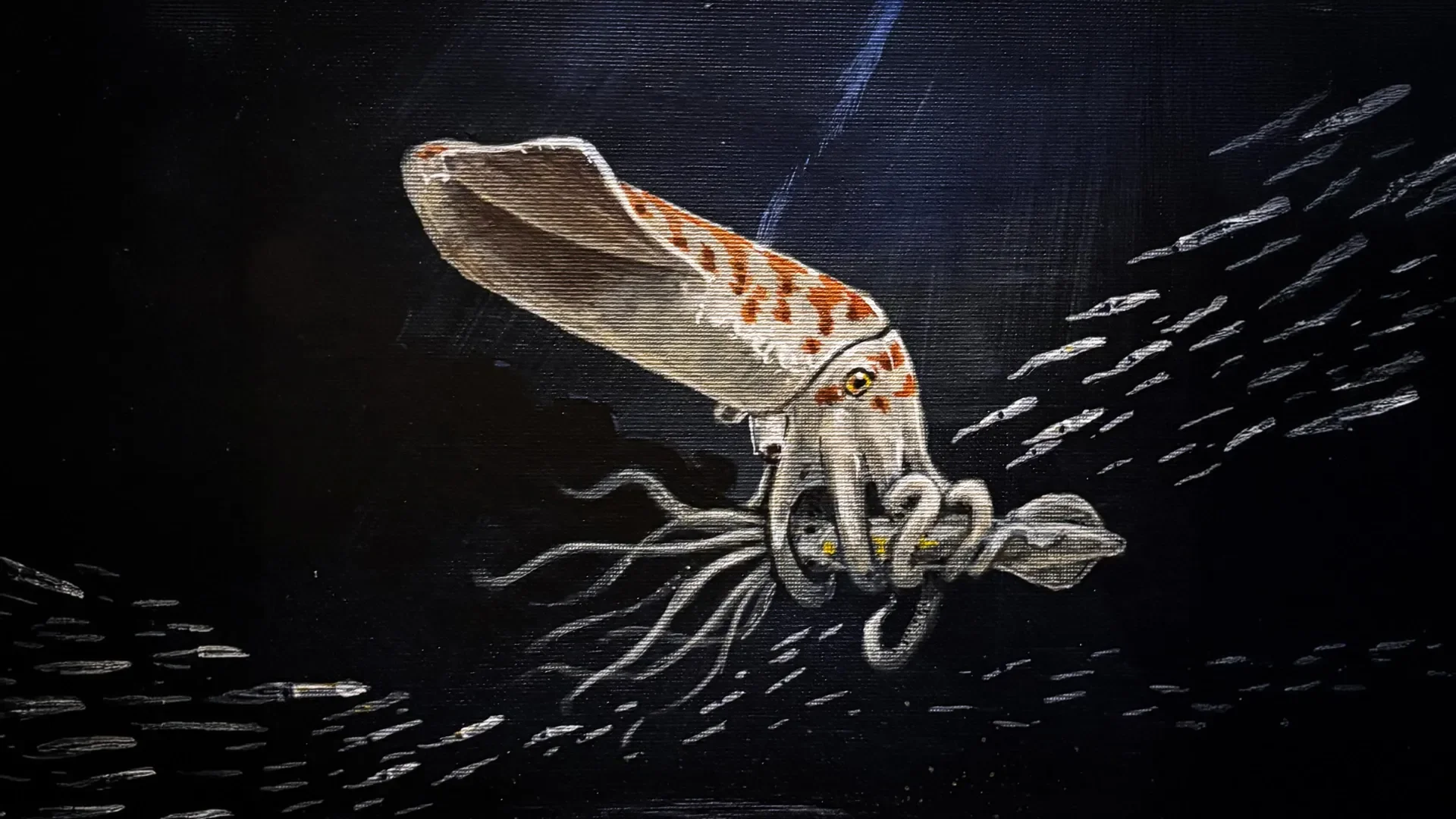
Visualization
In a groundbreaking paleontological discovery, researchers have unveiled evidence of a remarkable species hitherto unrecorded—a belemnite that challenges long-held perceptions of Jurassic marine life. Named Wyoteuthis linsterorum, this peculiar, barrel-shaped cephalopod existed approximately 160 million years ago in a prehistoric sea that once covered much of present-day Wyoming. The odds of uncovering such an eccentric member of the belemnite family are staggering, and the implications for evolutionary biology and paleontology are profound.
Belemnites, a fascinating group of marine invertebrates closely related to contemporary squids and octopuses, are celebrated for their distinctive internal shells known as rostra. Typically, these rostra are bullet-shaped and range from 5 to 10 centimeters in length and about 1 to 2 centimeters in diameter. Wyoteuthis linsterorum, however, diverges dramatically from this norm, boasting a rostrum that measures not only 10 centimeters long but also an extraordinary 6 centimeters wide—an unprecedented girth that earns it the moniker of the "fattest" belemnite documented to date. This newfound specimen has catalyzed a re-examination of the ecological dynamics within ancient marine environments.
The fossils, housed within the rich geological tapestry of Wyoming's Sundance Formation, were part of an expansive inland sea ecosystem that thrived during the Jurassic. An international coalition of paleontologists led by Dr. Dean Lomax from The University of Manchester undertook the rigorous task of analyzing these rare finds, deploying advanced computed tomography (CT) scanning techniques to peer into the internal structures of the fossils without inflicting damage. The scans performed not only confirmed the fossils’ unusual proportions but also hinted at a phylogenetic relationship to an ancient lineage of belemnites previously thought to have gone extinct millions of years before Wyoteuthis linsterorum emerged.
Paleontologist Jessica Lippincott, a co-author from Wyoming, articulated the astonishment reverberating through the research team upon uncovering the unique morphological traits of this species. The creature's robust physique suggests ecological advantages, possibly enabling it to prey on smaller contemporaneous cephalopods, such as the genus Pachyteuthis. The life history of modern squids, known for their aggressive predation behaviors, informs these interpretations, suggesting that behavioral continuities may transcend millions of years of evolutionary divergence.
The path to identifying Wyoteuthis linsterorum has roots that reach back nearly three decades. The initial specimen, discovered in the late 1990s by Dr. Burkhard Pohl of the Wyoming Dinosaur Center, laid dormant within museum collections for years until a pivotal contribution arrived from fossil collector Cliff Linster in 2019. Linster's discovery of a second specimen was the catalyst that prompted closer examination and ultimately, formal classification of this new species.
Named to honor both the geographic origin of its discovery and the contributions made by the Linster family—active participants in the regional paleontological community—the species name linsterorum commemorates Cliff Linster's legacy in the face of his recent passing. Dr. Lomax, who shares a personal history of fossil hunting with Linster, expressed a sentiment laden with nostalgia and gratitude: “It’s bittersweet that he didn’t get to see the publication of our findings, but it’s a privilege to immortalize his name in the annals of paleontology.”
The rare nature of Wyoteuthis linsterorum underscores the adaptability and complexity of marine life during a period marked by rapid evolutionary shifts. As detailed in the research published in Papers in Palaeontology, the discovery implicates broader paleoecological patterns and suggests a far richer tapestry of life within ancient marine systems than previously acknowledged.
Through meticulous research and transcendent collaboration spanning multiple continents, Wyoteuthis linsterorum stands as a testament to the ceaseless potential for discovery in paleontology—a field that, despite centuries of study, continues to yield surprises that reshape our understanding of Earth's distant past. Visitors to the Wyoming Dinosaur Center can now encounter these extraordinary remains, a bridge between modern curiosity and ancient mystery that challenges assumptions and illuminates the evolutionary history of cephalopods.