Field: Technology
A Cosmic Aftershock: Chandra Unmasks Abell 2029’s Turbulent Origin
Published | Technical Staff
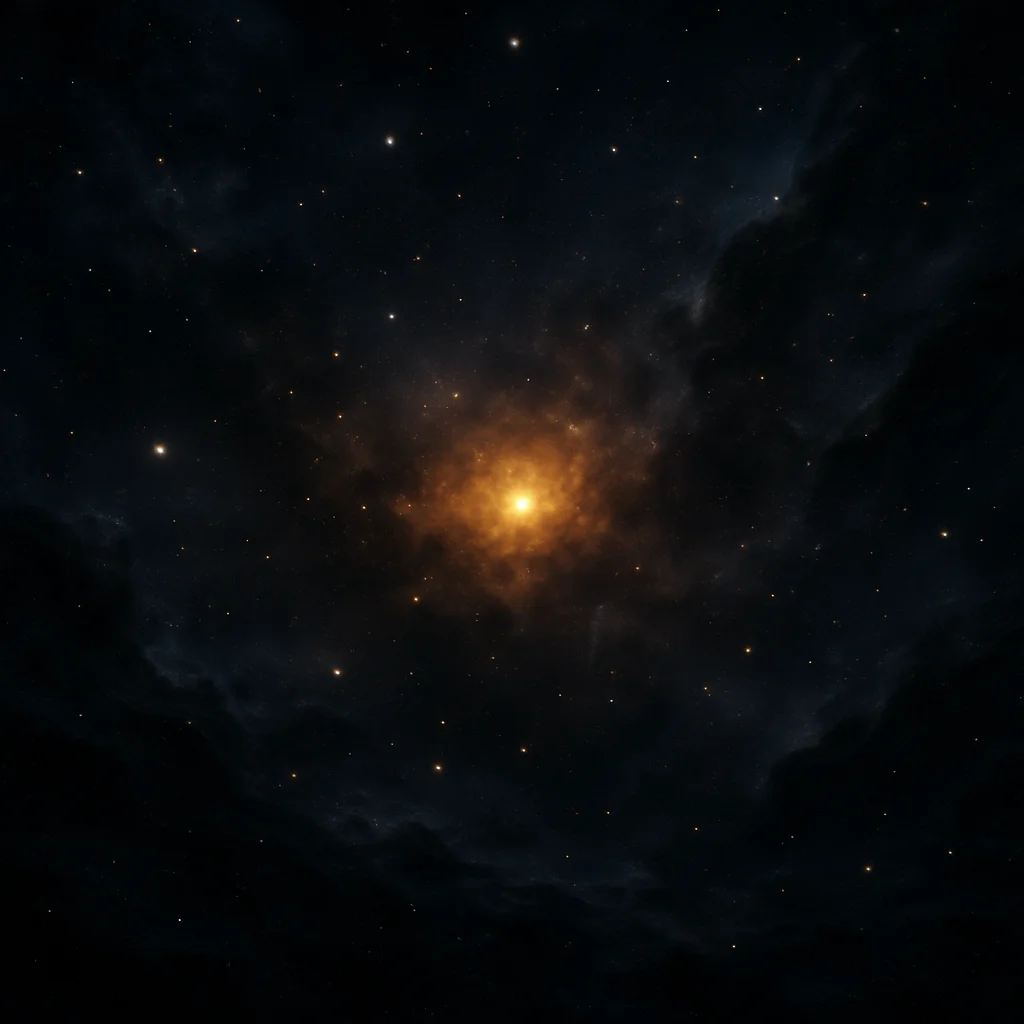
Visualization
Long considered the epitome of cosmic tranquility, the galaxy cluster Abell 2029 has now been unmasked as a survivor of intergalactic violence. Deep-field observations from NASA’s Chandra X-ray Observatory expose the aftermath of a colossal collision, overturning assumptions about the most quiescent cluster in the known universe.
Located roughly one billion light-years away in the constellation Virgo, Abell 2029 is a gravitationally bound aggregation comprising hundreds of galaxies, pervasive dark matter, and an enveloping plasma known as the intracluster medium (ICM). Galaxy clusters such as Abell 2029 represent the largest known structures stabilized by gravity, yet despite their scale, their dynamic pasts are largely shrouded by cosmological timescales. The ICM within such clusters typically remains invisible to optical telescopes, but Chandra’s probing X-ray vision—sensitive to emissions from gas heated to \(T \sim 10^7 - 10^8\) K—proves decisive in revealing the hydrodynamic scars left by ancient mergers.
A recent investigation led by Courtney Watson and colleagues at Boston University capitalized on the deepest X-ray data set ever acquired for Abell 2029. By integrating direct X-ray imagery with spatially subtracted datasets, the team unearthed an astonishing morphological feature: a vast, spiral plume of superheated gas, unfurling across nearly two million light-years. This spiral, among the longest of its kind ever detected, manifests as a luminous tracer of the cluster’s turbulent history.
The origin of this spiral lies in a cosmological event dating back approximately four billion years—a high-velocity collision as a smaller galaxy cluster, with an estimated mass ratio of 1:10 relative to the main cluster, plunged through Abell 2029’s gravitational center. Much like the inertial “sloshing” observed when disturbing a glass of wine, this passage imparted lateral momentum to the hot ICM, driving its gas into complex oscillatory movement. Detailed magnetohydrodynamic simulations corroborate this scenario, showing that gas sloshing—initiated during the intruder’s initial core-crossing—is further amplified as gravitational forces decelerate and recapture the smaller cluster, facilitating subsequent passes and deepening the spiral’s imprint on the ICM.
Chandra’s deep imaging, enhanced through the application of azimuthal symmetry-subtraction algorithms, brought additional substructures into focus. Near the spiral, researchers identified a diffuse “splash” region marked by anomalously cool gas, a relic signature of core gas stripped from both clusters and subsequently compressed by merger-driven turbulence. The temperature gradient across this region suggests an adiabatic expansion followed by localized cooling, a feature predicted for merger-induced gas mixing.
The team also discerned the presence of a putative merger shock front, analogous to the atmospheric shock waves trailing supersonic projectiles. In the X-ray domain, such fronts present as abrupt discontinuities in surface brightness and temperature, quantifiable as pressure jumps adhering to the Rankine-Hugoniot conditions:
\[
\frac{P_2}{P_1} = \frac{2 \gamma M^2 - (\gamma - 1)}{\gamma + 1}
\]
where \(P_2/P_1\) is the post-shock to pre-shock pressure ratio, \(\gamma\) is the adiabatic index (typically 5/3 for monatomic gas), and \(M\) is the Mach number of the shock. While detailed spectral fitting remains ongoing, preliminary diagnostics suggest a Mach number \(M \gtrsim 1.2\), sufficient to heat and compress the ambient gas within the shock interface.
Further complicating the hydrodynamic tableau, the X-ray maps revealed a bay-like depression contiguous with the outer arm of the spiral. This formation may result from hydrodynamic interactions between the coherent spiral slosh and interface gas stripped from the incoming subcluster, producing multiphase mixing on scales exceeding hundreds of kiloparsecs. While the researchers favor a collision-induced origin, alternative mechanisms, such as AGN feedback or residual turbulence from previous merger generations, remain under consideration.
Collectively, these observational signatures—an extended spiral, a cool-gas splash zone, shockwave structures, and a bay region—compose an unprecedented forensic record of cluster collision physics. Multiphase observations and simulation-driven interpretation allow the authors to reconstruct the hierarchical assembly of Abell 2029 at a level of detail previously unattainable. Contrary to its long-standing reputation for relaxation and symmetry, Abell 2029 emerges as a vivid testament to the ongoing process of large-scale structure formation, wherein violent mergers and subsequent hydrodynamic relaxation define the macroscopic architecture of the Universe.
The findings, published in the Astrophysical Journal (Watson et al., ApJ 996, 106, doi:10.3847/1538-4357/ae2026), expand the empirical sample of clusters displaying sloshing spirals and collision signatures. Their implications reverberate through cosmological modeling, ICM thermodynamics, and the evolving taxonomy of galaxy cluster morphologies observed across cosmic time.