Field: Technology
A clever molecular trick unlocks previously impossible properties in glass
Published | Technical Staff
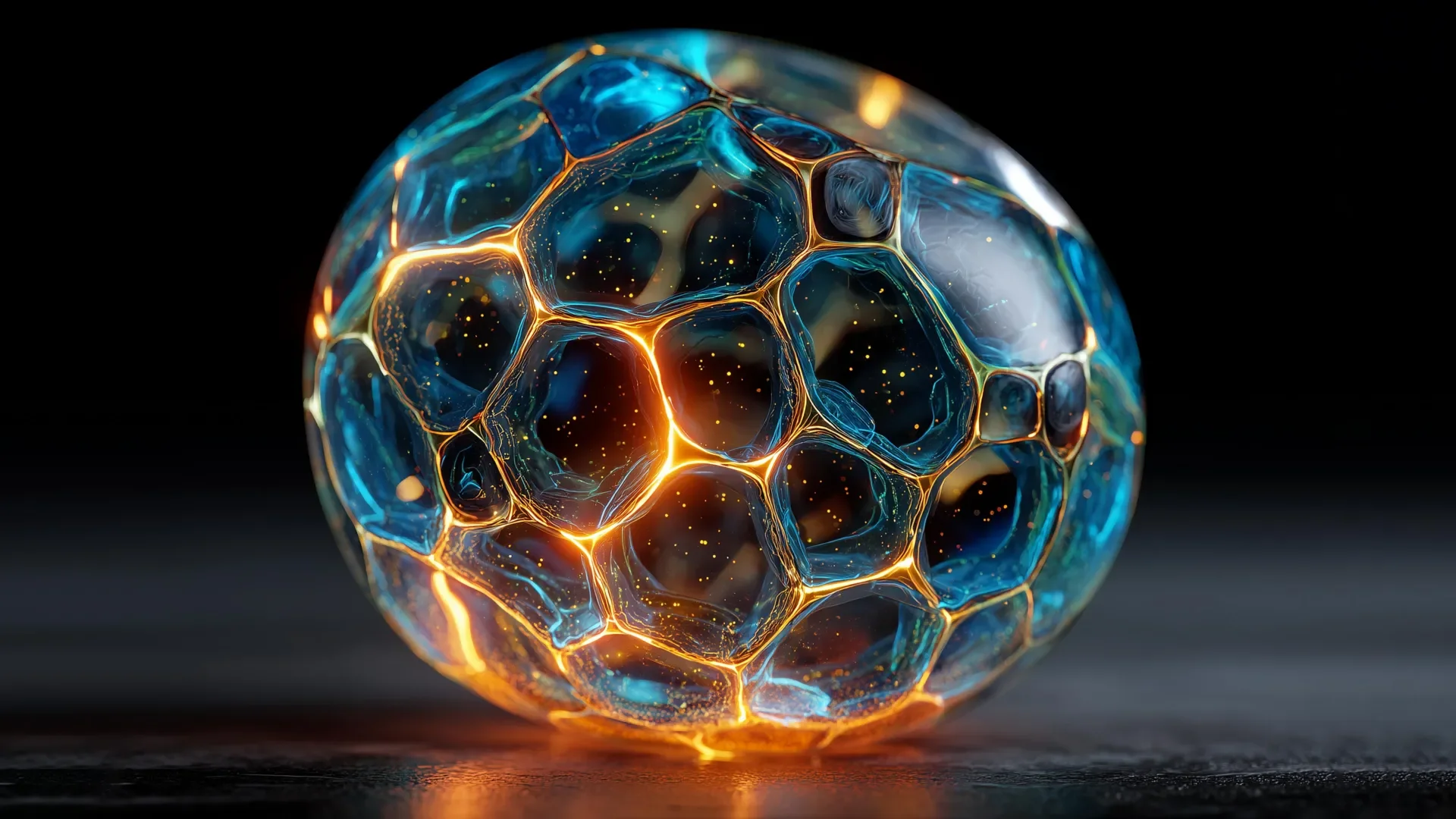
Visualization
In a groundbreaking revelation, researchers from a consortium that includes TU Dortmund University, Paderborn University, the University of Duisburg-Essen, and the University of Oxford have unveiled a sophisticated method for reprogramming the internal structure of glass. This innovative approach has profound implications for the design and fabrication of new glass materials, offering the potential to fine-tune their magnetic and optical properties, previously considered unachievable. The research, published in *Nature Materials*, details how the introduction of a particular organic molecule during the glassmaking process allows for a striking reduction in melting temperature while simultaneously enabling alterations in chemical bonding.
The key molecule identified in this transformative approach is 1,10-phenanthroline. When added to the melt, it executes a dual function; it not only lowers the temperature at which the glass transitions from liquid to solid but also modifies the coordination environment surrounding metal atoms within the glass matrix. Traditional glass manufacturing typically relies on the inherent chemistry and structure of starting materials, constraining the properties of the resultant glass. However, through this new technique, scientists are no longer beholden to these limitations.
The process is rooted in the concept of metal-organic frameworks (MOFs), which are formed by metal centers linked through organic ligands. As melting commences, the 1,10-phenanthroline targets the chemical bonds directly—this is not merely passive filler material but an active participant that induces essential rearrangements at the atomic level. The flux from the molecule facilitates chemical bonding by increasing the number of neighboring atoms surrounding the metal centers; this promotes increased connectivity within the glass structure, resulting in new properties like enhanced magnetism or the ability to emit light.
The intricacies of this molecular manipulation can be better understood through the lens of coordination chemistry. The molecule alters the immediate bonding of metal ions, changing their local environment—a concept encapsulated in the term "coordination number." An increase in this number due to successful incorporation of phenanthroline leads to a network that is fundamentally different from conventional glasses, which typically exhibit fixed coordination based on their initial ingredients.
Moreover, the ability to reduce the melting temperature of specialized glass materials poses a significant advancement in overcoming manufacturing challenges. Traditionally, many advanced glass types were susceptible to thermal degradation or breakdown under the high temperatures required for melting, which resulted in undesirable cross-links and impurities detrimental to their functional properties. With the application of 1,10-phenanthroline, the materials can now melt at significantly lower temperatures, thereby maintaining structural integrity and preventing unwanted byproducts that could compromise the material's magnetic characteristics.
The effectiveness of this molecular method was corroborated through rigorous analytical methods, particularly using X-ray absorption spectroscopy. This technique, suitable for studying non-crystalline materials, allowed the researchers to observe the local geometric arrangements around cobalt atoms within the glass. While the oxidation state of these cobalt ions remained unchanged, the neighboring milieu underwent significant reorganization, underscoring the profound alterations brought about by phenanthroline.
Importantly, the study indicates that this molecular strategy holds promise beyond the initial glass types studied. The preliminary success with carboxylate-based frameworks suggests broader applicability for various classes of glass materials. This versatility opens the door to a new paradigm in glass manufacturing, wherein the melting stage evolves into an interactive phase capable of orchestrating desired material behaviors.
As Prof. Henke articulates, the melt is now perceived not as a static precursor, but as a dynamic reaction environment that allows for the precise programming of structural attributes. The advancements signal a transformative shift towards a new generation of glass, engineered for intricate applications in fields ranging from advanced electronics to cutting-edge optical technologies and sophisticated sensing devices. These developments herald a future where glass is no longer merely a passive carrier of properties but an actively engineered medium tailored to meet the demands of emerging technologies.