Field: Technology
A Breakthrough in Sleep Technology: The Wearable Ultrasound Patch Enhancing REM Sleep
Published | Technical Staff
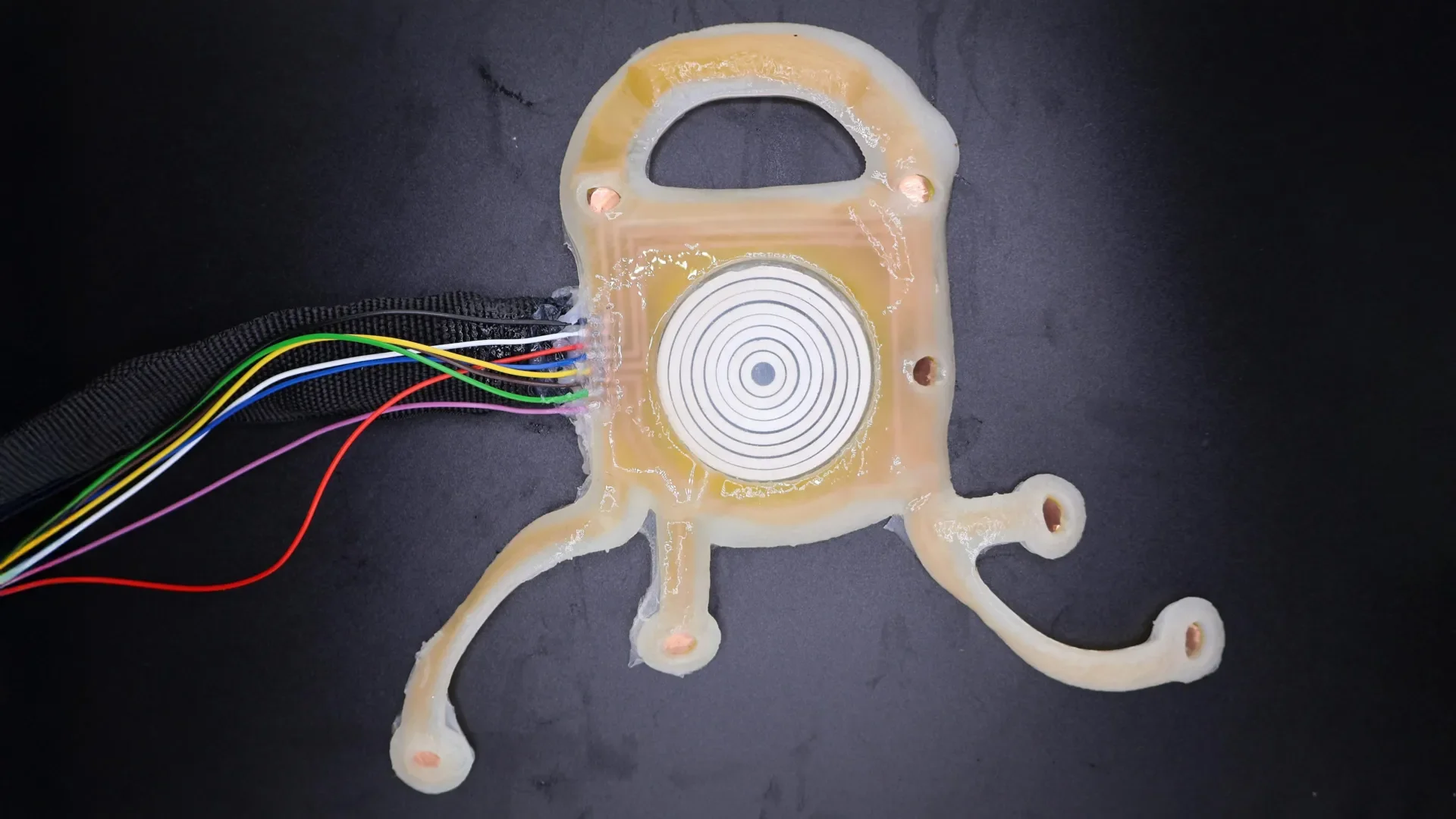
Visualization
A cohort from the University of Texas at Austin has unveiled an innovative solution to one of the most pervasive health challenges of our time: sleep deprivation, particularly in the critical phase of REM sleep. Their groundbreaking creation, a wearable ultrasound patch known as NEUSLeeP, represents an exciting intersection of biomedical engineering and neurobiology, harnessing ultrasonic waves to stimulate deep brain regions non-invasively. This device not only aids in accelerating the onset of REM sleep but also prolongs its duration, with study results indicating participants achieved REM sleep 43 minutes quicker and sustained it for an additional 16 minutes on average.
The mechanism of NEUSLeeP is intricately designed; the patch adheres to the skin and consists of an ultrasound transducer coupled with electrodes that facilitate real-time monitoring of brain activity. Utilizing ultrasound—a form of acoustic energy at frequencies above the human auditory threshold—this device effectively targets areas of the brain associated with sleep regulation without the necessity for any invasive procedures. The foundational principle rests upon the conversion of electrical signals into focused sound energy, which penetrates the cranial layers, thereby influencing neural oscillatory patterns.
This research journey began with a controlled trial involving 28 participants, as detailed in their recent publication in *Nature Communications*. Individuals varied in their sleep health, allowing for a broader consideration of the patch's efficacy across demographics. The findings suggest a dual benefit: not only does NEUSLeeP enhance the allocation of REM sleep, a crucial period characterized by rapid eye movement and vivid dreaming, but it also potentially alters physiological responses associated with stress regulation. Heart rate variability—an essential metric indicative of autonomic nervous system balance—exhibited improvement in those partaking in the study, signaling a favorable adjustment to stressors.
Kai Wing "Kevin" Tang, the leading researcher, highlighted the novelty of this approach: “This is the first time we've been able to noninvasively target deep brain regions involved in REM sleep while simultaneously monitoring brain activity.” Such innovation sheds light on the intricate relationship between sleep and emotional regulation, as disturbances during REM have been frequently correlated with mental health disorders, including anxiety and depression.
Collaboration with experts in psychiatry and behavioral sciences, such as Gregory Fonzo, suggests that enhancing REM sleep through targeted stimulation could empower individuals to manage stress better and support emotional resilience. The implications of this technology are especially compelling considering current interventions, ranging from pharmacological measures to cognitive-behavioral therapies, often come with unwanted side effects or fail to address the root biological issues disrupting REM sleep.
As the research progresses, the team remains cautiously optimistic yet practical; they recognize the necessity for larger clinical trials to validate the outcomes and explore NEUSLeeP's implications further, particularly for individuals grappling with conditions such as PTSD, chronic insomnia, and severe depressive disorders. While the early results are promising, the prospect of modifying entrenched sleep patterns through a non-invasive technological approach marks a paradigm shift in sleep therapy.
Moreover, as NEUSLeeP advances toward potential commercialization, efforts to engage with the university's commercialization unit, Discovery to Impact, are underway. Here, the vision expands to encompass personalized applications of the patch, capable of adjusting stimulation based on the user’s unique sleep requirements. This personalized approach echoes the broader paradigm shift in medicine toward tailored interventions, underscoring the significance of individualized treatment pathways in psychological and physical health.
In sum, the advent of the NEUSLeeP patch could signal a future where millions benefit from improved restorative sleep without resorting to pharmaceuticals or surgical procedures. The implications transcend mere sleep enhancement; they weave a narrative of potential for holistic health advancements, reinforcing the immeasurable value of quality sleep in optimizing well-being.