Field: Technology
A breakthrough in magnetism could make AI chips use dramatically less energy
Published | Technical Staff
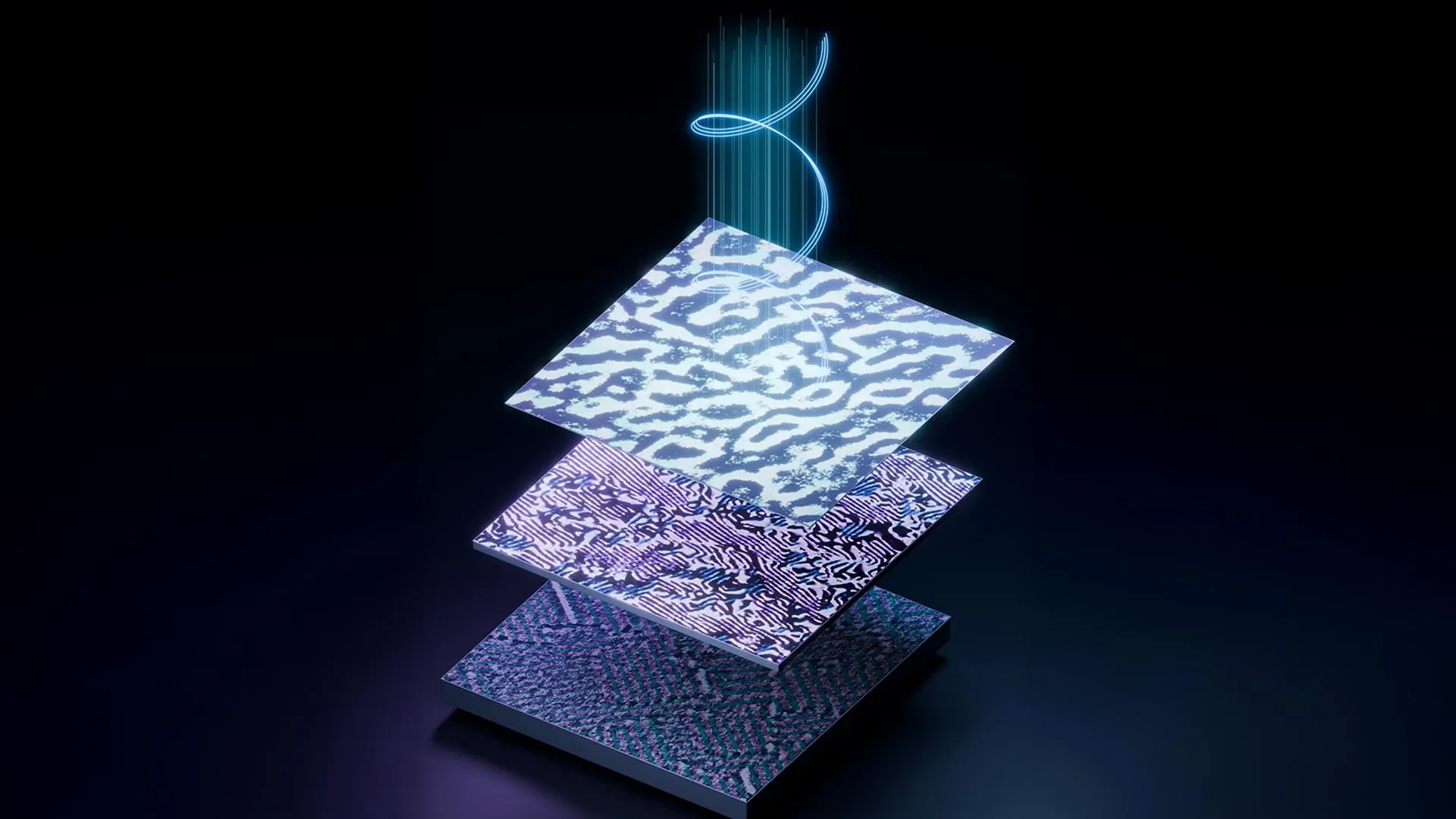
Visualization
In the ever-evolving landscape of computational technology, where the insatiable appetite for energy-efficient solutions remains paramount—especially in the context of artificial intelligence—researchers from Brown University have unveiled a pioneering advancement that promises to reshape future computing paradigms. Central to this transformative work is a sophisticated understanding of multiferroic materials, specifically bismuth ferrite, which combine dual electrical and magnetic properties, offering a tantalizing path towards ultra-low-power chips.
For decades, the practical application of multiferroics in electronics has been stymied by a persistent challenge known as the "dead layer" effect. This phenomenon results from the thinning of multiferroic films—below a critical threshold—leading to the degradation of their essential electrical and magnetic behaviors, effectively stalling their deployment in modern chip technologies. The implications of resolving this issue are profound, considering the dual-functionality these materials could offer: storing binary information while enabling magnetic retrieval, all while expending minimal energy.
The research team, guided by Assistant Professor of Engineering Lucas Caretta, has not only addressed the dead layer problem but has manipulated the properties of bismuth ferrite to enhance its magnetism. Through a meticulous layering technique, they crafted a thin film structure where bismuth ferrite is deposited on a dysprosium scandate substrate. This foundation, characterized by a staggered crystal lattice slightly smaller than that of bismuth ferrite, subjects the latter to a carefully controlled compressive strain, thereby preserving its vital atomic lattice while circumventing distortions.
This innovative approach goes beyond mere preservation. It encompasses the introduction of a metallic intermediary layer strategically designed to counterbalance internal electric fields that would typically compromise the electrical polarization—a crucial aspect of the material’s functionality. The implications of this architectural ingenuity are clear: when reduced to mere angstroms in thickness, the bismuth ferrite film retains its ferroelectric and magnetic properties, positioning it as a viable candidate for integration into advanced computing applications.
Moreover, the team’s results unearthed an unexpected phenomenon: the emergence of altermagnetism. This newly discovered magnetic state fuses key attributes of ferromagnetism and antiferromagnetism, allowing for rapid switching capabilities free from the interference typically associated with stray magnetic fields. Altermagnets present a compelling prospect; they offer robust signal outputs while eluding the density challenges that conventionally hinder chip design, effectively positioning them as a bridge towards efficient memory and logic components.
As computing demands escalate—especially within the realm of AI, which inherently requires vast processing power—the urgency for innovations that facilitate lower energy consumption cannot be understated. The Brown University researchers stand on the precipice of potentially revolutionizing this space, with Caretta emphasizing the crucial realization that through engineered atomic environments, it is feasible not only to preserve but also to enhance material properties.
Yet, while the research findings spotlight a significant stride towards practical application, the path to commercial viability necessitates further exploration. Nonetheless, the breakthroughs achieved herein signify a critical juncture, illustrating how the convergence of advanced materials science and engineering can illuminate a future — one where computing is not just faster and more powerful, but also strikingly efficient in its energy utilization. With backing from prominent institutions like the U.S. Army Research Office and the National Science Foundation, this research serves as a beacon of innovation in the quest for smarter, energy-conscious computational devices that will define the forthcoming digital era.