Field: Technology
A 700,000-Year-Old Elephant Tooth Reveals a Lost World Where Early Humans Lived
Published | Technical Staff
Visualization
The recent discovery of a remarkably preserved elephant tooth dating back nearly 700,000 years has unveiled a strikingly verdant prehistoric world, where colossal elephants coexisted with some of humanity's early ancestors. This significant fossil find emerged from the Gesher Benot Ya'aqov (GBY-NBA) archaeological site located in northern Israel, a landscape intrinsically tied to the movement of ancient humans and the evolution of hominin tools.
The tooth, belonging to *Palaeoloxodon antiquus*, the straight-tusked elephant, exemplifies one of the largest terrestrial mammals that thrived during the Pleistocene epoch—a time marked by significant climatic fluctuations and glacial periods. The tooth itself, a massive molar, is more than just a remnant of a long-gone giant; it acts as a time capsule, allowing researchers to reconstruct the environment that once flourished along the Jordan Rift Valley, near modern-day Hula Valley.
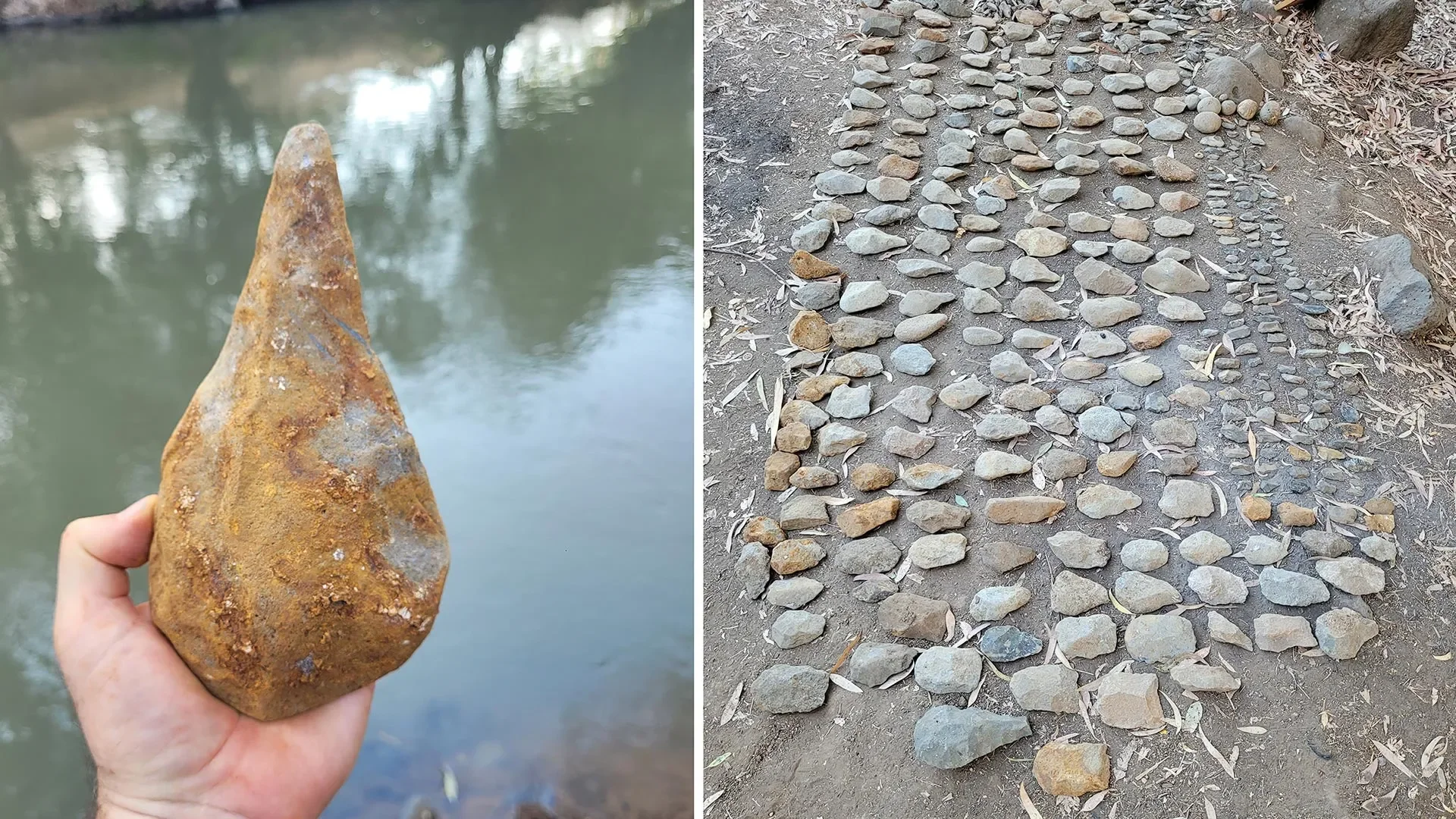
Alongside the elephant remnants were ancient Acheulian stone tools—specifically, basalt handaxes and cleavers—indicative of the sophisticated craftsmanship and adaptive strategies of early humans. This stone-tool tradition, originating approximately 1.76 million years ago, stands as one of the deepest roots in human technological evolution. The artifacts discovered alongside the tooth underscore the interconnectedness between early hominins and their ecosystems.
The impetus for this research, spearheaded by Hannah Farrell, a PhD candidate at Haifa University, involved an array of integrated scientific techniques designed to decode the biological and environmental information embedded in the elephant's dental anatomy. Using computed tomography (CT) scans, the researchers meticulously examined the internal structure of the tooth. This non-destructive imaging technique provided invaluable insights into the molar's compositional details, ruling out simple visual assessment and enhancing the quality of the isotopic analysis thereafter.
Isotope geochemistry became instrumental in understanding the dietary habits of the elephant, particularly through measurements of carbon isotopes, which reveal the types of flora consumed. The distinctive ratios of carbon-13 and carbon-12 isotopes indicated that the animal thrived in a habitat fueled by a reliable water supply, nourishing a plethora of herbaceous plants and trees. Supplementary pollen analysis yielded a diverse catalog of flora, including reeds, sedges, willows, and tamarisks, underscoring the existence of wetland vegetation that thrived under favorable climatic conditions.
The botanical assemblages corroborate the hypothesis of an ancient landscape rich in biodiversity—woodlands juxtaposed with expansive grasslands, weaving through wet marshlands and flowing rivers. These findings paint an image of a thriving ecosystem, a veritable paradise for both megafauna and early human communities. The variety and abundance of habitats within this environment likely played a pivotal role in sustaining the hominin populations that occupied the region.
The geographical context further elevates the significance of this discovery. Nestled within the Levantine Corridor, a natural corridor that bridges Africa and Eurasia, the Hula Valley served as a crucial ecological refuge for migrating species—both human and animal alike. This corridor facilitated the north-south transit of flora and fauna over millennia, making it imperative for understanding the migration patterns of ancient hominins, who depended heavily on accessible water and other natural resources.
Prof. Gonen Sharon, who led the excavation at Gesher Benot Ya'aqov, articulated the critical nature of these findings: "Understanding how humans and animals responded to environmental change hundreds of thousands of years ago helps us better understand the forces that shaped our species." The symbiosis between resources and survival tactics illuminates the challenges and adaptations faced by those early human groups, navigating an unpredictable world shaped by climatic shifts.
This groundbreaking study underscores the importance of an interdisciplinary approach in paleontological research, merging ecology, archaeology, and geology to construct a narrative that transcends mere fossil data. As researchers unravel the conditions that allowed for the survival and evolution of both humans and the fauna of the time, they gain essential insights into the very fabric of prehistoric life and the environmental parameters that governed it.
In blending these realms of scientific inquiry, the implications stretch far beyond the confines of a single archaeological find. The reliance on interwoven ecosystems and resources laid fundamental groundwork for human adaptability—a legacy that continues to resonate as we face modern challenges linked to environmental change and resource allocation.
Through the lens of this 700,000-year-old tooth, we are granted not just a view of the past, but a reminder of our ongoing relationship with the natural world that sustains us. The study by Hannah Farrell and her collaborators, recently published in *Quaternary Science Reviews*, marks a significant stride in bridging paleobiological study with human evolutionary understanding, serving as a monumental reference point in the ongoing exploration of our ancestral roots.