Field: Technology
5,000-year-old skulls reveal a disturbing secret of ancient Egypt's first kings
Published | Technical Staff
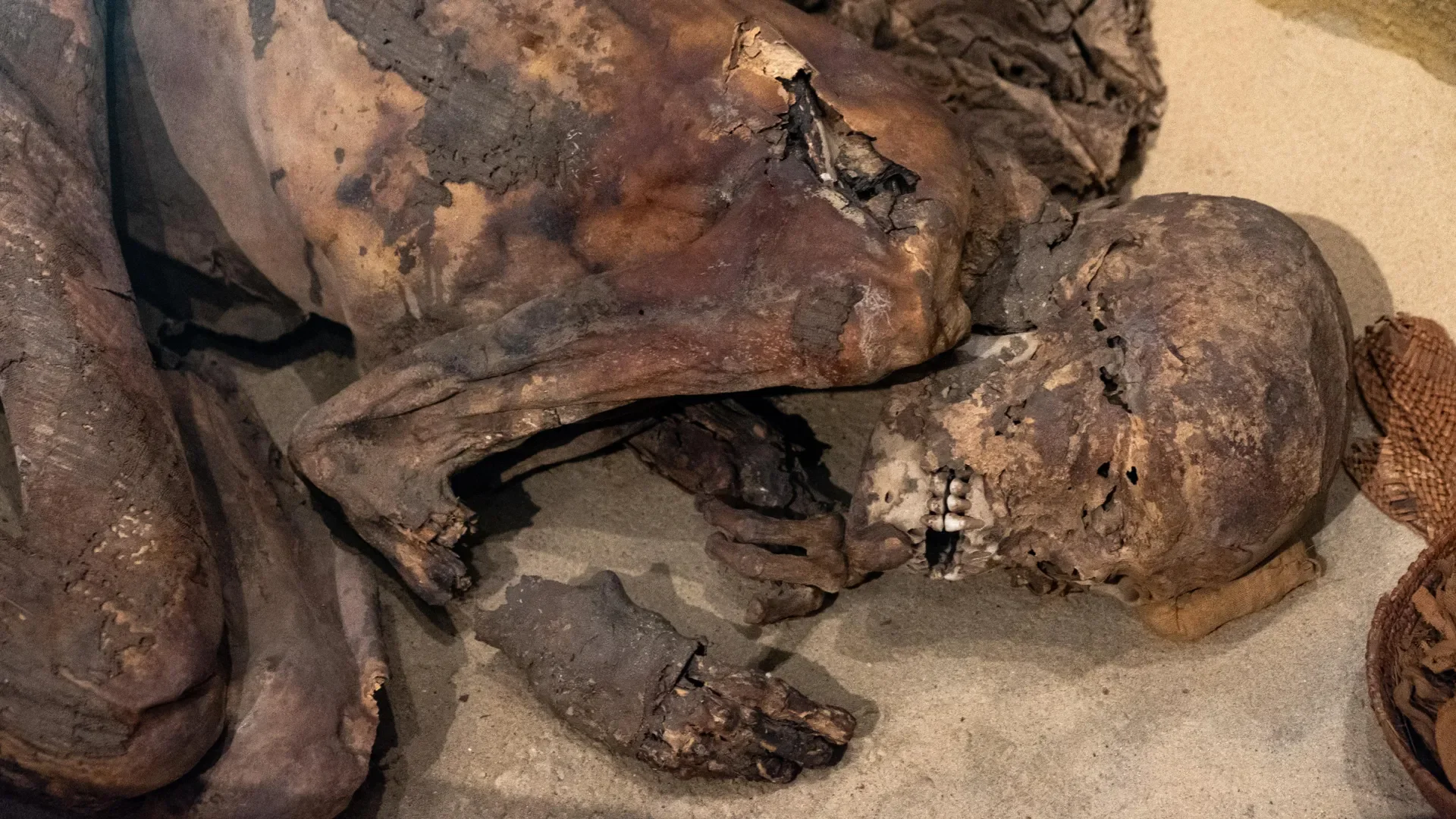
Visualization
The enigmatic tombs of ancient Egypt are filled with secrets from a civilization that has intrigued historians and archaeologists for millennia. A recent forensic examination of 46 ancient skulls has unearthed compelling evidence that at least 39% of the individuals may have been victims of ritual homicide, sacrificed to accompany the first kings of a unified Egypt into the afterlife. This startling revelation adds a disturbing layer to our understanding of early dynastic practices, echoing theories proposed over a century ago but lacking the robust evidence required to substantiate them.
Situated near the necropolis of Abydos, the skeletal remains reflect a society dedicated to elaborate funerary customs around 3000 BCE. It was at this site that the first Pharaohs of Egypt were laid to rest, often surrounded by elaborate burial chambers, riches, and an uncounted number of subsidiary graves. Excavated first by renowned archeologist Flinders Petrie in the 1920s, it was noted that an unusually high concentration of individuals had been buried in proximity to the royal tombs, leading to the hypothesis that these may represent retainers sacrificed to serve their monarchs in the afterlife.
Historically, the practice of retainer sacrifice—where attendants or trusted affiliates of a ruler are killed to ensure their continued service post-mortem—was speculated about but lacked definitive evidence. This practice is embedded in cultural paradigms; in many societies, it not only signifies the ruler's power but also reflects the belief in an enduring bond between the sovereign and their attendants beyond the grave. Despite the morbid implications, this ritual was thought to symbolize loyalty and honor.
Petrie's observations fell short of conclusively identifying the cause of death in these individuals, as he was unable to document violent injuries among them. Fast forward nearly a century, and modern forensic techniques opened a window into these forgotten lives. The 46 skulls, preserved in the Duckworth Collection at Cambridge University, were rigorously analyzed for cranial trauma using methods that have advanced far beyond what Petrie had at his disposal. Dr. Roselyn Campbell, leading the investigation, found significant cranial trauma in 18 of the examined skulls, consistent with potentially fatal injuries.
These fractures were predominantly linear, suggesting that they were not the product of natural degradation or post-mortem damage but rather were sustained at or around the time of death—termed perimortem injuries. The nature of these injuries pointed towards blunt force trauma rather than attacks associated with traditional weaponry like maces, which typically yield depressed fractures. Instead, the linear fractures identified could denote impacts from broad objects or significant falls, although the evidence of such trauma is ambiguous.
The conundrum continues as to how many of these individuals met their ends through ritualistic sacrifice versus natural causes, as the absence of accompanying skeletal remains prevents a full forensic examination. Sharp-force trauma indicative of cutting or chopping was also recorded on some skulls—one in particular noted for damage near the eye socket, potentially suggesting a violent death designed to ensure the victim's passage to the afterlife.
While the narrative of the sacrificial retainer was submerged in confusion and speculation for decades, the forensic techniques applied in this investigation have illuminated a grim yet fascinating aspect of human history. The combination of archaeology and modern science allows for a deeper comprehension of the complexities entrenched in ancient practices, reminiscent of an era when death was thought to be a passage rather than an end, and where the loyalty of a retainer could be quite literally a matter of life or death.
The disciplined integration of scientific inquiry into archaeology provides crucial insights, showcasing how historical interpretations can evolve through improved methodologies. Woolen threads in the fabric of ancient Egypt’s burial customs are slowly being pulled back, revealing not only the lifeways of its earliest rulers but also the potentially perilous positions of those who served them. Each rediscovered skull contributes a fragmentary voice from the past, piercing through the silence of antiquity and inviting us to reconsider the narratives surrounding power, life, and death in one of history’s most intriguing civilizations.