Field: Technology
400,000-Year-Old Teeth Reveal a Stunning Twist in Human Evolution
Published | Technical Staff
Visualization
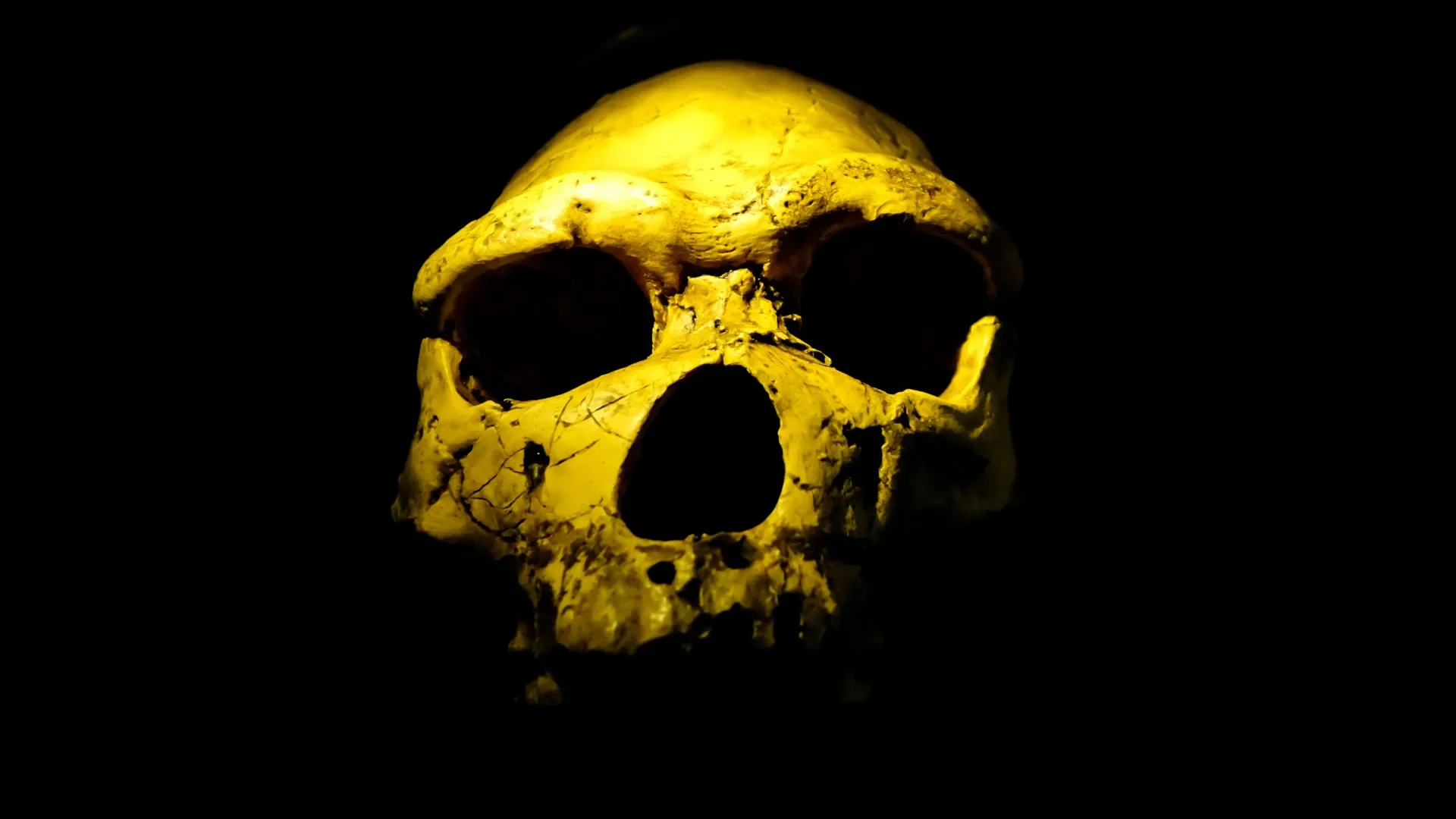
In a remarkable twist to our understanding of human evolution, the latest research proposes that Homo erectus, a hominin long considered an evolutionary dead end, may have contributed to the genetic makeup of modern humans. This paradigm shift stems from an innovative analysis of proteins extracted from teeth that are approximately 400,000 years old, excavated from several pivotal sites in China. The study, spearheaded by Qiaomei Fu and a team from the Chinese Academy of Sciences, utilizes proteomic approaches that allow scientists to generate biological insights previously deemed unattainable, particularly in fossils older than the range of recoverable DNA.
Homo erectus is classified as one of the earliest hominins to venture out of Africa, with evidence indicating their presence across Eurasia as early as two million years ago. Historically, the narrative surrounding human evolution has often depicted a simplistic tree structure in which distinct branches—such as Neanderthals, Homo erectus, and ultimately Homo sapiens—emerged in isolation, with the latter supplanting its predecessors. However, recent genomic studies have illuminated a more intricate reality of human ancestry characterized by routine interbreeding among divergent lineages.
The research published in Nature marks a formidable advancement in the field. Utilizing six specimens of H. erectus teeth, discovered at notable locations like Zhoukoudian, known for yielding the remains popularly referred to as "Peking Man," the scientists embarked on a detailed analysis of the enamel's protein composition. Tooth enamel, being the hardest tissue in the human body, is notably resilient and preserves certain proteins long after DNA has deteriorated. The team's methodology involved the extraction of specific proteins, leading to the identification of a unique amino acid variant shared across the specimens, thereby establishing their identity and resolving debates regarding the classification of the Hexian fossils.
Within the data, the researchers uncovered not only the distinctive variant unique to East Asian H. erectus populations but also a second variant present in Denisovans—a mysterious group largely known from a Siberian cave. The genetic signature of this second variant appears in modern human populations, manifesting at frequencies of approximately 21% in the Philippines and roughly 1% in India. The spatial distribution of this genetic marker aligns with predictive models based on potential introgression events, postulating that H. erectus interbred with Denisovans, who subsequently passed this genetic material onto their descendants in Southeast Asia and beyond.
The implications of this study extend beyond mere variant identification; they underscore a radical reconceptualization of our evolutionary history. Rather than a linear trajectory marked by extinction and replacement, human evolution resembles a complex web of genetic exchanges, alluding to widespread admixture. Modern humans outside of Africa carry about 2% Neanderthal DNA, while populations in Oceania possess an additional 2-5% Denisovan ancestry. Notably, genetic contributions from unidentified archaic lineages exist among West African populations, reflecting a rich tapestry of interactions across millennia.
This recent study illuminates an exciting avenue for future research, particularly concerning ancient populations that have yet to yield genomic or proteomic data. The survival of H. erectus in regions like Indonesia until around 100,000 years ago and the presence of other enigmatic species such as Homo floresiensis and Homo luzonensis necessitate further investigation. Current proteomic techniques may yield crucial insights into whether these species similarly participated in shaping the genomes of the modern humans that followed.
As we navigate through the complexities of our past, the metaphor of the evolutionary tree is increasingly being supplanted by conceptualizations of braided rivers—dynamic channels of interaction, with multiple pathways merging and diverging while continuously exchanging genetic material. This nuanced understanding reflects a deep acknowledgment of our ancestry, one that fosters recognition of the intertwined destinies of ancient hominins and modern humans, revealing that the extinction of one lineage does not equate to its complete disappearance. Instead, remnants of these ancient populations linger within the fabric of our own genetic narratives, offering a profound connection between Peking Man’s enamel and the present-day inhabitants of Asia.