Field: Technology
40 years later, Chernobyl's nuclear fallout is not what scientists expected
Published | Technical Staff
Visualization
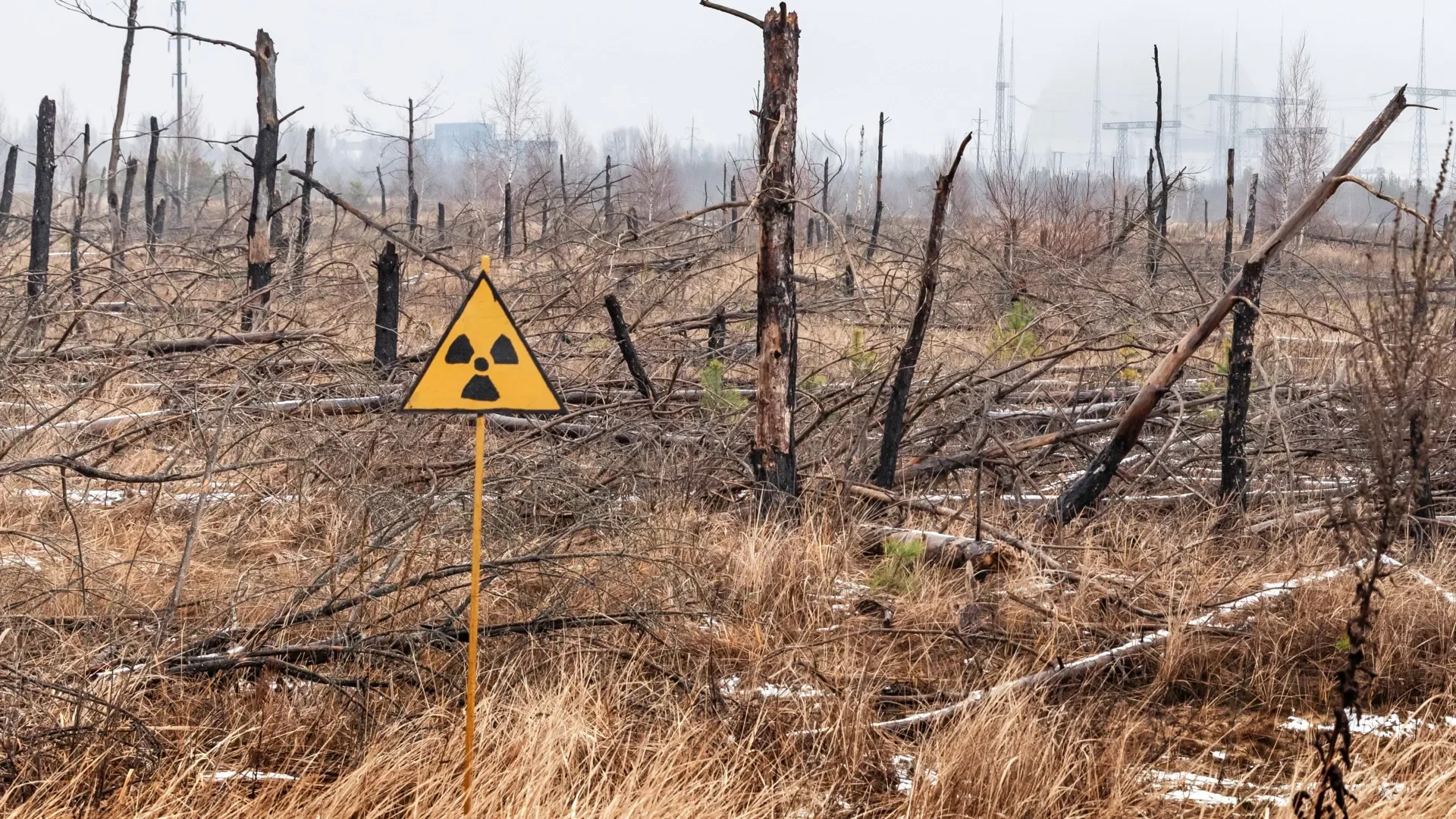
The Chornobyl disaster, which occurred in April 1986, has left an indelible mark on the annals of nuclear history, as the fallout from that fateful day continues to shape our understanding of radioactive materials and the risks they pose to human health and the environment. Four decades of scientific inquiry has revealed that the remnants of this catastrophic event include not only dangerous radioactive isotopes but also surprisingly resilient structures that defy prior expectations.
Despite a time span of forty years, tiny radioactive particles, measuring between 8 to 50 micrometers, still permeate the soil around Chornobyl, acting as lasting emissaries of danger. Initially released during the reactor's horrifying explosions, these particles have lingered much longer than anticipated, prompting a new wave of research aimed at unraveling the complexities of their enduring presence and effects. Protective clothing remains de rigueur for anyone venturing into the contaminated zones, underscoring the persistent health risks involved.
Recent investigations led by Tobias Weissenborn and his team from Leibniz University Hannover have revealed three distinct classes of radioactive particles clinging to the landscape of Chornobyl. The first class consists of particles that retain significant chemical and physical similarities to their precursor, uranium dioxide. The second class formed through a high-temperature interplay of nuclear fuel and zirconium, a material known for its inherent resilience in the face of extreme conditions. Finally, the third class emerged from the fiery destruction of the graphite moderator—an integral component of the reactor—during the disaster. The oxides formed (notably, U₃O₈) reveal themselves to be structurally weaker and more susceptible to fragmentation, thus heightening the risk of inhalation of radioactive dust dispersed by wind.
To gain deeper insights into these particles' stability and their potential to release radioactive materials, Weissenborn collaborated with Dr. Christoph Hennig of the Helmholtz-Zentrum Dresden-Rossendorf (HZDR). Utilizing synchrotron X-ray diffraction—an advanced technique that characterizes crystalline structures through X-ray scattering—Hennig's team meticulously examined six selected particles procured from the Chornobyl region. This approach required rigorous safety protocols due to the high radioactivity of the samples, which were thoroughly contained during their transportation to the research facility in Grenoble.
The methodology involved a novel rotation of the samples within a precisely focused X-ray beam, measuring the particles from 2,000 different angles to capture multidimensional reflections. The intricate process facilitated the identification of various crystalline phases within the particles, elucidating critical information regarding the longevity and potential behavior of radioactive components embedded in these structures. Remarkably, initial findings indicated that the radioactive fuel within the analyzed particles has preserved significant aspects of its original crystal architecture, suggesting a stability that exceeds previous assumptions.
This revelation carries substantial implications for environmental science. The ability of certain particles to encase fission products within stable structures may inhibit the rapid release of radioactive materials into surrounding ecosystems. However, interpretative caution is warranted, as Weissenborn notes, “Each particle manifests a unique structure, and our study analyzed only six specimens from limited locations.” The conclusive judgments regarding the behavior of the entirety of radioactive debris at Chornobyl remain distant, necessitating further exploration across a broader spectrum of geographical locales.
While the findings illuminate one facet of the complex fallout narrative, they also underscore the inherent unpredictability surrounding Chornobyl’s radioactive legacy. Particle behavior varies widely in terms of composition, structural integrity, and resistance to weathering—factors that critically influence the timing and extent of radioactive emissions. Weissenborn cautions against overinterpretation of stability data, as unpredictable outliers could exist, continuing to release hazardous radionuclides well after their more fragile counterparts have degraded.
As the research continues, studies are increasingly focused on transuranic phases, aiming to build a comprehensive profile of the radioactive materials lingering in Chornobyl's wake. The implications of this ongoing inquiry reach into environmental policies and public health considerations, emphasizing that despite advances in our understanding of radiation stability, the specter of Chornobyl's contamination remains an unresolved challenge. Far from indicating a future where restrictions around the exclusion zone can be relaxed, these insights reinforce the need for a vigilant and scientifically informed response to one of humanity's most consequential industrial failures.