Field: Technology
128,000-Year-Old Ice in Tibet Could Rewrite Climate History
Published | Technical Staff
Visualization
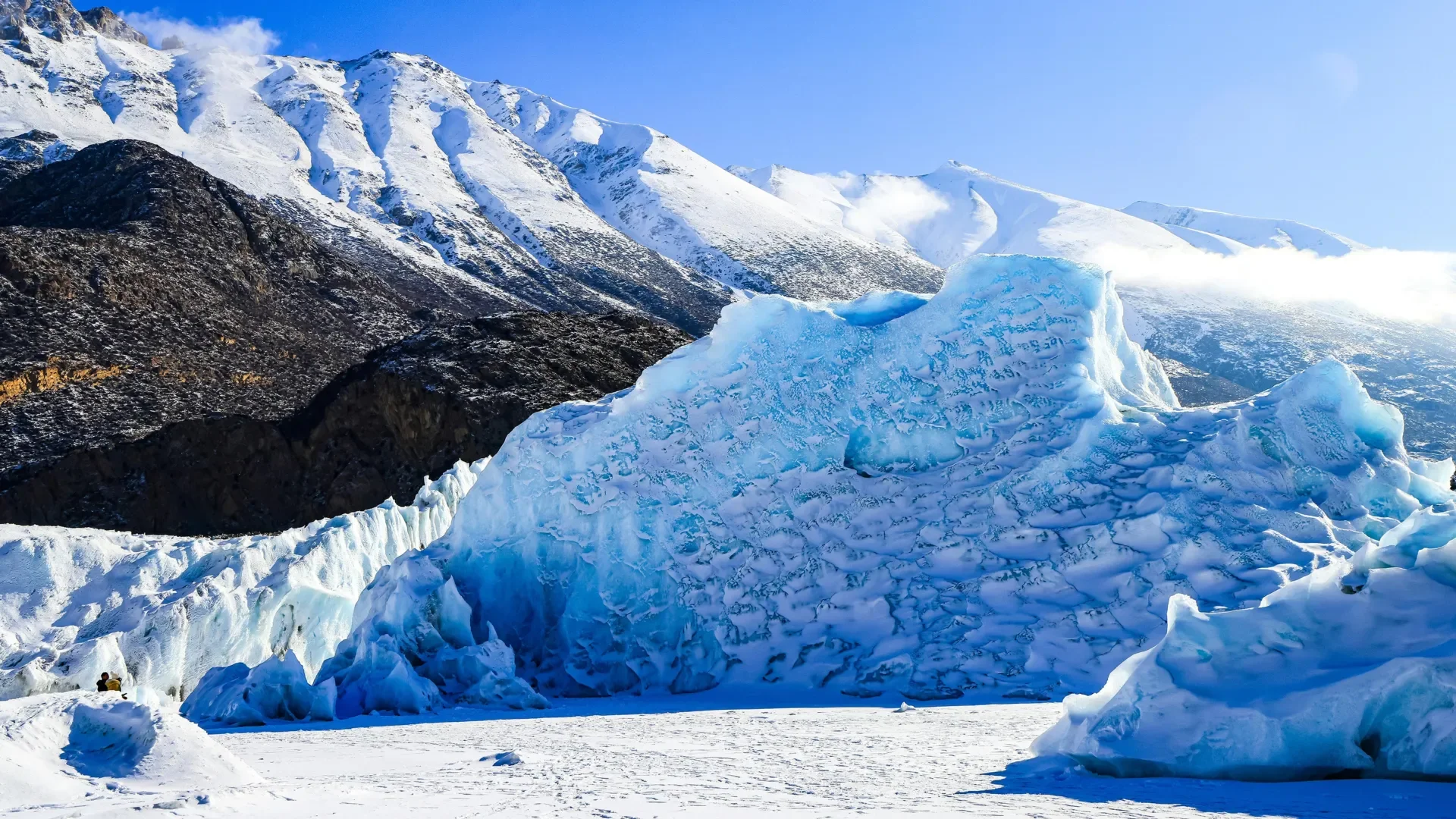
Nestled high in the rugged terrain of the Guliya Plateau in northwestern Tibet, scientists have made a groundbreaking discovery: a cache of ice that may date back over 128,000 years, offering an extraordinary window into Earth's climatic history during the last ice age. This remarkable find not only pushes the timeline of known glacial records in the region back by more than 100,000 years but also serves as a critical repository for information on how mountain glaciers have endured significant global climate shifts.
The research team, led by Lonnie Thompson from The Ohio State University, analyzed ice cores collected from the Guliya ice cap in two different years: 1992 and 2015. Despite the nearly quarter-century gap, the samples exhibited strikingly similar isotopic signatures, particularly in oxygen isotopes, which serve as critical proxies for reconstructing past environmental conditions. The consistent isotopic data reinforce the reliability of the ice cores as a faithful record of historical climate variations.
To unravel the age of this ancient ice, researchers employed advanced radiometric dating techniques utilizing naturally occurring radioactive isotopes of beryllium and chlorine. These isotopes decay at well-characterized rates, providing invaluable insights into timeline events deep within Earth’s geological epochs. Notably, the team identified the chemical markers from the Leschamp Geomagnetic Excursion, an event that occurred over 41,000 years ago, affirming the temporal framework for the Guliya ice cap's ice layers.
Comparative analyses were conducted against oxygen isotope data preserved in adjacent cave deposits in Tibet, further corroborating the hypothesis that the Guliya ice record may well exceed the 128,000-year benchmark. In contrast, existing ice core records from other non-polar regions, such as Huascarán in Peru, have only offered insights that stretch back approximately 30,000 years. Thus, the Guliya ice core not only furnishes a deep historical narrative of climate fluctuations but stands as a unique geoclimatic archive outside of polar domains.
This significant discovery redefines our understanding of ice persistence and glacial dynamics during transitions from glacial to interglacial periods. Previous interpretations of the Guliya ice records suggested they were confined to the middle Holocene epoch, which began around 12,000 years ago. However, the new evidence firmly establishes that substantial ice masses in Tibet likely survived significant environmental changes associated with the end of the last glacial period. This finding carries profound implications; it indicates that the glaciers did not simply evaporate with the warming temperatures of the early Holocene, but rather, they endured through the climatic shifts that marked this critical transition.
The unusual geomorphology of the Guliya ice cap, characterized by its high elevation and specific topographic factors, may elucidate its ability to preserve such ancient ice against the backdrop of global warming. Understanding the chronological succession of glaciation events—when they began, their durations, and when retreat commenced—becomes pivotal for reconstructing Earth's natural climate cycles.
As researchers embark on future inquiries into the Guliya ice cores, they anticipate that deeper examinations may yield further insights into critical climate indicators that were previously unappreciated. The ages and isotopic signatures provide researchers with the much-needed temporal precision to unveil deeper narratives of atmospheric shifts, volcanic eruptions, and anthropogenic impacts on climate.
Thompson encapsulates the essence of the project, emphasizing a unified story emerging from the data: “If you get the science right, it’s consistent. It’s our understanding that must evolve to catch up.”
This groundbreaking study, which appears in *Science Advances*, invites the scientific community to revisit and refine our understanding of earth’s glacial phenomena, which holds grave significance in our current era of climate changes. The Guliya ice cap stands as a sentinel of our planet’s climate narrative, its ancient layers whispering tales of resilience amid transformative epochs. The research was supported by the U.S. National Science Foundation and involved collaborations with numerous international experts, underscoring the collaborative nature of contemporary climate science endeavors.