Field: Technology
115-Million-Year-Old Dinosaur Bones Preserve Chemical Traces of Red Blood Cells
Published | Technical Staff
Visualization
In a remarkable intersection of paleontology and molecular biology, a recent study has unveiled chemical signatures indicative of red blood cells within the fossilized remains of *Aratasaurus museunacionali*, a coelurosaurian theropod that roamed what is now northeastern Brazil during the Early Cretaceous epoch, approximately 115 million years ago. Conducted by an interdisciplinary team led by Professor Kliti Grice from Curtin University, this groundbreaking research promises to redefine long-standing perspectives on the persistence of biomolecules over geological time.
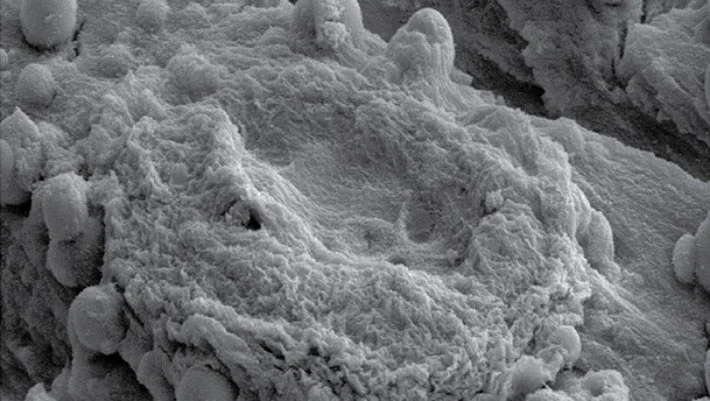
The fossils in question were excavated from the Mina Pedra Branca site within the Romualdo Formation, an area renowned for its remarkably preserved specimens. Close investigation of the dinosaur's hind-limb bones revealed a plethora of tiny, ellipsoidal structures nestled within the vascular canals—channels previously used by blood vessels. The dimensions of these structures are notable, averaging around 23 micrometers in length and 20 micrometers in width. This discovery capitalizes on advanced imaging techniques, particularly scanning electron microscopy (SEM), demonstrating the potential for further exploration into the molecular vestiges of ancient life.
In their analysis, Grice and colleagues identified heme B, a vital component of hemoglobin responsible for oxygen transport in the blood, alongside a chemically modified derivative termed 3,8-diethyl heme B. The researchers employed spectroscopic methods to locate these heme-related chemical signatures within the minute structures, thus bolstering the interpretation that these formations are not merely random mineral accumulations but rather fossilized remnants of red blood cells.
Integral to this preservation phenomenon is the role of mineralization, specifically manganese oxide. The presence of the mineral hausmannite appears to have played a crucial part in shielding these cellular structures from the ravages of time and decay. This process underscores a significant methodological advancement, suggesting that chemical signatures of biological significance can survive far longer than previously assumed.
While the discovery is thrilling, it is critical to clarify that it does not imply the survival of intact blood or hemoglobin proteins over 100 million years. Instead, the findings represent chemically altered forms of these organic materials that have withstood the test of time. "To detect intact heme-derived molecules in 115-million-year-old red blood cells is astonishing," declares Professor Grice, accentuating the landmark nature of the research. By extending the fossil record of blood, the study opens a molecular window into the physiology of *Aratasaurus museunacionali* and, by extension, the broader ecosystem in which it thrived.
The implications of this research extend beyond the mere identification of ancient biomolecules; it invites a reevaluation of the evolutionary pathways of blood, metabolism, and activity levels across prehistoric species. As paleontologists begin to unravel the complexities of life in the Cretaceous, the methodologies developed for this study could well usher in a new era of molecular paleontology. The full exposition of these findings was published in the *Proceedings of the National Academy of Sciences*, leaving the scientific community at the precipice of a deeper understanding of the biological and ecological dynamics of long-extinct organisms.
The investigation of *Aratasaurus museunacionali* exemplifies how advancements in technology and interdisciplinary research approaches can yield extraordinary insights into the distant past, challenging prevailing assumptions about the temporal limits of biological materials and paving the way for future explorations into the molecular underpinnings of ancient life.